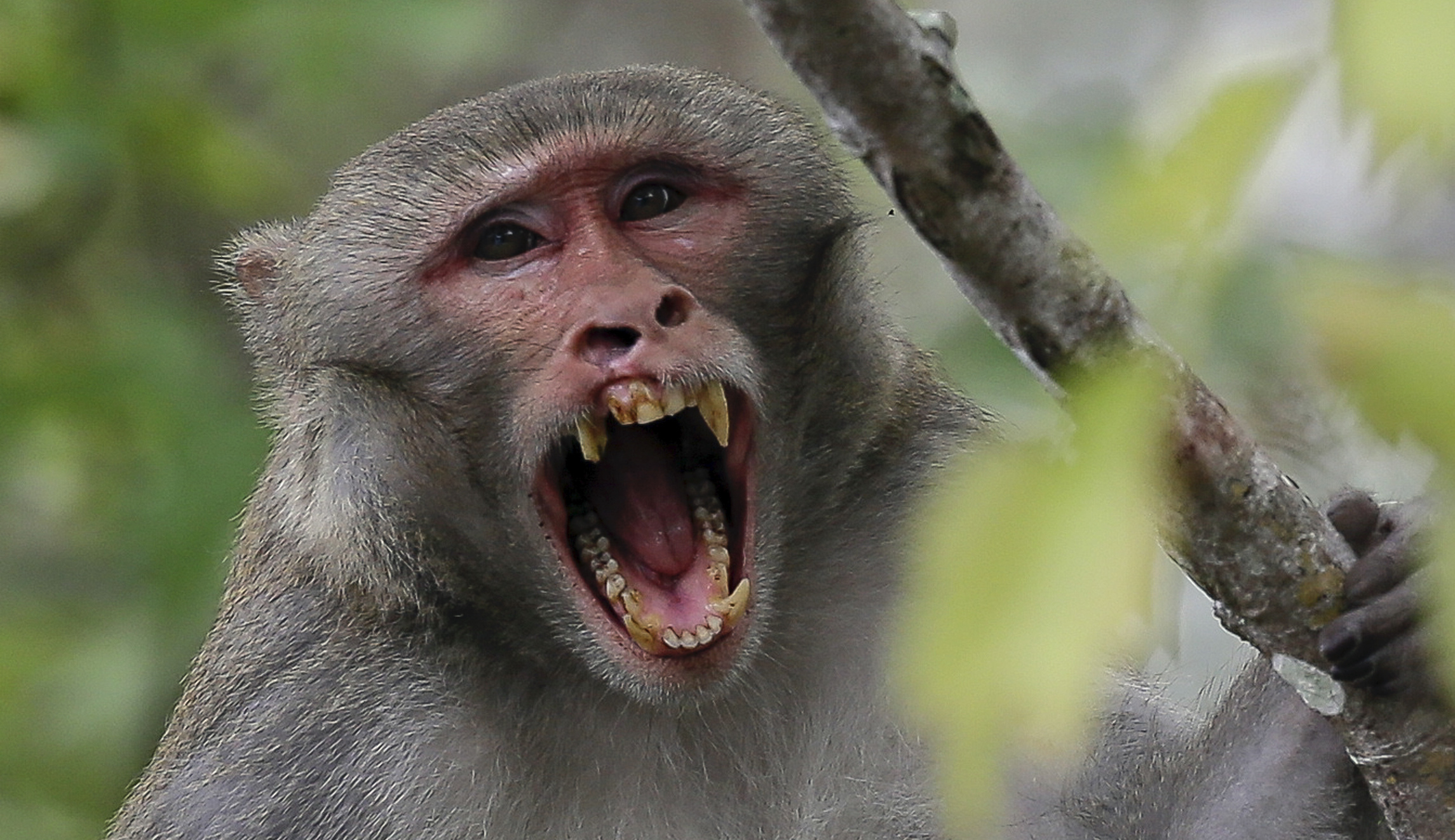
Powerful, herpes-infected monkeys have been spreading out across northeast Florida, raising concerns among the locals.
The rhesus macaque monkeys were first brought to Silver Springs State Park in central Florida in the 1930s by a cruise operator. He introduced a dozen of the primates over the years onto a man-made island inside the park but didn’t realize that the macaques were adept swimmers.
Over the years, the population grew, and in 1984, the state government began to allow culling of the primates, according to First Coast News. More than a thousand of the macaques, endemic in South Asia, were rounded up and put in zoos, given to research labs, or killed. But the population control ended in 2012, and since then, the numbers have grown.
In recent weeks, the primates have been spotted branching out from central Florida into Jacksonville, St. Johns, St. Augustine, Palatka, Welaka, and Elkton, Florida.
More than a quarter of the approximately 300 feral monkeys are thought to carry herpes B, a deadly disease that can be transmitted through their saliva and can kill humans if they are bitten. The primates are also incredibly powerful and can pose a threat to people or their pets.
“The potential ramifications are really dire,” University of Florida primate scientist Steve Johnson said. “A big male … that’s an extremely strong, potentially dangerous animal.”
Although there is an inherent danger posed by their existence in residential areas, Greta Mealey, who is with the DuMond Conservancy for Primates & Tropical Forests in Miami, said that they are more bashful than some make them out to be.
“They’re not going to come up to us and interact with us,” Mealey said. “They would be more fearful.”
Although, she added, “it’s not the kind of animal you probably want hanging around.”
