

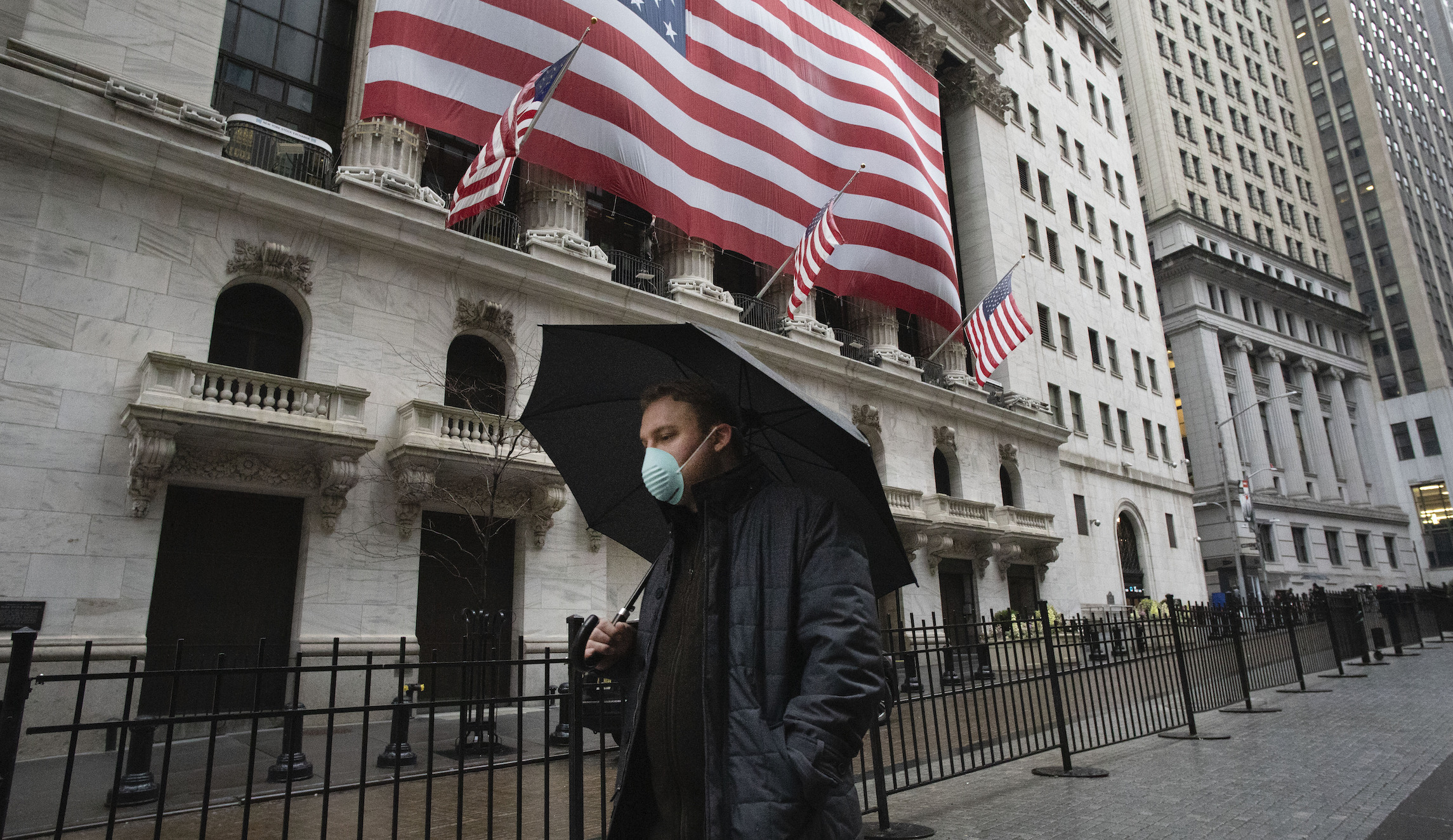
A large portion of the country is concerned about the economy collapsing amid restrictions placed on businesses during the coronavirus pandemic.
According to a Tuesday poll from Axios/Ipsos, 89% of both Republicans and Democrats have some concern that the coronavirus may trigger an economic collapse. The U.S. economy has already suffered some significant blows, including 26 million new jobless claims since the pandemic first hit the country.
Recommended Stories



While the Trump administration has predicted that the economy will recover quickly, senior economic adviser Kevin Hassett said on Sunday that this is the worst hit the economy has taken since the Great Depression.
“During the Great Recession, remember that was the financial crisis around 2008 that we lost 8.7 million jobs in the whole thing. Right now, we’re losing that many jobs about every 10 days. And so, the economic lift for policymakers is an extraordinary one,” Hassett said.
The federal government worked to inject money into the economy by giving most adults a stimulus check of up to $1,200 for an individual and $500 for dependents. According to the poll, 38% put the check into savings, 26% used it to pay off debt, and 18% planned to spend it but hadn’t yet. The patterns show that much of the stimulus funding was not spent on new purchases from businesses.
Republicans and Democrats were on the same page when it came to their concern of economic ruin, but they differed greatly on their fears about reopening the economy too soon. Eighty-eight percent of Democrats feared opening the economy too soon, while only 56% of Republicans felt the same way.
Many Democratic states have suffered larger outbreaks than Republican states, which was reflecting in the poll, finding that Democrats were nearly twice as likely to know someone who died of COVID-19 than Republican respondents. Several Republican states have taken steps to reopen businesses in the state, including Texas and Georgia.
The poll was conducted from last Friday to Monday and included responses from 1,021 adults living in the United States. The margin of error was 3.4 percentage points.
