

Nineteen-ninety-eight was a year of scandal in Washington. Independent counsel Kenneth Starr was investigating whether President Bill Clinton lied about a sexual affair with former intern Monica Lewinsky. The Clinton legal and public relations team furiously resisted Starr’s probe, and the battle, which began with news of the affair in January, stretched through the spring, and into summer, and into fall.
The November 1998 midterm elections approached. Although Clinton wasn’t on the ballot, voting shaped up as a referendum on him and the Lewinsky matter, with impeachment hanging in the balance.
Recommended Stories


In Starr’s offices, lawyers discussed how to handle the upcoming elections. The independent counsel had to report on what he found, but any prosecutorial action close to November might influence the vote, something prosecutors traditionally try to avoid. So the Starr team set a deadline of Labor Day for finishing its report on the Lewinsky matter and sending it to Congress.
“We were very concerned about issuing the report too close to the midterms,” recalls Sol Wisenberg, a senior duputy of Starr’s. “We were shooting for before Labor Day. We weren’t indicting anyone, but we were very conscious of the midterms.”
As it turned out, Starr didn’t quite meet his deadline. Labor Day in 1998 was Monday, Sept. 7. Starr sent his report to Congress on Wednesday, Sept. 9.
It caused an uproar. The Starr Report dominated political conversation, and nearly every other conversation, from the day of its release through the election. In the end, it backfired on those Republicans who thought Clinton’s troubles, sensationally detailed by Starr, might help them at the ballot box. Despite a prediction by Newt Gingrich, who was then House speaker, that the GOP would pick up seats, the party lost ground, barely keeping control for Clinton’s final years in office. After the election, it was Gingrich, not Clinton, who stepped down.
The whole episode was proof of a simple maxim: Hot political prosecutions can change elections.
Mueller Time
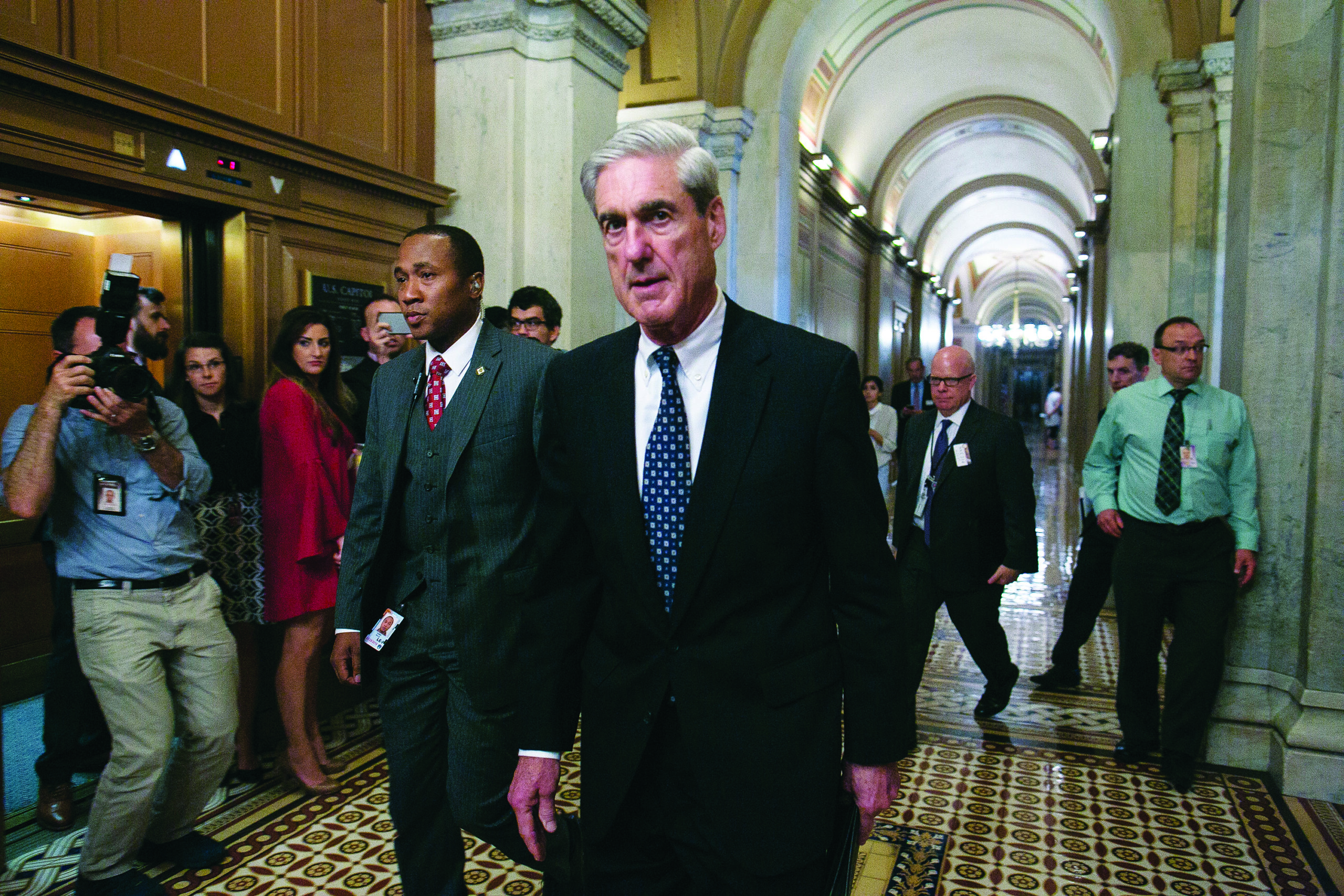
Now, the 2018 midterms are less than 100 days away, and a president not on the ballot is at the center of a highly publicized investigation. Special counsel Robert Mueller’s politically charged Trump-Russia probe shows no sign of letting up as the days until Nov. 6 tick away.
If it is still going full force a month from now, Mueller, like Starr before him, will have a decision to make. Does he race to deliver a report, and possibly more indictments, by some specific cutoff date, such as Labor Day? Does he go dark? Does he keep plowing ahead? What the special counsel chooses to do could be one of the most consequential decisions of a critical election season.
There are no specific, detailed rules for Mueller to follow. Read discussions of prosecutors and elections, and you’ll find references to Justice Department “policies” and “customs” and “practices” and “traditions,” all to the effect that prosecutors should not take any action to affect the outcome of an election. But there’s no written-in-stone rule about it.
One relatively recent statement of the policy was a March 9, 2012, memo from then-Attorney General Eric Holder to all Justice Department employees. “Law enforcement officers and prosecutors may never select the timing of investigative steps or criminal charges for the purpose of affecting any election,” Holder wrote, “or for the purpose of giving an advantage or disadvantage to any candidate or political party.”
There is also the Hatch Act. Best known as forbidding federal employees from engaging in some political activities, the Hatch Act also specifically says an employee “may not use his official authority or influence for the purpose of interfering with or affecting the result of an election.”
“This has been cited and adopted as part of the Department of Justice ethics policy for all department employees,” notes Texas Republican Rep. John Ratcliffe, a former federal prosecutor. “Beyond that, there are years of department precedents about handling sensitive cases as Election Day approaches. Folks at the Justice Department traditionally bend over backwards to avoid taking any action that might be seen by the public as influencing an election.”
So the message to prosecutors, and in this case Mueller, is clear. It is that he should not mess with the election. But what does that mean about specific actions? If, for example, the special counsel is to go dark, that is, to take no public actions, when should he do it?
The ’60-Day Rule’
The recent Justice Department inspector general report on the investigation into Hillary Clinton’s emails noted that many Justice employees cite something they call the “60-Day Rule” forbidding prosecutors from taking any big investigative steps during the two months before voters go to the polls. But the fact is, there really is no 60-Day Rule. “The 60-Day Rule is not written or described in any Department policy or regulation,” the inspector general wrote, adding, “Nevertheless, high-ranking department and FBI officials acknowledged the existence of a general practice that informs department decisions.”
If Mueller were to apply the 60-Day Rule, he would basically do what Starr did and try to lay low after Labor Day. But the details are up to Mueller; there’s no edict telling him how many days he should allow between his last public action and the election.
On the other hand, there are excellent examples of what not to do. In 1992, Iran-Contra independent counsel Lawrence Walsh indicted former Defense Secretary Caspar Weinberger four days before the presidential election, setting off controversy that some believe contributed to the defeat of President George H.W. Bush. A judge threw out the indictment six weeks later, but the damage was done; Clinton was victorious and heading to the White House.
More recently, then-FBI Director James Comey re-opened the Hillary Clinton email investigation ten days before the 2016 election, setting off tumult that many believe contributed to Clinton’s defeat. Comey told the inspector general that the Justice Department policy of not taking action before an election was a “very important norm.” But Comey subordinated it to other concerns. As the IG described events, Comey “felt he had an obligation to update Congress because the email discovery was potentially very significant.”
The report did not accuse Comey of political motivation. But the IG still didn’t buy his reasoning. “We found unpersuasive Comey’s explanation as to why transparency was more important than Department policy and practice with regard to the reactivated [Clinton] investigation,” he wrote.
There now seems to be a near consensus that Comey made a dreadful mistake by taking such public and consequential action so close to the election. One person who is certainly aware of that view, although we don’t know if he shares it, is Robert Mueller. “My guess is that Bob Mueller is intent upon not repeating the very same actions that have caused Jim Comey so much well-deserved criticism,” says Ratcliffe.
‘Witch hunt’
Whatever Mueller does will not stop his investigation from being a factor in the voting. Too much has already happened for the Trump-Russia probe simply to disappear from voters’ minds. Mueller’s indictments of key Trump campaign figures including Paul Manafort and Michael Flynn have raised his office’s profile, and so have the president’s frequent attacks on the prosecutor.
Trump misses no opportunity to denounce Mueller as biased and the investigation as a “witch hunt.” Which leads to the question of whether anyone thinks the president will observe the 60-Day Rule himself and refrain from criticizing Mueller before the election? Not a chance, especially when Trump’s attacks have taken a toll on public opinion of the probe and of Mueller himself. In a recent Fox News poll, just 48 percent of respondents said they approve of Mueller’s investigation, down from 55 percent last month.
“Mueller went from a largely unknown figure to now a more partisan political personality as his unfavorables have risen in the last few months, then stabilized,” says Mark Penn, former Bill and Hillary Clinton strategist whose Harvard-Harris poll has found a decline in Mueller’s approval. Other surveys have found the same.
As it was in 1998, the question of impeachment hangs over this year’s midterm elections. If Democrats win control of the House, a substantial segment of the party base will demand that lawmakers bring charges to remove Trump from office. That will happen if Democrats win, regardless of whether Mueller says another word between now and November. But it does tell Mueller and his staff, every day, how much is riding on their work.
So what will Mueller do? True to form, he is remaining silent. “We have declined to comment,” spokesman Peter Carr said when asked about Mueller’s policy. For “guidance,” however, Carr sent along a link to the March 2012 Eric Holder memo mentioned above. But that simply suggests that Mueller, like everybody else, subscribes to Justice Department policies which have been followed and not followed over the years.
So there are no answers. But Ratcliffe might be on to something when he suggests that the Comey experience is an example Mueller will dearly want to avoid repeating. “In my opinion, Mueller will either try to clear Donald Trump as a target by Labor Day, or will throttle down any further public actions by the special counsel until after Nov. 6,” Ratcliffe says.
There’s Labor Day again. It’s less than six weeks away. Which means we might find out some big things from Mueller soon. If not, we might be in for a long wait.
