

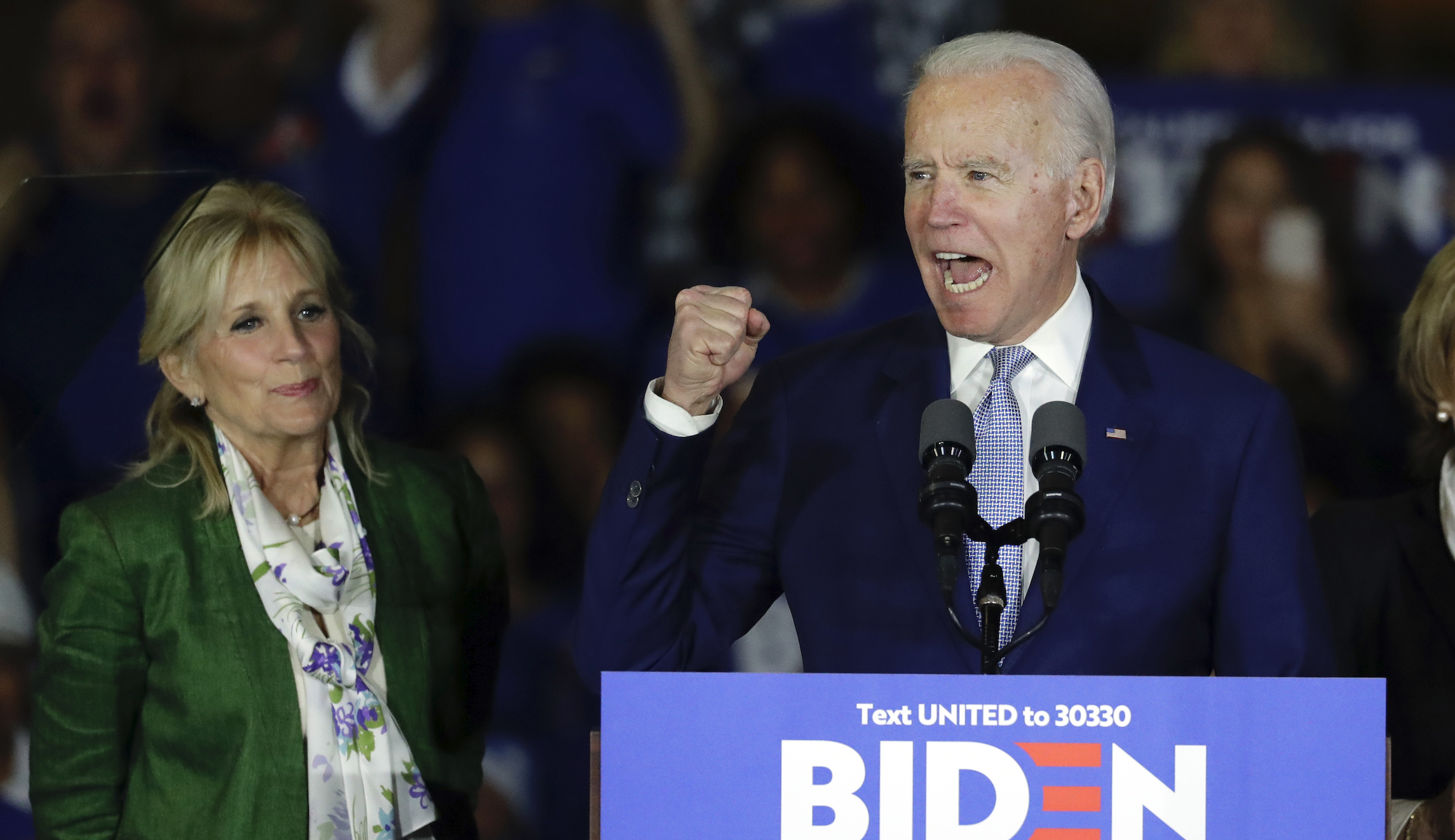
Joe Biden is leading Bernie Sanders in the delegate-rich state of Texas, adding to a dramatic reshaping of the Democratic presidential primary field that could push the former vice president back to front-runner status.
Biden is projected to win more delegates than Sanders, according to a New York Times analysis.
Recommended Stories


The former vice president cemented his place as the top centrist alternative to socialist Sanders in a remarkable comeback, while the Vermont senator had an underwhelming Super Tuesday performance.
Meanwhile, Massachusetts Sen. Elizabeth Warren and billionaire former New York City Mayor Michael Bloomberg are in trouble. Bloomberg said earlier on Tuesday that he has “no intention of dropping out,” but his team reportedly plans to “reassess” his campaign on Wednesday.
The New York Times projects that Warren and the billionaire former New York City mayor will be at about 400-plus delegates behind Sanders and Biden after final tallies.
Where state results stand:
Alabama — 52 pledged delegates: Biden won the state with 63%, with Sanders in second at 16.4%, with 89% of precincts reporting.
Arkansas — 31 pledged delegates: Biden won the state with 40.1%, with Sanders in second at 22.4%, with 93% of precincts reporting.
California — 415 pledged delegates: The Associated Press called the state for Sanders as soon as polls closed. Sanders leads the state with 28.4% while Bloomberg is in second at 18.6% and Biden has 18.1%, with 30% of precincts reporting.
About 40% of California’s primary electorate votes absentee by mail, meaning that Biden’s wave of endorsements from former rivals on Monday could have a smaller effect there. Mail-in ballots could also delay declaring a winner in the primary. The last ballots are expected to arrive in mid-March.
Colorado — 67 pledged delegates: Sanders won the state with 35.9%, with Biden in second at 22.7%, with 82% of precincts reporting.
Maine — 24 pledged delegates: Not yet called. Biden is leading with 33.8%, with Sanders in second at 32.3%, and 68% of precincts reporting.
Massachusetts — 91 pledged delegates: Biden won the state with 33.4%, with Sanders in second at 27.1% and Warren in third at 21.4%, with 83% of precincts reporting.
Minnesota — 75 pledged delegates: Biden won the state with 38.6%, with Sanders in second at 29.9%, with 96% of precincts reporting.
North Carolina — 110 pledged delegates: Biden won the state with 42.9%, with Sanders in second at 24.1%, with 96% of precincts reporting.
Oklahoma — 37 pledged delegates: Biden won the state with 38.7%, with Sanders in second at 25.4%, with 97% of precincts reporting.
Tennessee — 64 pledged delegates: Biden won the state with 41.4%, with Sanders in second at 24.7%, with 98% of precincts reporting.
Texas — 228 pledged delegates: Biden is on track to win.
Utah — 29 pledged delegates: Sanders won the state and has 35.9%, with Bloomberg in second at 17.3% and Biden with 16.4% and 28% of precincts reporting.
Vermont — 16 pledged delegates: Sanders won the state with 50.7%, with Biden in second with 22.1%, with 98% of precincts reporting.
Virginia — 99 pledged delegates: Biden won the state with 53.3%, with Sanders in second at 23.1%, with 99% of precincts reporting.
American Samoa — 6 pledged delegates: Bloomberg won the contest, and long shot candidate Tulsi Gabbard, who was born in American Samoa, won at least one delegate there.
11:59 p.m. EST: Sanders roars back with California win
10:35 p.m. EST: Warren and Bloomberg fall flat
9:33 p.m. EST: Warning signs for Sanders in Texas and Oklahoma
8:05 p.m. EST: Big night for Joe Biden in early Super Tuesday states
7:18 p.m. EST: Biden vs. Sanders race taking shape as first polls close
Results from 14 states plus the territory of American Samoa on Tuesday account for 1,347 pledged nominating delegates, about one-third of the total. A candidate needs a majority of 1,991 pledged delegates to win the nomination on the first Democratic National Convention ballot and prevent a contested convention. In the event of a brokered convention, about 770 automatic superdelegates, party leaders such as Democratic National Committee members and Democratic members of Congress, are permitted to vote for whomever they wish.
Delegates are allocated based on the proportion of statewide votes and votes within congressional districts (except for Texas, which allocates district delegates based on state Senate districts rather than congressional districts). Candidates must obtain 15% support statewide or in at least one district to earn delegates, meaning that a candidate could pick up some district delegates even if they do not capture more than 15% support statewide.
