Private schools were taking extensive coronavirus precautions. Maryland bureaucrats didn’t care.

Published August 3, 2020 12:15pm ET


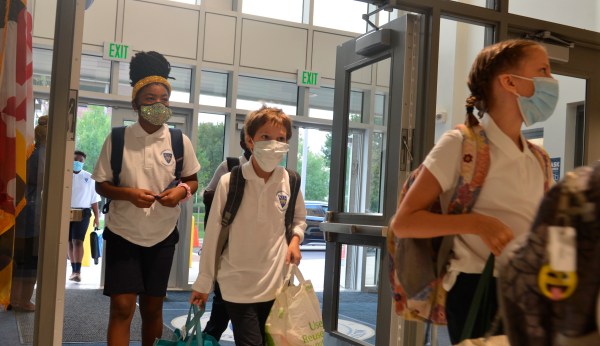
As public schools and some private schools in Montgomery County, Maryland, were deciding to keep their doors closed and resort to all virtual schooling in the fall, many private and religious schools were investing in plexiglass and air filtration systems while consulting with infectious disease specialists in order to create a way to bring students into school this fall.

County officials didn’t care. They refused to look at schools’ plans and waved off guidance from state and federal officials on their way to barring nonpublic schools from meeting in person.

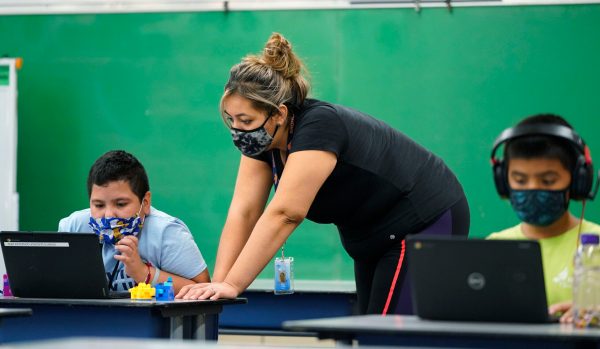
But religious and private schools were not planning to return to pre-COVID ways. They were physically reshaping their school buildings and grounds, implementing new rules, consulting with experts, and begging the county for feedback. All the while, these schools gave parents the option of remote learning.

“We’re not looking to conduct business as usual,” said Robert Gold, co-founder and executive director of the Feynman School in Potomac. “We understand that COVID is serious.”

“We were working very hard to organize and follow all the CDC rules and regulations,” said Father Mark Knestout, pastor of St. Bartholomew Church and School in Bethesda.

“We have been preparing to open with all safety precautions suggested by state, county, and the CDC,” explained Rebecca Prater, principal of the Fellowship Christian School in Germantown, Maryland. “We are committed to the safety of staff, students, and parents, and while I’m sure the county is as well, they have failed to take into account the measures we are taking to ensure the students’ and staff’s safety.”

“We put a lot of effort,” said Rabbi Yitzchok Merkin, headmaster of the Yeshiva of Greater Washington in Silver Spring. “We worked very hard. We’ve been working with experts from NIH on infectious disease. … We had a whole plan.”

“We were really trying hard to make a plan this year to keep everybody safe,” said Gold. One school mom, a pediatrician, told Gold she had “absolutely no qualms” about sending her child to Feynman considering the precautions and preparations the school was taking.

The Archdiocese of Washington gave every Catholic school in the county a 60-page book of requirements following guidelines from the Centers for Disease Control and Prevention and the State of Maryland. Each school that wanted to offer in-person instruction had to submit a plan explaining how they would do so safely. Masks, social distancing, temperature checks, altered arrival and departure rules, and plenty more was required by every Catholic school. Schools that couldn’t make a workable plan opted instead for virtual learning.

Many others made workable plans, which county officials refused to consider.

The Avalon School, an independent Catholic school in Wheaton, canceled all field trips, planned to use 5-10 entrances for dropoff and pickup. According to headmaster Kevin Davern, other precautions included “minimal time in hallways … building cleaning and handwashing … throughout the day… lunch … in small cohorts that students will stay with throughout the day.”

With smaller school size, many private schools were able to space desks all 6 feet apart in a way the average public school might not have been able to. At the Yeshiva school, plexiglass shields were installed, so that all teachers would be teaching from behind plexiglass while wearing a mask.

Officials at the Yeshiva school said they brought in “HVAC system engineers. We made sure that everyone meets the CDC recommendations for the filters. We brought them up to pristine state.”

“We have separate entranceways” for different grades, said Knestout. The plan called for windows to be left open even when air conditioning or heat was on. The school invested in disinfectant foggers and lined up more frequent professional cleaning services.

At St. Bartholomew, school leaders decided on a hybrid model. The school would meet in-person in the morning, and students would be sent home for lunch. No lunchtime meant less fraternizing, less time in the school building, and less reason for students to ever remove a mask.

At Yeshiva of Greater Washington, students would be kept in smaller cohorts to limit mixing. At St. Bart’s, students would stay in the same classroom for the whole morning.

“I understand the concerns,” Knestout said. “I have a mother who’s 90 years old, who I have not seen, except through a window, since March 5. At the same time, I still think that the children need to have this interaction, because we’re concerned about their overall health. … We’re small schools. We’re capable of following the guidelines.”

When school leaders asked Montgomery County Health Officer Travis Gayles in a conference call on Wednesday for a professional judgment on the efficacy of such measures, he blew off the questions as “niche issues,” and his answers made it clear that no course of action would be okay. No amount of space. No amount of sanitation. No amount of ventilation, limited capacity, clever use of space, personal protective equipment would matter.

In the conference call, when faced with questions about classroom safety, county officials deflected. “The time in the classroom, while challenging, wasn’t nearly as challenging as some of the other things,” county emergency official Earl Stoddard said. “Like the hallways, bathrooms, how you get meals to people. How students get into the building … if students line up or congregate outside the school, that’s another area.”

Schools had answers for this. The private schools typically rely less than public schools on buses, and many don’t have any busing at all. My children’s parish school has an exit from each classroom to the outdoors, and the school’s plan, submitted to the archdiocese, called on using these doors instead of hallways.

When school leaders asked if Gayles or the county would review their plans, he declined. Then on Friday, after sundown, Gayles announced he would bar all nonpublic schools from holding in-person instruction.

Some schools accepted the announcement. Others reacted with shock and promised to fight. “We’re working with experts,” Merkin said. “We’re complying, it’s just wrong.”