

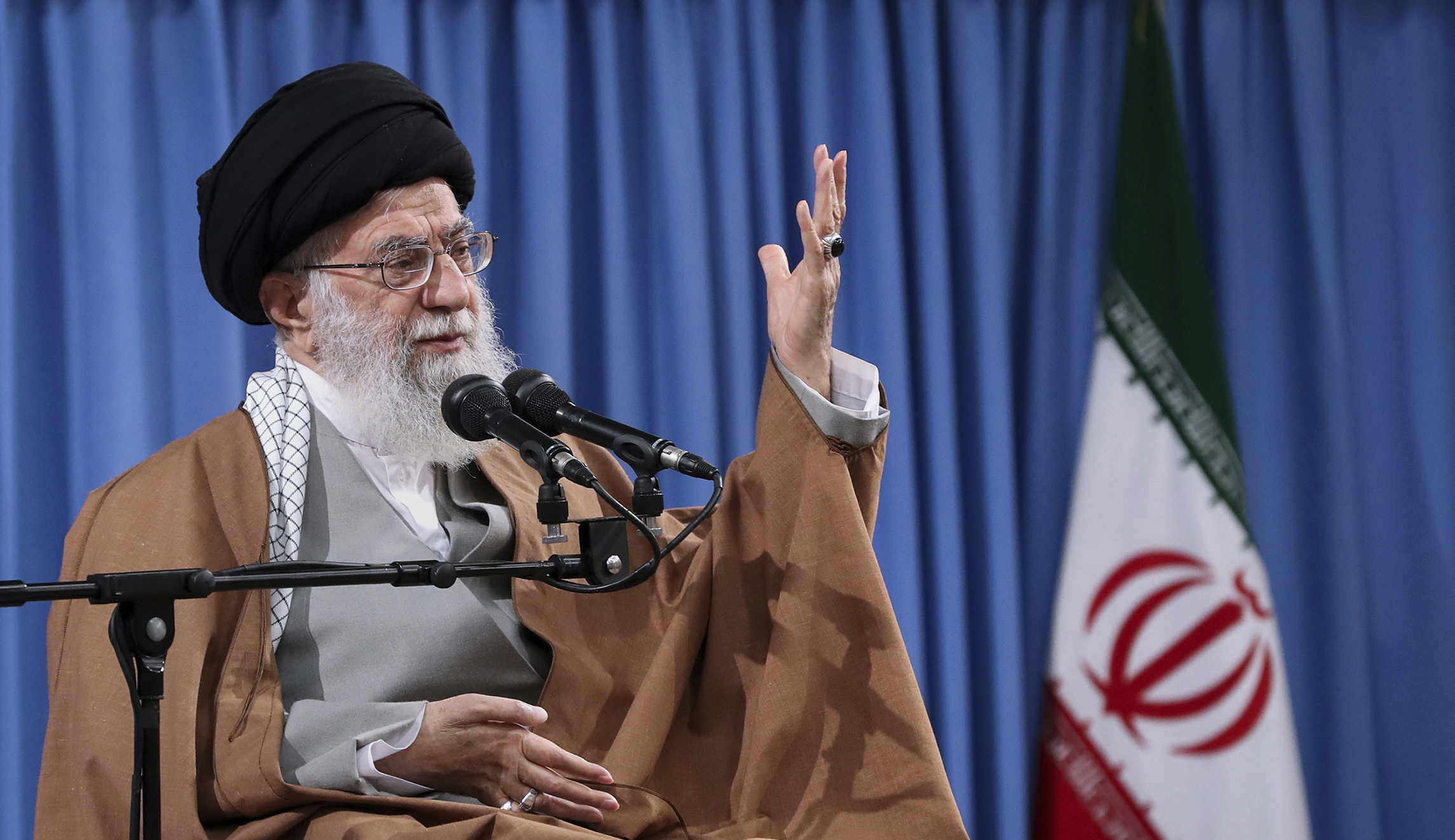
The Biden administration’s accelerating pace of concessions to Tehran suggests that the regime has once again fooled Joe Biden.
But while the Islamic Republic likes to project an image of strength, it has seldom been weaker. Supreme Leader Ali Khamenei’s inevitable death overshadows Iranian politics. While many policymakers often assume the Middle East is young, Iran is the exception: Its fertility rate continues to plummet as Iranians both defer marriage and divorce at alarming rates. A special Iranian parliamentary commission warned in November 2020 that Iran only had five years left to reverse the trend before a demographic death spiral set in. Khamenei himself has often warned about Iran’s demographic decline.
Recommended Stories


The Iranian people have shaken regime stability with increasing frequency. In 1999, nationwide protests erupted after heavy-handed security forces attacked a student dormitory after the students had protested newspaper closings. In 2001, Iranians again took to the streets after a Los Angeles-based exile television station reported that the regime had ordered Iran’s soccer team to throw a World Cup qualifier against Bahrain in order to prevent mixed-sex celebrations. In 2009, the spark was election fraud. Since late 2017, economic grievances have led to near-annual protests. Iran is a tinderbox, and the spark for each episode is different.
Could bitcoin and other cryptocurrency unleash the next wave of unrest? Yes.
At the end of last week’s Cabinet meeting, Energy Minister Reza Ardakanian told reporters, “Electricity is an important issue these days,” he continued, “Early heat, a decline in hydroelectric generation, and cryptocurrency have all caused problems.”
Specifically, desperate Iranian bitcoin miners are siphoning off up to 10% of Iran’s total electricity output. In the short term, Ardakanian says Iran will reduce or perhaps even cut off electricity exports to its neighbors. The Iranian government has also cracked down on miners and confiscated equipment.
Traditionally, however, ordinary Iranians take their chances defying government crackdowns on technology. Satellite TV, for example, has long been illegal, but ever-shrinking dishes have enabled Iranians to hide their reception, and those who do get caught often either put up with the confiscation or do the Iranian equivalent of “fixing a ticket” by calling upon classmates, friends, or family who work inside the bloated bureaucracy to help make the problem disappear. Likewise, Iranians have long ignored prohibitions on social media and outside news organizations by using VPNs.
The problem the Iranian government faces with cryptocurrency miners is not only that they consume tremendous amounts of electricity but that inflation and Iran’s moribund economy make the risk worth it. The regime’s subsidies on electricity encourage the process and, while Ardakanian did not mention it directly, the fact that the Islamic Revolutionary Guard Corps remains immune from domestic law means that the government’s measures to stop the phenomenon will not work when and if the guards are involved.
Should bitcoin mining continue or increase, the roving blackouts affecting major Iranian cities will continue. Should the government reduce or end subsidies to disincentive the practice, however, ordinary Iranians will be hit hard. The result is a lose-lose proposition for the government that coincides with the hot summer months.
Culturally, not only regime officials but also ordinary Iranians see themselves as superior to the peoples around them. That they increasingly have a less stable electrical grid than many of their neighbors is a tough pill to swallow and heightens the sense of regime failure. Unfortunately, for the regime, any action it takes to remedy the situation, a more serious crackdown or an end to subsidies, could provide the spark that leads to the next mass protest.
Michael Rubin (@Mrubin1971) is a contributor to the Washington Examiner’s Beltway Confidential. He is a senior fellow at the American Enterprise Institute.
