

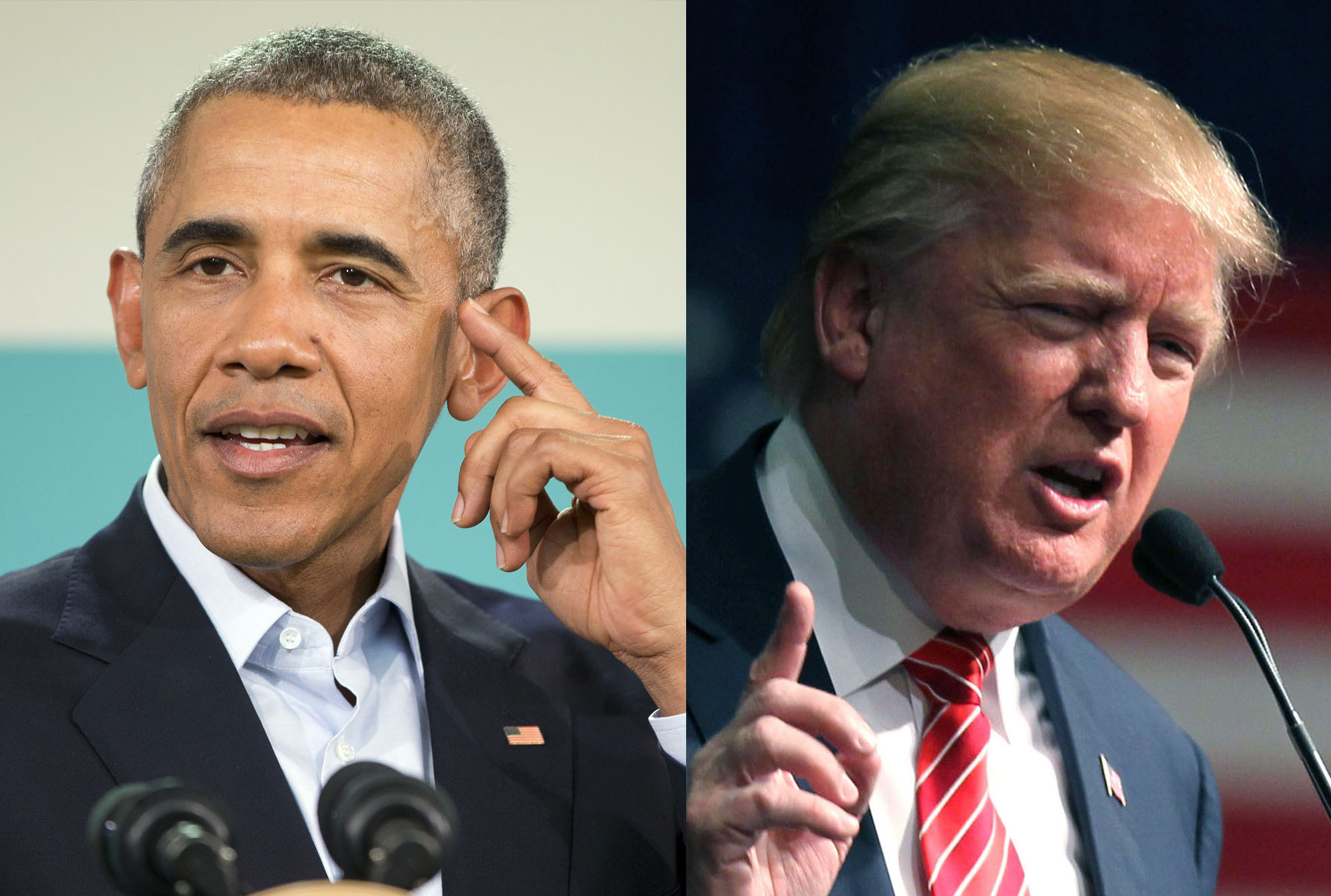
The Trump administration admits that by picking winners with a trade war, it has also created losers. The White House’s response: Just subsidize the losers to make up for it.
Trumponomics, it turns out, is largely the same as Obamanomics.
Recommended Stories


Trump ran for president promising to bring back factory jobs. His primary weapon in this fight is taxes. “Tariffs are the greatest,” he tweeted, celebrating taxes on American consumers. Sure enough, U.S. aluminum producers and steel producers have applauded Trump’s aluminum and steel tariffs, which allow them to get higher prices for their product. American makers of washers and dryers also liked the washer and dryer tariffs Trump announced in January.
Similarly, President Barack Obama was able to help companies with taxes and regulations that protected them, with bailouts that rescued them, with a stimulus that subsidized them, and with massive federal programs that padded their profits.
General Electric, Chrysler, Goldman Sachs, Netflix, Boeing, H&R Block, Solyndra, and many other companies benefited, if fleetingly, from Obama’s big-government policies. Conservatives and Republicans generally didn’t applaud these “pro-business” policies even though they created jobs at these favored companies.
Instead, Republicans rightly charged Obama with “picking winners and losers.” That is, for every company Obama propped up or tried to prop up with government intervention, he created victims. Obama’s loan guarantees to Boeing’s overseas customers caused harm to U.S. airlines competing with them. Obama’s regulations to protect H&R Block would have harmed Mom & Pop preparers. Obama’s subsidy to Solyndra cost the taxpayers.
On the flip side, conservatives objected to Obama’s taxes and regulations, pointing out that they would hurt businesses. Obamacare required insurers to cover all comers for all conditions, and stripped them of the ability to charge according to risk. Obama’s response: Hey, he was also helping those same companies. To keep insurers from going out of business, Obama paired these restrictions with subsidies: the individual mandate and a bevy of handouts and built-in bailouts such as “risk corridors.”
Under Obama (though due to a law President George W. Bush signed), a General Electric light bulb factory in Virginia shut down. Also under Obama, GE got subsidies for its battery plants, its rail car factory, and its electrical generation plants, among others. The net result: GE replaced market-supported jobs with government-supported jobs.
GE CEO Jeff Immelt heralded the Obama era with a shareholder letter declaring the “reset” of capitalism. “The interaction between government and business will change forever. In a reset economy, the government will be a regulator; and also an industry policy champion, a financier, and a key partner.”
Tax them, regulate them, subsidize them, bail them out.
This was the clear and deliberate structure of Obamanomics. Fewer profits were to be earned separate of government. More profits were to be earned in partnership with government.
That’s where Trumponomics is headed. Trump’s tariffs on China have spurred Chinese tariffs on American soybeans. “No problem,” Trump declares, “we’ll just use a New Deal law to subsidized soy bean farmers.”
But the steel and aluminum tariffs also create victims more directly, including carmakers who have to pay more for their inputs. Will Trump really let the auto workers of Detroit suffer, or will he throw them a government lifeline, too?
Hurting a company with Big Government Policy A and subsidizing it with Big Government Policy B doesn’t bring us back where we started. It leaves businesses more dependent on government. It makes their profits more contingent on the good will of politicians. It pressures them to invest more in lobbyists, and thus less in innovation.
Also, forcing business to run the government gauntlet tilts the playing field toward the big guys who can afford the lawyers and lobbyists.
All of this hurts the economy and denigrates the pursuit of profit by making it a question of gaming the political system.
Empowering politicians and lobbyists isn’t draining the swamp. It’s not helping the economy. It’s adopting Obamanomics, just picking different winners.
