


Welcome to Byron York’s Daily Memo newsletter.
Was this email forwarded to you? Sign up here to receive the newsletter.
BIDEN BEGS REPUBLICANS TO RESIST TRUMP. One of the most effective things Donald Trump did to cement the support of Republicans during the 2016 campaign was to release a list of candidates from which he would select a Supreme Court nominee. Trump promised to choose a name from the list. He kept the promise and won the deep loyalty of many conservatives for whom the Court is a top issue.
Recommended Stories



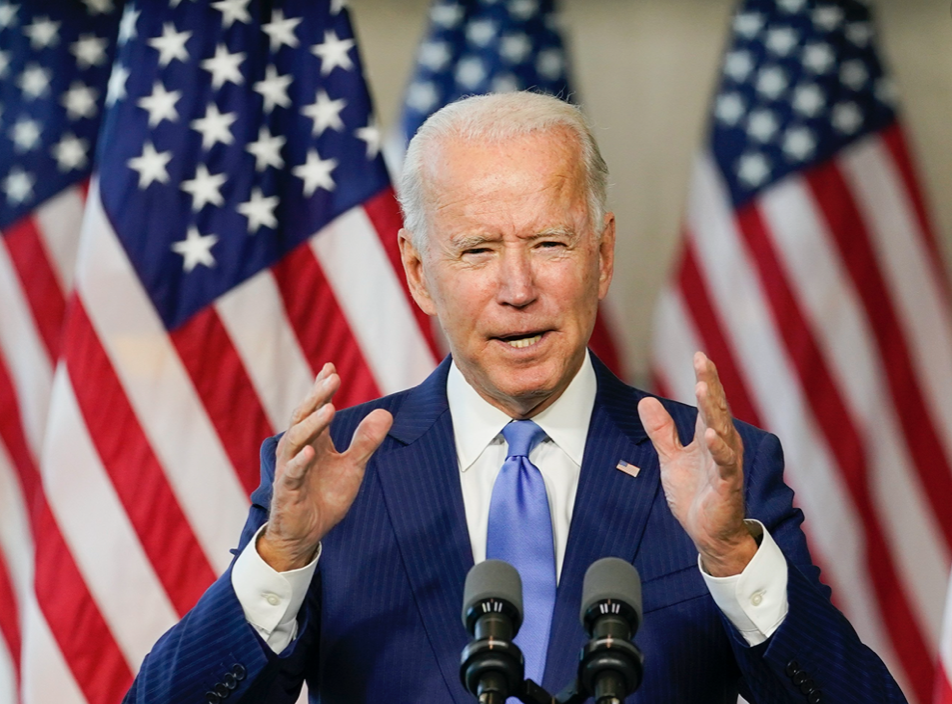
So now, what about Joe Biden? Even before the death of Ruth Bader Ginsburg, there had been speculation over whether the Democratic nominee would reveal who he would nominate for the Supreme Court if he is elected president. On Sunday, Biden made his SCOTUS strategy clear. He will not release a list of choices for the Court, but he will plead with his old Republican colleagues in the Senate to blockade the president of their own party.
“I appeal to those few Senate Republicans — the handful who will really decide what happens — don’t vote to confirm anyone nominated under the circumstances President Trump and Senator McConnell have created,” Biden said Sunday afternoon. “Don’t go there. Uphold your constitutional duty — your conscience. Cool the flames that have been engulfing our country.”
Subscribe today to the Washington Examiner magazine that will keep you up to date with what’s going on in Washington. SUBSCRIBE NOW: Just $1.00 an issue!
But of course, one doesn’t have to go far back to see Joe Biden saying something different. In 2016, when Justice Antonin Scalia died unexpectedly and the Republican-controlled Senate declined to consider President Obama’s nomination of a replacement, Biden spoke passionately in favor of quick Senate consideration of nominees. Referring to his years as Senate Judiciary Committee chairman, Biden said, “I made it absolutely clear that I would go forward with the confirmation process, as chairman — even a few months before a presidential election — if the nominee were chosen with the advice, and not merely the consent, of the Senate — just as the Constitution requires.”
Other top Democrats demanded that the Senate consider Obama’s nominee, Merrick Garland, even though 2016 was an election year. That shouldn’t have anything to do with it! they argued. Now, media attention is focusing on Republicans who stopped Garland back then but will consider Trump’s nominee now. They’re hypocrites! But in court nominations, hypocrisy has always — always — been a two-say street. And also remember that Senate Republicans made clear that his blockade of the Garland nomination was based on the fact that the White House and Senate were under the control of different parties.
“The most careful articulations of the Republican position in 2016,” writes National Review, “held that when a Supreme Court vacancy arose while the White House and Senate were controlled by opposite parties and a presidential election was coming soon, the vacancy should be filled by the winner of that election. In short, the voters should be asked to break the deadlock between two branches they elected.”
Here is an even simpler view: The party in control of the Senate decides what happens in the Senate. The most important thing to remember about the Senate is that it can be a brutal place. Yes, senators engage in lots of niceties about “my distinguished colleague from so-and-so” and call each other “my good friend from so-and-so,” but the fact is, when something important is on the line, it is a bare-knuckles place. It has gotten even more so since the former Majority Leader Harry Reid blew up the filibuster for nominations in 2013. The majority rules.
A lot of Republicans see this in very simple terms. The GOP controls the White House. The GOP controls the Senate. Therefore, President Trump can nominate, and the Senate can confirm, a Supreme Court justice. Look for them to do just that.
