Border Patrol chief during 2000s migrant peak cites three ‘crises’ now

David Aguilar is no stranger to a border crisis.

President George W. Bush tapped him in 2004 to lead the U.S. Border Patrol as the agency wrestled with reining in what was at that point the highest-ever number of illegal border crossers from Mexico into the United States. At that point his 12,000 agents were taking 1.2 million people into custody annually. And that was down by 25% from four years prior. In 2001, 1.6 million unauthorized immigrants were stopped at the border that year, the most since 1925.

The numbers continued to fall under his tenure, during which he was promoted to acting Customs and Border Protection commissioner by former President Barack Obama. By the time he retired in 2013, annual border apprehensions had shrunk to less than 400,000.

Looking to 2019, Aguilar says the situation unfolding on the southern border is not only a “crisis,” as the Trump administration coined it last year, it’s three crises.

In a recent phone interview with the Washington Examiner, the former national border chief said he sees a humanitarian crisis, an operational crisis, and a political crisis.

[Related: More than 90,000 apprehended for illegally crossing southern border in March]

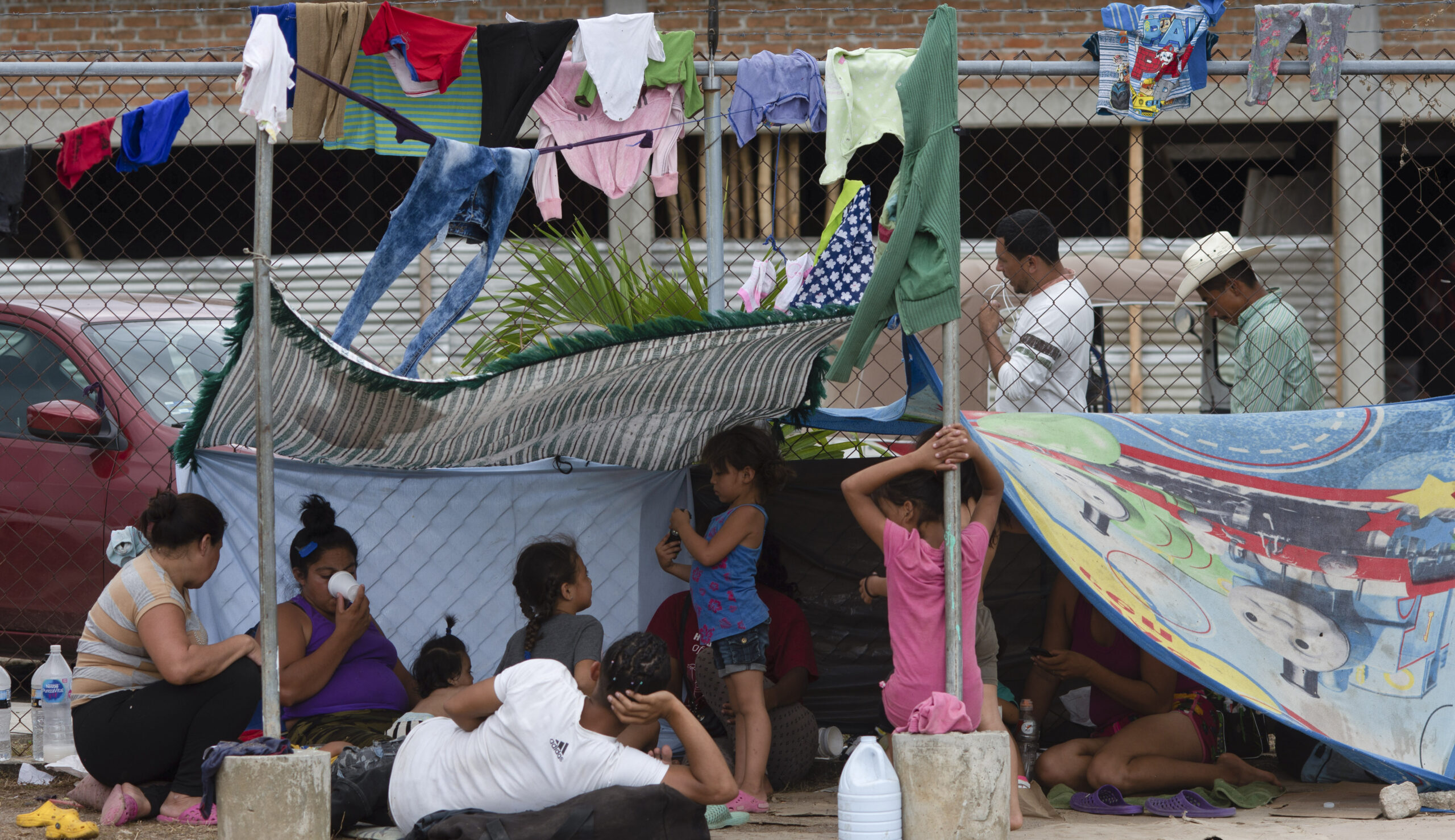
The humanitarian crisis has to do with the reason hundreds of thousands of Central Americans have fled their home countries, just this year.

“This is not just a U.S. problem. This is not just a U.S. and Mexico problem. This is a North America problem,” said Aguilar. “We need to address the rule of law. Asylum law needs complete reworking.”

Aguilar also wants to see a major uptick in the number of immigration judges on the southern border so that asylum seekers can be processed much quicker than the two to five years a case currently takes. Presently, 400 judges take cases and the Trump administration has requested additional funding to bring that number to 634 by fiscal 2020.

Migrants coming to the U.S. may still legally seek asylum even after illegally entering the country. However, a 2015 court ruling in the Flores settlement agreement determined families could not be held more than 20 days. Aguilar wants to see that 20-day rule amended and Immigration and Customs Enforcement build up its residential facilities to hold families who are seeking asylum.

The operational crisis is the result of an overwhelmed agency, Aguilar said. Migrants are “distracting” agents from their normal workload, according to Aguilar. Up to 60% of agents in some regions are having to be redirected from enforcement and security posts to transporting people to hospitals and processing people who have arrived in large groups, Rio Grande Valley Chief Patrol Agent Rodolfo Karisch testified before the Senate Homeland Security and Governmental Affairs Committee Tuesday.

Customs and Border Protection estimated its agents have spent more than 49,000 hours facilitating medical trips and watching patients while they are in hospitals during this two-month span. The loss of agents working in law enforcement roles is equivalent to the 2,000 hours worked by 25 border patrol agents in a year.

“If they’re focused on handling this demographic of illegal flow, everything else is being ignored — narcotics, bulk cash, weapons, criminal organizations, they’re having a field day out there. Are you aware that Border Patrol checkpoints are not being operated? The highways are open,” he said.

“Officer presence at ports of entry is being scaled down. Well, heck. That opens up opportunity for more narcotics, more illegal traffic coming through ports,” he said.

Third, Aguilar said the politics of the border situation is preventing lawmakers from moving in ways they could help.

“We need a unified effort … this goes way beyond Congress. Frankly, we need to get beyond party politics,” Aguilar said. “The inaction on the part of Congress does not provide the requirements that the Border Patrol has right now in order to address the situation in the way it needs to be addressed.”

“I would urge every American to think about the situation that our border security is in now because there is so much effort being put into this flow — it [security] is degraded,” he continued. “It has degraded the Border Patrol’s ability to carry out their enforcement capabilities.”

Related Content
