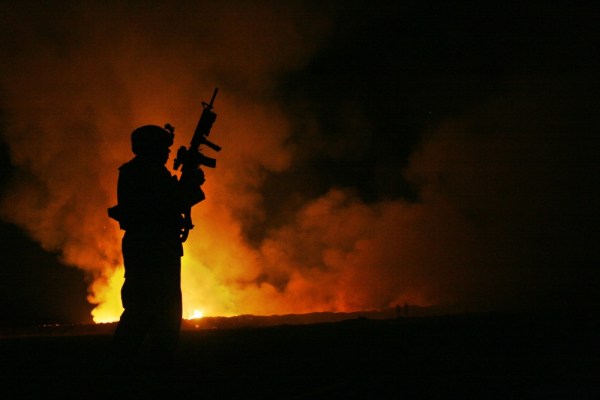
With one Afghanistan War veteran dying every 25 days, several senators have recently taken an interest in the 10,000 service members who deployed to a deeply contaminated Uzbek air base called “K2” that served as a staging ground for the invasion of Afghanistan after 9/11.
“We know that K2 was the sight of open burn pits and also of depleted uranium,” Sen. Marsha Blackburn told the Washington Examiner. The Tennessee Republican, elected to the Senate in 2018 after 16 years in the House, noted her many Fort Campbell veteran staff members brought the issue to her attention.
Both the 5th Special Forces Group and the 160th Special Operations Aviation Regiment that deployed to the contaminated former Soviet base in Karshi-Khanabad, Uzbekistan, were based at the Army garrison that she represents, on the Tennessee-Kentucky state line.
“It is frustrating to me to see that it has taken time,” Blackburn said of the 19-year delay in guaranteeing healthcare to the first responders after the Sept. 11, 2001, terrorist attacks.
Blackburn’s K2 Veterans Toxic Exposure Accountability Act closely mirrors legislation introduced by her House colleague, Tennessee Republican Rep. Mark Green.
Green is one of the veterans who set foot on the remote K2 base on flights from Bagram Air Base.
“I was stationed there. These are my brothers,” he told the Washington Examiner. “I went to combat with these guys, and they’re dropping like flies from cancer. We’ve got to fix this.”
Green and Massachusetts Democratic Rep. Stephen Lynch first brought the K2 veterans saga to national attention with legislation and a February hearing by a K2 widow and veterans who had suffered rare cancers and chronic ailments ranging from severe headaches to never-ending gastrointestinal problems.
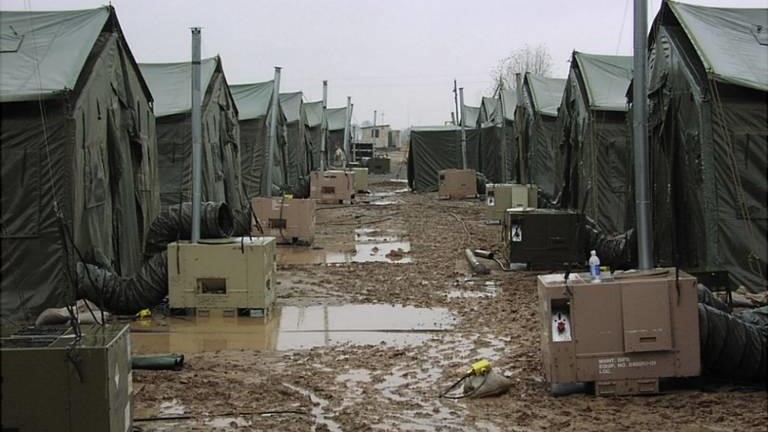
“It was a remote place,” Green recalled of K2.
“They build up these little huts, and they build them over the, unfortunately, earth that was covering, you know, some pretty toxic stuff,” he said. “So, plywood buildings and tents, a typical forward operating base.”
VA pushes back
The flurry of bills in recent days follows a failed effort in the House to add a comprehensive amendment to the National Defense Authorization Act that would have assured that K2 veterans who faced known toxic and radiological exposures at K2 get the healthcare they need.
“We were working with Green’s office after the shellacking in the House, but we had low expectations,” said Mark Jackson, a K2 veteran who serves on the Stronghold Freedom Foundation and has been part of the intense legislative push.
Jackson told the Washington Examiner that pressure from the Department of Veterans Affairs stripped language regarding presumptive conditions from an NDAA amendment in the House and ultimately gutted it from the bills under consideration.
“The fact that there is any legislation speaks to the enormity of the oversight committed by the DoD and VA in the years since K2 closed,” he said.
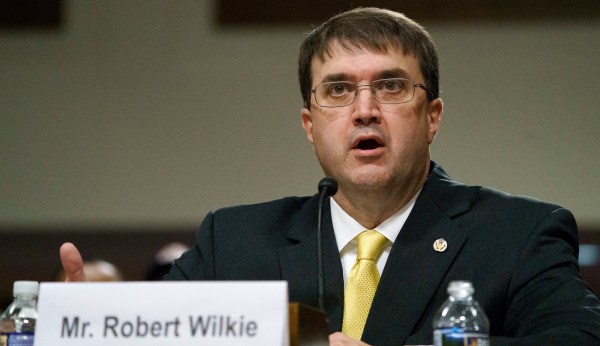
VA Secretary Robert Wilkie told the Washington Examiner in July that the VA does not deny care to sick veterans.
“We don’t want our veterans to go through what Vietnam veterans went through in terms of not knowing,” Wilkie said in a July press call. “Now, the Congress does have to change legislation.”
In April, the VA agreed to study the ailments suffered by K2 veterans. Initial findings are expected in 12 to 18 months, but the study would not change the VA policy regarding pre-screenings of veterans who might have early-stage cancers.
Recently declassified Department of Defense surveys from the 2001-2005 time when K2 was used reveal that the Pentagon knew that the base was unsafe.
Watering down the bill
Jackson said the Blackburn legislation had included the three tenants most needed by K2 veterans: requiring a DoD epidemiological study, adding K2 veterans to the VA’s Burn Pits Registry and depleted uranium follow-up program that afford them specific healthcare, and the presumptive condition language.
“The VA strongly objects to its addition, and I fear that will be removed,” Jackson said of the presumptive condition language. “My assumption is that such a measure has a dollar amount attached to it.”
When Green spoke to the Washington Examiner, the language was still in the bill.
“The key piece of this is that presumption, right? Because with the presumption, the soldier gets care,” said Green. “We got to get that, or this is all worth very little.”
By late Tuesday, the presumptive condition language had also been stripped from the Blackburn bill. What remains has the best chance of passing as an amendment to the NDAA, said staffers.
Over the last several days, a coterie of other senators had offered K2 legislation, building pressure to get K2 veterans as much help as possible.
The first K2 bill was dropped by Alaska Senator and Marine Corps veteran Dan Sullivan Thursday.
A pair of Democratic senators, Richard Blumenthal of Connecticut and Tammy Baldwin of Wisconsin, followed with their own bill on Friday. New York Democratic Sen. Kirsten Gillibrand filed one Monday, and Sens. Blackburn and co-sponsors Baldwin and Dianne Feinstein, a California Democrat, filed legislation Tuesday.
“People are looking around, they’re seeing an awful lot of cancer and other really horrible diseases that are coming out of K2,” an aide to Alaska Sen. Dan Sullivan told the Washington Examiner.
“We’re trying to right a situation that in a perfect world would have been looked at a number of years ago,” she added.
But not all the bills are complete, said Jackson.
The Gillibrand bill includes Uzbekistan on registry lists, while the Sullivan bill does not put the epidemiological study burden on DoD.
Green argues mandating DoD will fast-track help to vets.
“Ours makes it happen in 6 months. Sullivan’s is 2 years,” he said.
New epidemiological studies would give the VA the evidence they require to pre-screen veterans for certain cancers.
“Getting DOD to do this study and to make an assessment on any possible exposures between these toxic substances and negative health consequences, that is important,” Blackburn said.
She added: “This has brought a little bit more attention to the issue of chemical or radiological exposure that is experienced by our men and women in uniform.”