

A humanitarian effort founded by a German clean energy firm launched a first-of-a-kind project in Puerto Rico on Thursday, aiming to make the island’s energy grid impervious to hurricanes and hopefully get some buy-in from Washington.
“If this had existed a year ago, it would have been life-changing for Puerto Rico following Hurricane Maria,” a project principal told the Washington Examiner in an interview previewing the announcement.
Recommended Stories


The “Lighthouse Project,” as it is called, was initiated by the del Sol Foundation for Energy Security, which was founded by the U.S. branch of the German clean energy firm sonnen, Inc., to oversee the construction of “humanitarian microgrids” as part of a Puerto Rico relief effort initiated last year.
The plan is to link 3,000 places of worship, schools, hospitals, and other venues to a so-called microgrid, which is essentially a self-sustaining energy system that is more resilient than a conventional electric grid.
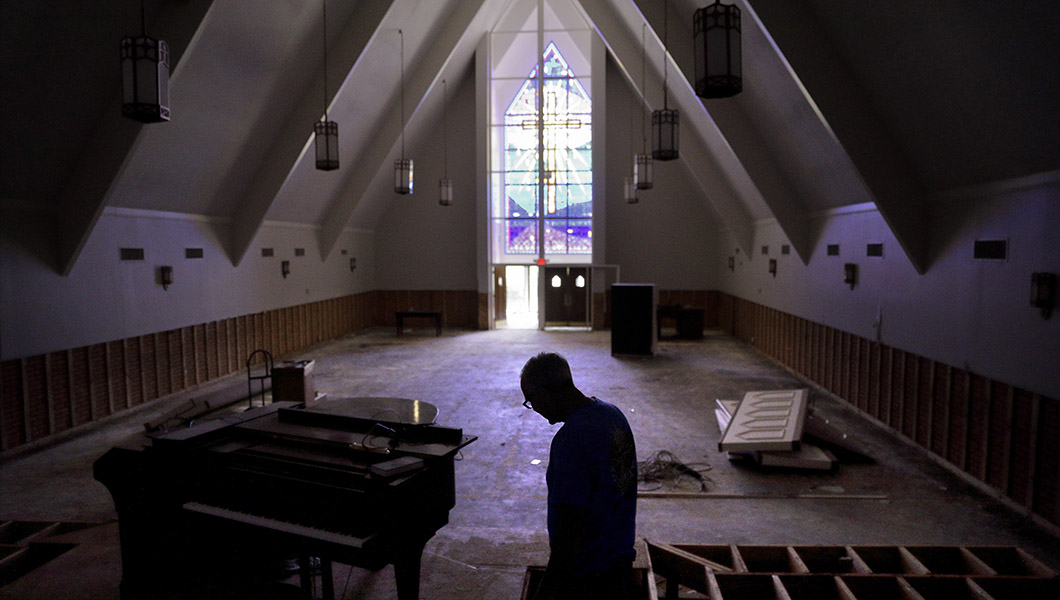
The effort will begin by deploying solar and battery storage at 500 churches, essentially turning the places of worships into power plants that can sustain the nearby communities where they reside.
By tying together enough of these microgrids, the hope is that Puerto Rico can bounce back faster if another storm like Hurricane Maria strikes the island again. The project developers say they expect to build out the first several hundred microgrids very quickly. Del Sol already has 12 proof-of-concept grid projects up and running.
[Also read: Trump claims Puerto Rico death toll estimate is wrong, says Democrats inflated the numbers to ‘make me look bad’]
Del Sol’s advisers hope to get some assistance from the Trump administration, although it is not clear if or when that will happen.
Henry Lozano, deputy assistant to former President George W. Bush, who serves as an adviser on the project, said Lighthouse would be impossible without the faith-based initiative offices set up under the Bush administration.
“In every municipality in Puerto Rico there is a faith-based office, so you actually have boots on the ground,” said Lozano in explaining how the project would be coordinated using those offices. “The time that it would have took to bring together a large group to try to figure out where this was going to go and how this was going to happen was going to be too complex.”
But those offices only speak for Puerto Rico, and not Washington or the Trump administration.
During the Bush administration, Pastor Anibal Heredia led the charge to implement the president’s faith-based directive in Puerto Rico by setting up offices and faith directorates within the government there.
Lozano is working to further coordinate that effort with the faith-based offices that still exist within every Cabinet-level agency in Washington, he said. Lozano has been in talks with the faith-based offices in Washington about joining in support of the Lighthouse Project, but it isn’t clear if the administration will join.
There is also the fact that President Trump has been touting a plan he is developing to support coal power plants, and has criticized solar and wind energy.
Still, Lozano is optimistic. “There has been an awful lot of communication going on within the agencies,” he told the Washington Examiner in an interview last month. “We have still in place in every cabinet office in the United States faith-based initiative offices.”
Lozano is working with them on “how they could venture into Puerto Rico and champion a cause with Puerto Rico at the helm, and do some incredible technical work, as well as design work.”
Pastor Heredia is working with Puerto Rico lawmakers to bring together the faith-based “summit” to underscore the project’s benefits.
But that summit would benefit more if there was an “infusion of leadership” from Washington, Lozano said. The summit will likely occur toward the end of September.
The project announcement came as President Trump prepares for the impacts of Hurricane Florence. Trump raised eyebrows on Tuesday by saying his administration’s response to Puerto Rico after last year’s hurricanes was an “unsung success.” Puerto Rican leaders almost immediately came out to refute his claim.
It took nearly a year to fully restore the island’s electricity service. But Trump argues that any delays in getting the U.S. territory’s power grid up and running was due to the poor state of affairs with regard to the island’s utilities.
[More: Trump says feds succeeded in Puerto Rico despite ‘totally incompetent’ San Juan mayor]
Trump told reporters on Tuesday that the “problem” with Puerto Rico is that the electric grid and the electric generating plants there were “dead before the storms ever hit.”
“It was in very bad shape, it was in bankruptcy, had no money,” he said. “And when the storm hit, they had no electricity essentially before the storm, and when the storm hit, that took it out entirely.”
