

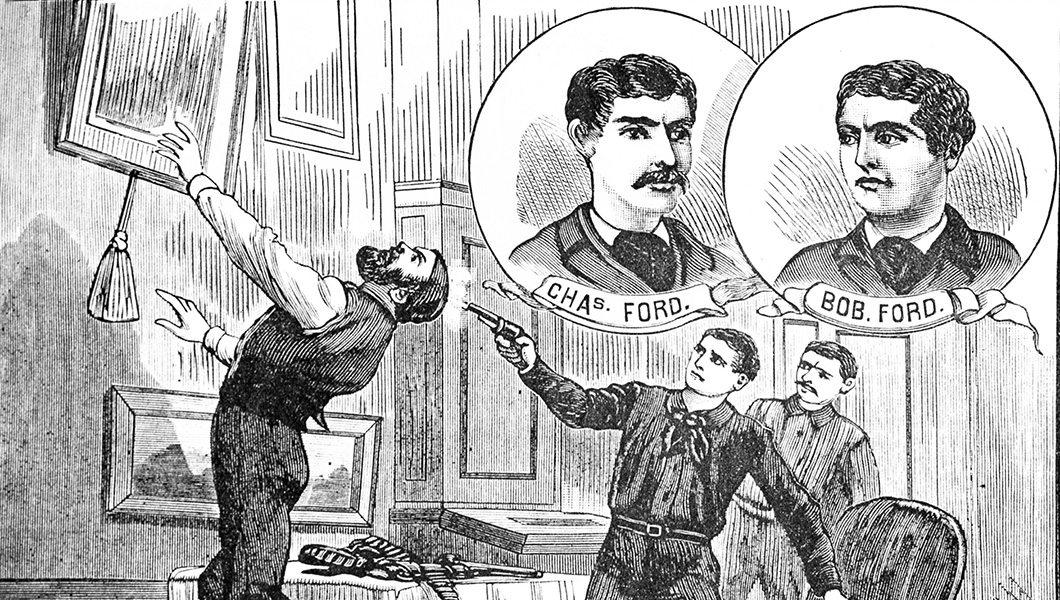
April 3, 1882, was a bad day for Jesse James. A very bad day, in fact.
I’ve always been intrigued by his killing. It happened in my birthplace. St. Joseph, Mo., the place “where the Pony Express began and Jesse James ended.” My great-grandfather Elisha Powell even got a postmortem peek at the famous outlaw when James’ body was on public display there.
Recommended Stories


I don’t have a rosy, romanticized view of Jesse James. He put good men in the ground and stole money from innocent people. Murderous thievery doesn’t make one a hero. Still, there was a sad quality to his death and an odd poetic justice for the man who dispatched him to the hereafter, too. Let me tell you about it.
The heat was on back in the early spring of 1882. Jesse and family were laying low in a small house in St. Joe. He rented it under the name Mr. Howard, an alias he’d used before. The James Gang had fallen on hard times and Jesse was trying to (in modern terminology) “put the band back together” for a criminal comeback. But with many original members dead or in prison, it was time for new blood.
Brothers Bob and Charley Ford were in their early 20s. They were also snakes. While they were worming their way into Jesse James’ world, they were also secretly negotiating with Missouri’s governor for the $5,000 reward on James’ head. A deal was cut: Kill James and get the cash, plus a full pardon.
April 3, 1882, was an unusually warm Monday. After finishing breakfast in the little rented house, James noticed a picture was hanging crooked on a wall. With his guns resting on a nearby table, he was straightening it when Bob Ford shot him from behind.
Jesse James was no hero, but shooting an unarmed man from behind was the ultimate in cowardice. Conspiring to collect $5,000 for it added a Judas Iscariot quality, too.
But while Jesse James’ story was over, Bob and Charley Ford’s tale was just beginning. They wired the governor to collect their ill-gotten gain, then surrendered themselves to authorities. Imagine their surprise when they were indicted for murder, tried, found guilty, and sentenced to hang, all in just one day!
Two hours later, the governor spared them from the gallows with a full pardon. But he ripped them off on the reward by paying only $500, a far cry from the $5,000 they were promised. (Thievery wasn’t limited to outlaws back then.)
It was all downhill from there for the brothers Ford. Killing a celebrity made them celebrities as well, but in a bad way. Bob was viewed much like John Wilkes Booth, who also shot Lincoln from behind. Even people who loathed Jesse James felt he didn’t deserve an ending like that.
Bob and Charley tried to cash in on their new-found fame. Bob posed for pictures in cheap arcades, a forerunner to pay-per-view. The brothers re-enacted the shooting on stage, but the audience’s dislike of them and their inability to act doomed the show. Two years later Charley, riddled with tuberculosis and addicted to morphine for the pain, committed suicide. Bob Ford stumbled from job to job. He opened a saloon in New Mexico Territory, tried his hand at being a policeman in Las Vegas, and finally wound up in Colorado, where he launched another saloon. When it burned down, he reopened in a tent. Then it was on to yet another saloon in yet another town.
He was working in it on June 8, 1892, when a man walked in and said, “Hello, Bob.” As he turned around, Edward O’Kelly fired both barrels of a double barrel shotgun, killing Ford instantly. O’Kelly became known as “The Man Who Killed the Man Who Killed Jesse James,” until he himself was killed in 1904 while trying to shoot a policeman in Oklahoma City.
That’s how the bloody string of connected killings finally ended. You never know what chain of events your actions can set in motion, nor can you predict how and when they will stop.
J. Mark Powell (@JMarkPowell) is a contributor to the Washington Examiner’s Beltway Confidential blog. He is a former broadcast journalist and government communicator. His weekly offbeat look at our forgotten past, “Holy Cow! History,” can be read at jmarkpowell.com.
