

While many medical experts warn that the worst of the coronavirus pandemic is yet to come, President Trump is already looking ahead to the recovery on the horizon. “There’s tremendous hope as we look forward and we begin to see the light at the end of the tunnel,” Trump told reporters. “Stay focused and stay strong. And my administration and myself will deliver for you as we have in the past.”
This is a long way from “American carnage,” a theme of Trump’s sometimes pessimistic inaugural address. Pundits regularly describe the president’s speeches as “dark,” “militant,” or “divisive,” and Trump has been warning about national decline, usually due to foreign malfeasance, since at least the 1980s. But a certain defiant self-confidence and optimism have also long been Trump hallmarks, with the coronavirus the latest example of him trying to will himself to success.
Recommended Stories


“Multiple times on the phone with him when I worked with him, there was some major crisis, and he said, ‘We’ll get through it. It will be nothing,'” former Trump aide Sam Nunberg said. “Since the early 1990s, he’s always been an eternal optimist.”
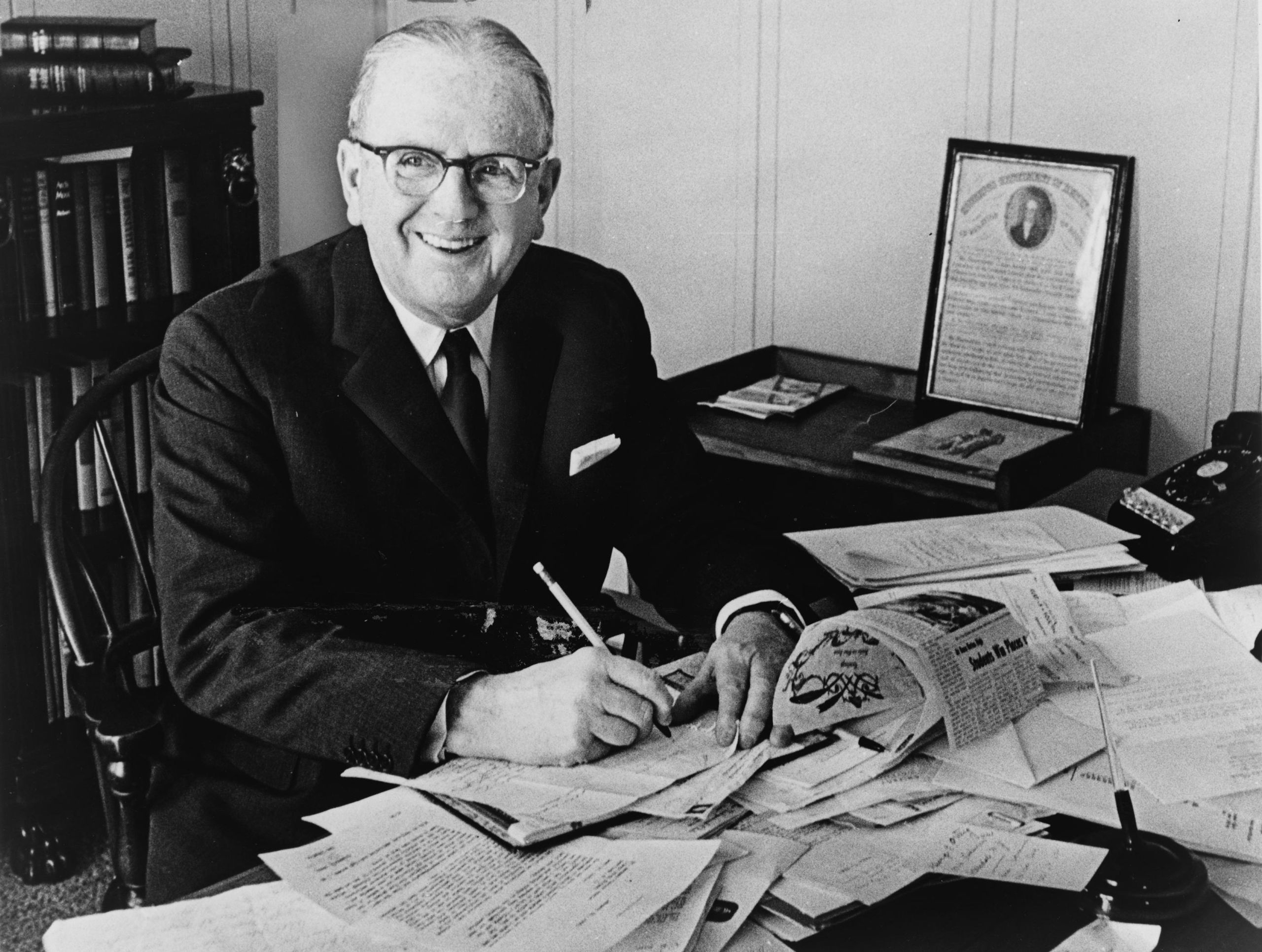
Trump’s belief in “the power of positive thinking” goes back further than that. Young Trump and his parents attended Marble Collegiate Church, led by Norman Vincent Peale, who, in 1952, published an influential New York Times bestselling book by that title. Trump’s first wedding was held at that church, as were his mother’s and father’s funerals. Known as “God’s salesman,” Peale peppered his preaching with self-help advice similar to later secular gurus such as Tony Robbins. “Believe in yourself!” Peale’s book begins. “Have faith in your abilities!” Chapters include “Expect The Best and Get It” and “I Don’t Believe in Defeat.”
The future president certainly took this advice. “Actually,” Peale claimed, “it is an affront to God when you have a low opinion of yourself.” Trump, who once said that he could not recall ever asking God for forgiveness, has avoided that sin. Trump biographer Gwenda Blair went so far as to describe Peale as teaching the man in the Oval Office to worship himself.
“I still remember his sermons,” Trump said of Peale to the socially conservative Iowa Family Leadership Summit. “You could listen to him all day long. And when you left the church, you were disappointed it was over. He was the greatest guy.” When the organized religious Right was slow to embrace the twice-divorced, thrice-married, formerly pro-choice reality TV star, often preferring Texas Sen. Ted Cruz, Trump filled the gap with endorsements from Peale-like “prosperity gospel” preachers.
Before entering politics, Trump applied these lessons to business. “In the early ‘90s I was in a ton of debt. I had gone from the smartest guy in town to a complete zero,” he wrote in his 2008 book Think Big. He recalled walking into a room full of depressed company accountants. To brighten the mood, he began talking about future investments he then lacked the money to make. “I went into detail about them, painting a vivid picture of success,” he continued. “My accountants all acknowledged later that they thought I had actually flipped out.”
“You know, all of my life, people have told me bad stuff could possibly happen,” Trump wrote, citing “market crashes” and “diseases” as examples. “The truth is I don’t think of anything except what I have to think about to do a great job.”
Will this approach work for the coronavirus, where Trump’s early predictions downplaying the outbreak have already been proven wrong? “President Trump has chosen to project optimism, eyeing Easter as a possible target to begin a return to normalcy, as well as being an ever-present force in the media,” said Ford O’Connell, a Trump-friendly political analyst and former Florida GOP congressional candidate. “In many ways, Trump is beginning to execute a playbook that is similar to what made him a success in the private sector — if you bet on Trump, eventually everything will be fine.”
“Optimism is infectious and sorely needed,” said Republican strategist John Feehery. “I am glad that the president is trying to put this in a broader perspective, trying to push the bureaucracy to move quicker and trying to push back on the negativity that is coming from the media. We need more hope, not more dire predictions.”
Trump’s top coronavirus advisers Anthony Fauci and Deborah Birx, both medical professionals, have tried to tap the brakes on how quickly normal life can resume. Former White House chief strategist Steve Bannon and Fox News host Tucker Carlson, who often has Trump’s ear, have also warned of the pandemic’s seriousness. Trump himself vowed that despite his Easter goal, “Every decision we make is grounded solely on the health, safety, and well-being of our citizens. This is a medical crisis; this isn’t a financial crisis.”
Still, a self-assured Trump has his eyes on the “beautiful timeline” of Easter — Resurrection Sunday.
