

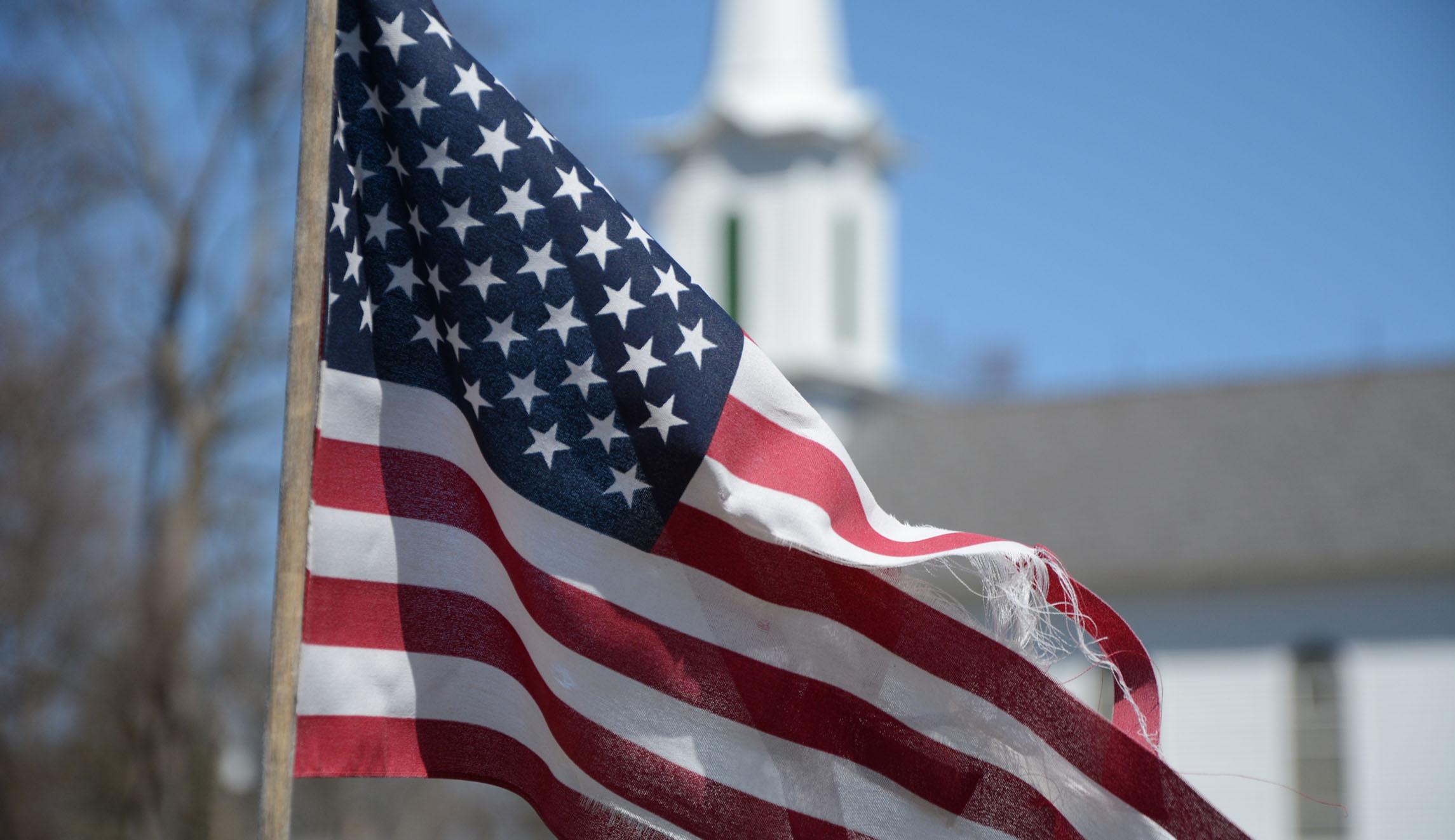
Every state since March has weighed the thorny question of how (or if) governments should restrict how many people may attend church services during the coronavirus pandemic.
In general, state governors settled on one of three solutions. Some states, such as Mississippi and South Dakota, never made an attempt to regulate services, instead releasing guidelines that they recommended religious leaders follow. Others, such as Virginia and Illinois, regulated heavily during the beginning of the pandemic, but since President Trump in May demanded that churches reopen, they have eased off to the point that many restrictions are lifted.
Recommended Stories


A third group of states, most prominently California, Maine, and Nevada, have kept strict regulations in place throughout the pandemic. These states have faced a score of lawsuits and legal challenges from a small but vocal minority of church leaders who argue that government restrictions on church services are unconstitutional violations of the First Amendment’s Free Exercise Clause.
The Washington Examiner reviewed the coronavirus policies of all 50 states, as well as the District of Columbia, and found that the majority of states have moved away from restricting church services. Only 11 states still have strict guidances in place. No states still ban church services. The list below explains how governments are handling church restrictions six months into the pandemic.
States with strict limits on church attendance
California: Churches are limited to 25% capacity or a 100-person limit, whichever is fewer. Social distancing, mask-wearing, and enhanced sanitation are required. Indoor services in many counties are also banned, and singing is banned throughout the state. Several pastors sued state and local officials this summer after they were fined for not following Gov. Gavin Newsom’s orders.
Connecticut: Indoor services are limited to 25% capacity or 100 people, whichever is smaller. One hundred and fifty people are allowed in outdoor services.
Colorado: Indoor services are limited to 50% capacity or up to 50 people per room. Social distancing, mask-wearing, and enhanced sanitation are required. Outdoor services are required to comply with local capacity limits.
Maine: Services are limited to 50 people in attendance. The cap drew several lawsuits in the spring, when Gov. Kate Brown’s original 10-person limit was still in place.
Montana: Services are limited to 50 people in attendance.
Nevada: Indoor services are allowed, so long as no more than 50 people are in attendance and social distancing requirements are observed. Gov. Steve Sisolak’s orders have drawn sharp criticism from faith leaders, especially after he allowed casinos to reopen under looser restrictions. A church in July unsuccessfully appealed to the Supreme Court to exempt it from Sisolak’s order.
New Jersey: Services are capped at 25% capacity or 150 people, whichever number is lower. Gov. Mike Murphy in June was the last governor in the country to remove his all-out ban on in-person church services during the pandemic.
New Mexico: Service attendance is limited to 25% of a church’s capacity.
New York: Services are capped, depending on the region’s designation in the state’s reopening plan. High-risk places are limited to 10 people in attendance. Lower risk places are required to limit themselves to 33% capacity.
Oregon: Most counties in the state are in Phase Two, in which services are limited to 250 people. But in Phase One counties, attendance at services is still limited to 50 people.
Washington: In Phase One counties, services are banned indoors. Services in Phase Two counties are limited to 25% capacity or 50 people in attendance, whichever is fewer. In Phase Three counties, indoor services are limited to 50% or 400 people, whichever is fewer.
States with looser limits on church attendance
Alaska: Services are limited to 500 people in attendance.
Illinois: The state recommends that no more than 50 people gather at services, but it makes allowances for churches that wish to hold larger services. Gov. J.B. Pritzker faced strong pushback from church leaders in May for requirements that prevented congregations from meeting at all.
Louisiana: Attendance at services is limited to 75% of a church’s capacity.
Massachusetts: Attendance at services is limited to 50% capacity, so long as social distancing is observed.
Maryland: Attendance is limited to 50% capacity.
Minnesota: Attendance at services is limited to 50% capacity or 250 people. Catholic and Lutheran leaders opposed Gov. Tim Walz’s earlier restrictions in May, driving the governor to relax his orders.
New Hampshire: Attendance at services is limited to 50% capacity.
Rhode Island: Attendance at services is limited to 66% capacity or 125 people, whichever is fewer.
Vermont: Attendance is limited to 50% capacity or 1 person per 100 square feet.
Washington, D.C.: Attendance is limited to 50% capacity or up to 100 people.
States where governments are not limiting church attendance
Alabama, Arizona, Arkansas, Delaware, Florida, Georgia, Hawaii, Idaho, Indiana, Iowa, Kansas, Kentucky, Michigan, Mississippi, Missouri, Nebraska, North Carolina, North Dakota, Ohio, Oklahoma, Pennsylvania, South Carolina, South Dakota, Tennessee, Texas, Utah, Virginia, West Virginia, Wisconsin, Wyoming
