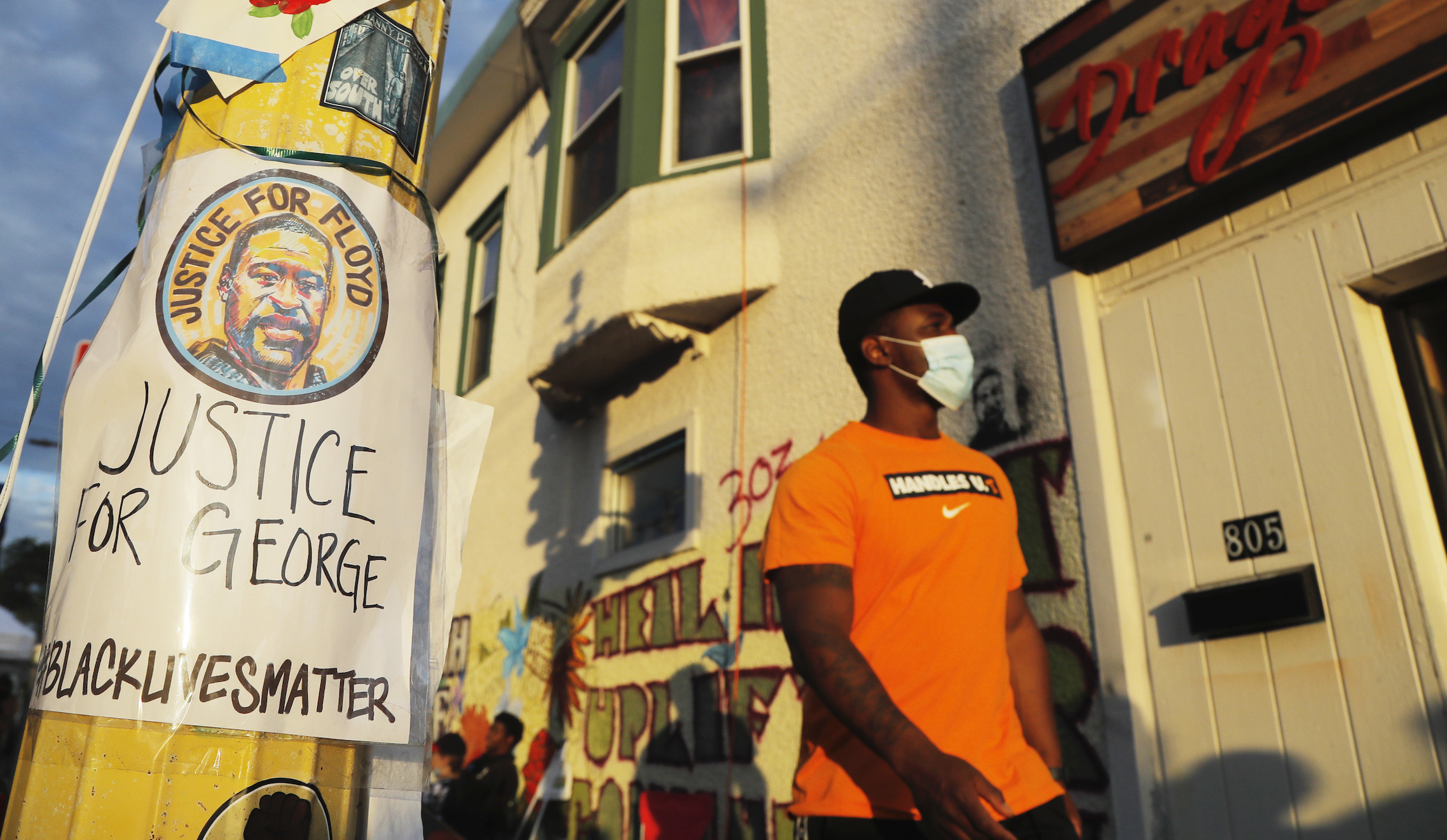
Keith Ellison’s George Floyd charges could ignite Minnesota ‘tinderbox’ if they fail

Minnesota Attorney General Keith Ellison, a firebrand liberal, placated activists when he announced he was escalating charges against the Minneapolis police officer who knelt on George Floyd’s neck and was pressing charges against the other officers who didn’t intervene.

But by upping the stakes in what are likely to be high-profile, emotional trials, Ellison may have also set the stage for more disappointment, frustration, and rage, with local and national political ramifications.

Minnesota offers President Trump and presumptive 2020 Democratic presidential nominee Joe Biden the opportunity to pick up 10 Electoral College votes as they jostle for 270 this fall. Biden, the former vice president, had a 5 percentage point lead in a May Star Tribune poll after Trump lost Minnesota to Hillary Clinton in 2016 by a point-and-a-half and Vice President Mike Pence visited the state during the peak of the coronavirus pandemic.

The Trump campaign has long talked about expanding the 2020 playing field to include Minnesota. If the president won the state, it would relieve pressure to come out on top in other battlegrounds, such as neighboring Wisconsin. Or, potentially Arizona, long a red state but whose 11 electoral votes are now up for grabs, according to recent polling.

Yet, Floyd’s death has reshaped the political landscape, at least for the time being.

For Larry Jacobs, the director of the University of Minnesota’s Center for the Study of Politics and Governance, the first week of chaos after Minneapolis Police Department officer Derek Chauvin was recorded on May 25 pinning Floyd down by the neck for almost nine minutes “worked” in Trump’s favor. Images of one of the city’s police precincts on fire, for instance, along with heated protests sparked across the country, played into the president’s notorious inaugural depiction of “American carnage.”

“But in the week since the violence hit its height, the actions of the governor and the state of Minnesota, combined with the controversial and broadly criticized actions of the president, have probably neutralized whatever advantage the president immediately gained,” he said.

Referring to Trump’s show of force against demonstrators in Washington, D.C., and calls for state governors to “dominate” their streets, he added: “My hunch is it’s probably still a pretty close race in Minnesota, that the president is behind but within striking distance.”

Jacobs, a political science professor, believed the economic fallout from COVID-19 will weigh more heavily on voters’ minds by November. However, he described Minnesota’s unrest over police brutality and racial injustice as “a tinderbox,” especially after Ellison was appointed to replace Hennepin County prosecutor Mike Freeman because the attorney “didn’t move as fast as the protesters and progressives wanted.”

“Freeman is a very experienced prosecutor. He wasn’t dragging his feet because he likes to drag his feet. Getting a conviction of a police officer is very difficult,” Jacobs said.

In comparison, Ellison is a 12-year U.S. congressman and former Democratic National Committee official who became Minnesota’s chief law enforcer in 2019 after a tight contest. He doesn’t have the same courtroom record and is seen more as a political animal.

“It’s not inconceivable that Ellison is going to lose on some of these charges,” Jacobs said. “A trial that looks highly political and has outcomes that the protesters did not expect and certainly would be upset by could play into Trump’s hands.”

As a counterpoint, legal experts suggest the trials may take up to a year, long after the general election is scheduled to be held. Others compare Floyd’s death to that of Freddie Gray.

Gray, a 25-year-old black man, died in 2015 from a spinal cord injury inflicted during a ride in the back of a Baltimore police van where he was shackled but not restrained. Although Gray’s death triggered Floyd-like demonstrations, the failure to convict any of the six officers, charged with a range of offenses from second-degree murder to illegal arrest, didn’t ignite the same level of outrage.

In addition to second-degree manslaughter, Ellison upgraded Chauvin’s charge to second-degree murder and charged Thomas Lane, Alexander Kueng, and Tou Thao with aiding and abetting murder.

During his Wednesday press conference unveiling the charges, Ellison acknowledged the complexity of convicting officers. But in a Washington Post event livestreamed on Thursday, he expressed more confidence.

“They did what we accused them of,” Ellison said. “When I agreed to take this case, I agreed with myself, and to God, that I was not going to let public reaction dictate my view of this case. The charges that we filed actually have nothing to do with public reaction and everything to do with the facts that we found and law that is written into Minnesota statutes.”

Without commenting on the aiding and abetting charges, former Maryland Attorney General Douglas Gansler told the Washington Examiner third-degree murder would’ve been more easily obtainable given the facts currently known as they apply to the law.

“Second-degree murder, in that case, is also a plausible but more difficult verdict to get,” he said.

While the judicial process unfolds, gripes that Democrats take Minnesota for granted may become a more pressing electoral issue ahead of the fall fight, according to Jacobs.

“In the rural areas up north, you have mining, and for generations, that mining area was heavily unionized and reliably Democratic,” he said of the Iron Range, the muse for Bob Dylan songs such as “North Country Blues.” “And for a variety of reasons, that area has become more competitive and maybe leaning Republican at this point.”

Related Content
