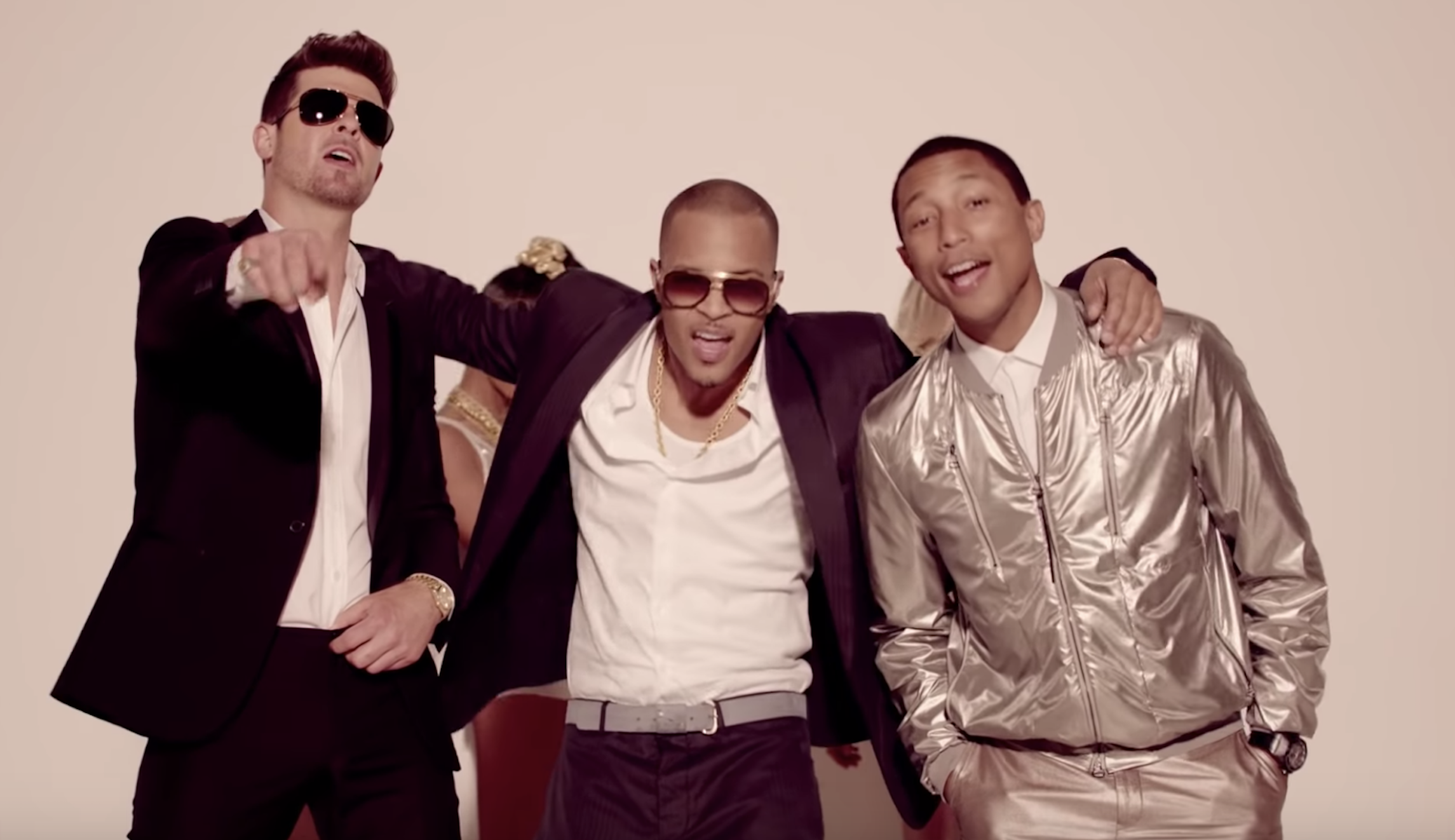
Four years before the #MeToo movement began, feminists and religious conservatives joined in condemning a rapey viral pop song.
“Talk about getting blasted / Everybody get up / I hate these blurred lines / I know you want it,” sang Robin Thicke in Blurred Lines. The song came under fire not only for whining about the constraints of consent, but also for ripping off a much older song by Marvin Gaye.
One writer at Slate called the song “sexist and awful.” At Focus on the Family-owned Plugged In, a reviewer wrote that the song “pushes the all-too-familiar meme of king-like male celebs treating women like disposable concubines into heretofore unexplored and deeply troubling territory for a major pop hit.” Even Ohio University’s marching band abruptly cut the song from its halftime show lineup.
Now six years later, Pharrell Williams, who produced and co-starred in the song, is ready to breeze past all that and regain his rightful place as a feminist icon.
Gracing the cover of GQ‘s “new masculinity” issue in a yellow sleeping bag, Williams revealed that he’s thought about Blurred Lines in the years since the song perched atop the Billboard charts, and he’s decided that it was part of “a chauvinist culture in our country.” But as he continues to talk about the controversy, it’s clear that he doesn’t understand why:
In short, it wasn’t the rapey lyrics (“But you’re an animal / Just let me liberate you / And that’s why I’m gon’ take a good girl / I know you want it”) that changed his mind. Neither was it the graphic music video, which was released in two editions — the first starring three scantily clad models cavorting by the fully clothed men singing the song, who treat them not as people, but as pleasing props. The second, which you can’t watch on YouTube without clicking through a sensitive content warning, is the same thing, except all of the women are topless.
But no, none of these things struck the wrong chord with Williams. Watching middle-aged white ladies twerk to his music was what really changed his mind. And he doesn’t blame himself or his collaborators for contributing to a culture of sexism. That’s the rest of America. It’s not him:
If it’s mind blowing that treating women like objects contributes to chauvinism, then Williams is in for a few more revelations. Look, maybe Williams has just been too busy cavorting with nameless, topless women to think this all through. But not according to GQ‘s editor-in-chief, who interviewed him for the cover story. “As you’ll see, I don’t have to bring up the Blurred Lines controversy from 2013 … because he does,” writes GQ‘s Will Welch. “Occasionally he slows down to choose his words carefully, but there is never a shadow of hesitation or fear. He thinks about this stuff constantly.”
If his apology for Blurred Lines leaves something to be desired, Williams tries to make up for it with some woke signaling that doesn’t threaten his bottom line. He’s still making money off Blurred Lines, after all. (In 2015, Business Insider reported that he’d made more than $5 million off the hit.)
So instead, Williams pivots to “abortion rights.” He complains:
He supports women’s “reproductive rights,” just not their rights to, you know, wear clothes. You know what’s actually sexist though? The Declaration of Independence, he says: “Referring to men, they use the term ‘mankind.’ Well, what about the women?”
The real question about women is one that Williams asks himself in the interview, “Man, what would the world be like if women held all of the highest positions worldwide?” Well, we wouldn’t necessarily have looser abortion laws, as men and women have almost statistically identical views on the issue, with men even displaying slightly more support for legal abortion, according to a recent Pew report.
There is one thing that would certainly change, though. If more women had been in charge, Blurred Lines would never have happened.
Williams is, sadly, not unique in the music industry for producing and composing Blurred Lines. But what does stand out is his endless moralizing. If you’re going to complain about “wrinkly old men who are deciding the fate of women’s reproductive organs and using religious dogma,” maybe you should try not to be a 40-something-year-old dandy who writes songs about consent getting in the way of a good time.
