

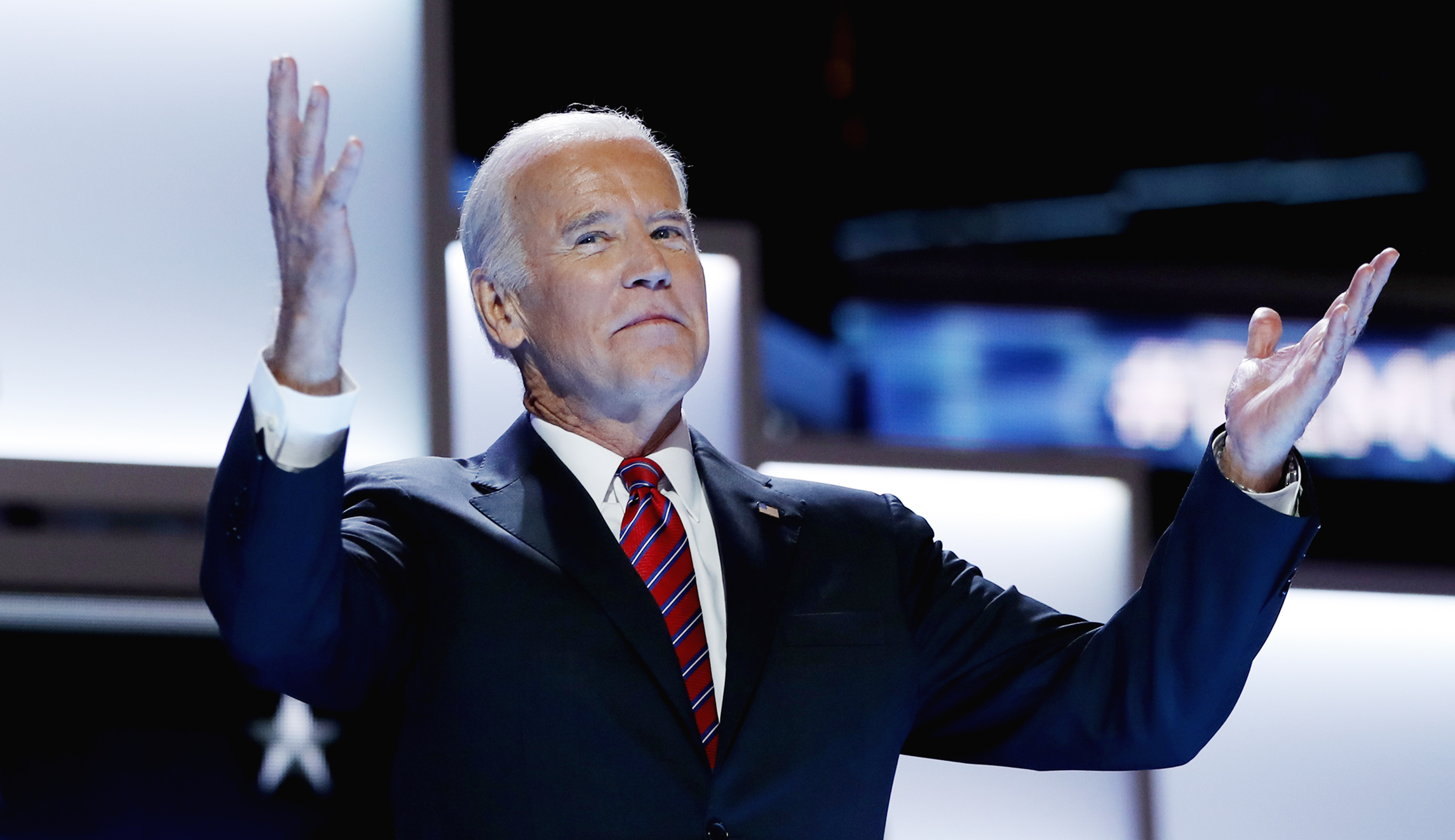
Former Vice President Joe Biden has been rocked in recent days by a heightened focus on his years of engaging in uncomfortable and uninvited contact with shocked and demoralized women.
But if he can continue to show strength in the face of controversy while running as one of the Democratic 2020 race’s few moderates, he may have staying power as other candidates trample herd-like to the left.
Recommended Stories


Biden, 76, appears to be passing the test, at least for now. Despite multiple allegations from women who said that Biden made them uncomfortable with unwanted contact, he remains atop the polls.
A Morning Consult poll of Democratic primary voters conducted April 1 to 7, while allegations were gradually surfacing, found Biden leading the field with 32 percent. Another POLITICO/Morning Consult poll conducted April 5 to 7 found that about half of Democratic primary voters said that the allegations would make no difference in their vote.
Hidden Tribes Project survey data found that about half of Democratic-leaning voters call themselves moderate or conservative, the New York Times reported. They make up a smaller but still significant portion in the primaries: 2 in 5 Democratic primary voters identified as moderate or conservative in 2016, according to CNN exit polls.
Antjuan Seawright, a Democratic strategist and president and CEO of Blueprint Strategy, said that Biden showed strength in his response: a video in which Biden acknowledged that social norms have changed and promised to be more mindful of personal space.
“People just want to hear you say, ‘Look, I’m not perfect, and I will never be perfect, but I’m willing to learn from my mistakes.’” Seawright said.
The big danger for Biden is that that the lesser-known candidates in the 2020 Democratic field could gain a lot of traction once voters learn who they are.
Early poll numbers “represent name recognition, broad acceptability, et cetera. It’s not to dismiss it, but they are misleading,” Peter D. Hart, a Democratic pollster and chairman of Hart Research, told the Washington Examiner.
“Any of these unknown candidates have the ability to grow and pick up more acceptance as the electorate sorts through things. I’m not saying that Joe Biden can’t hold on to that vote, but to fall in love with these sets of numbers is a mistake,” Hart said.
There is also a concern about whether Biden, 76, and his wing of the party can connect with younger voters.
In presidential primaries over the last 50 years, “Democrats have a tendency to kind of chew up and spit out their front-runners,” John Zogby, a Democratic pollster at Zogby Strategies, told the Washington Examiner. “It’s not necessarily the most comfortable position to be in.”
One of Biden’s advantages, though, is appealing to demographics where Democrats have been weak in recent decades, Zogby said, pointing to “blue-collar territory, more traditional, Catholic kinds of voters.”
Other candidates tout progressive policies like abolishing the Electoral College, a wealth tax, and “Medicare for All,” which could alienate a significant portion of the electorate.
“Maturity, stability, a sense of the bigger picture rather than splinter issues, all of those things could work for Joe Biden. But he has to be able to meld it together in his language and his campaign,” Hart said.
And while Biden is seen as more of a moderate, he has enough progressive chops to make his case to those in the progressive wing whose number one goal is to defeat President Trump.
“Biden knows how to discuss policy, and he may be in a position to finesse things like the ‘Green New Deal’ by saying things like, ‘Look, I got Obamacare through. Look, I stopped the government from being shut down a couple of times,’” Zogby said.
Strategists said that the best thing Biden can do is stay strong, but don’t get cocky.
“The worst thing you can do is act like the front-runner when you are the front-runner,” Seawright said. “Which way the poll numbers go will be up to Joe.”
There is a danger in getting too far ahead in the polls too early. Zogby mentioned 1984 Democratic presidential nominee Walter Mondale, who was the front-runner polling around 45 to 48 percent before the Iowa Caucuses. But Mondale got 48.9% in Iowa, making the big story Gary Hart’s surprising 16.5% second-place finish.
“The press just declared Mondale the loser,” Zogby said. “Far and away the frontrunner, he couldn’t get 50%?”
Hart went on to win the New Hampshire primary and gave Mondale a tough race, though Mondale ultimately won the Democratic presidential nomination.
