

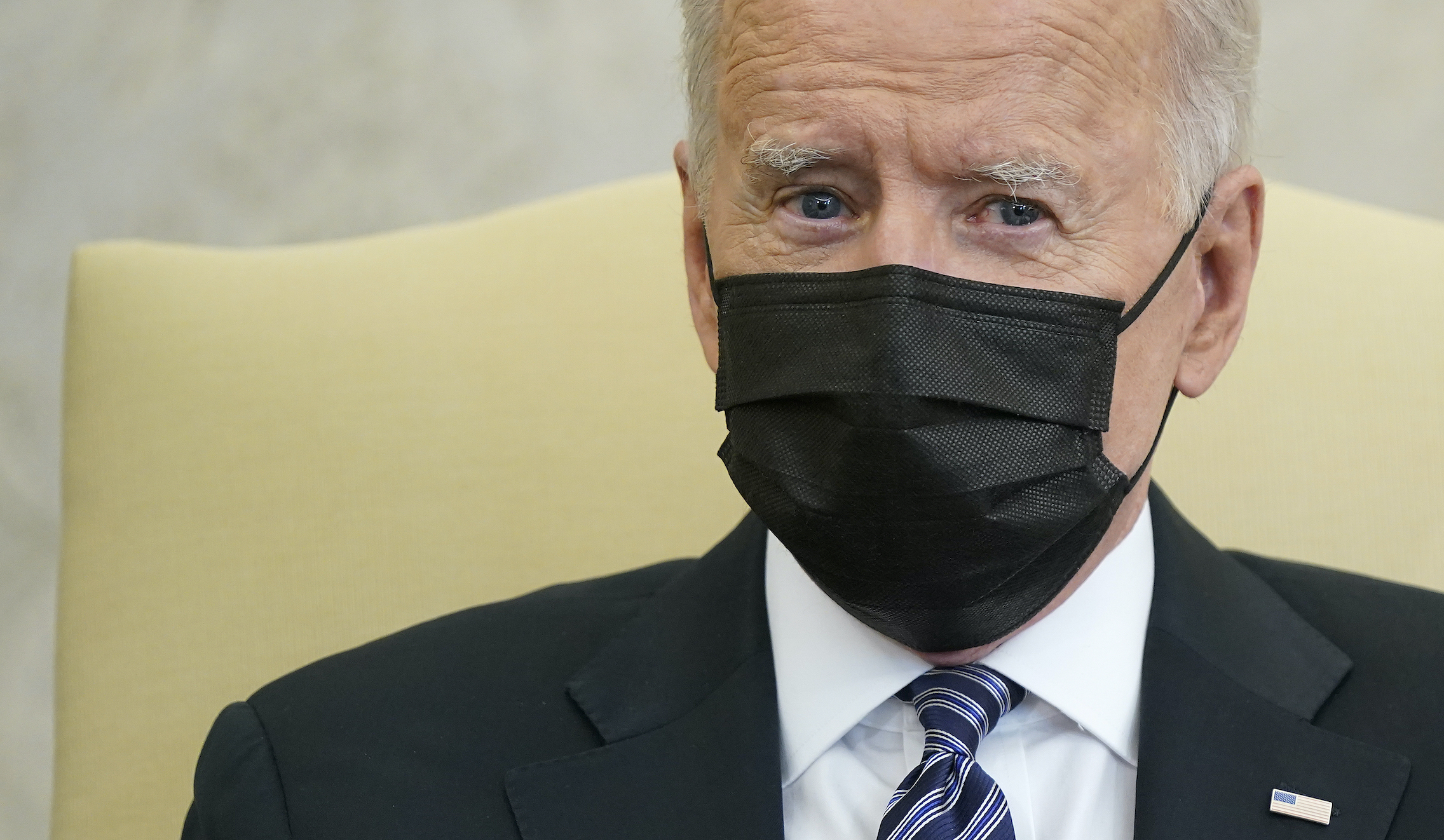
President Joe Biden has only revealed the first part of his infrastructure agenda, but he’s already struggling to find a bipartisan way to pay for its $2.25 trillion price tag after crafting a plan with few alternative ways to cover its massive cost.
The White House has rebutted a House Democrat invited to this week’s bipartisan Oval Office meeting on infrastructure after he suggested Biden was open to raising the federal gas tax and rolling out a new vehicle miles traveled levy to cover his “American Jobs Plan.”
Recommended Stories


But by taking those two proposals off the negotiating table, Biden is left with limited options for pay-for measures palatable to lawmakers of both political persuasions as he and his aides embark on talks in earnest.
BIDEN AND CEOS ARE ODD BEDFELLOWS IN VOTING DISPUTE WITH STATES
Biden once cared about unpaid spending, according to Republican strategist Cesar Conda, a former aide to then-Vice President Dick Cheney and Florida Sen. Marco Rubio.
The White House insists Biden wants to cover the cost of his “American Jobs Plan,” pitched as a jobs and infrastructure package. But by introducing it one month after Congress passed his $1.9 trillion coronavirus spending framework and with his equally large “American Families Plan” due to be unveiled later this month, Conda is not so sure.
“As a senator, he was a strong supporter of a balanced budget amendment,” Conda told the Washington Examiner of Biden. “But in the end, I think he will bow to pressure from Hill Democrats and his liberal base and end up supporting a partisan approach.”
For Doug Heye, a fellow Republican strategist, pay-fors are always “the biggest” hurdle for complex legislative negotiations.
Biden is adamant his Oval Office discussions with Republicans are not simply “window dressing.” Heye, however, is reserving judgment.
Republicans, though, have more leverage over Biden’s infrastructure spending than they did during the coronavirus talks because they now have more time, Heye explained. The White House and congressional Democrats have marked Memorial Day as a deadline so a bill, or bills, can be signed into law this summer. The coronavirus package, deemed emergency legislation, had to be passed by March since benefits were about to expire.
In addition to its cost, another Republican argument against the “American Jobs Plan” hinges on its broad definition of “infrastructure,” which currently includes increasing wages and expanding benefits for “essential home care workers,” Heye said. That is at odds with Biden’s “shovel-ready” infrastructure approach of the past.
“Six weeks is a long time. It is an especially long time when we operate in a very different media environment than we did just a few months ago. Our lives are not taken over by tweets every day,” he added. “This is going to be a long conversation on what is infrastructure and how do you pay for it.”
Republicans also have more leverage thanks to a Democrat: West Virginia Sen. Joe Manchin. Manchin has been vocal against Democrats relying on the budgetary procedure known as reconciliation to ram the measure through the Senate with a simple majority. Democrats can muster 51 votes without the GOP given Vice President Kamala Harris’s tiebreaking role in the evenly divided chamber.
Manchin, however, has made his position contingent on “good faith” negotiations. That is a slippery adjective deployed under a White House that has gained a reputation for redefining campaign promises such as “unity” and “bipartisanship” in order to keep them. Instead of defining “bipartisanship” based on earning Republican votes, as is tradition, the administration uses polling data, for example.
And Republicans, at least publicly, are hardening their stances against the “American Jobs Plan.” Senate Minority Leader Mitch McConnell, for instance, indicated Tuesday his colleagues were unlikely to back changes to former President Donald Trump’s 2017 tax cuts.
McConnell’s posture reflects the Republican Party’s “core tenet” against raising taxes, Heye said, citing George H.W. Bush’s 1992 election defeat. At the same time, Republicans have to contend with Democratic rebuttal regarding the spending they notched under Trump, he conceded.
“The reality in the politics of the moment that we’re in is where Biden can move things, he’s going to do so. If he can do something where he can hail, you know, ‘I’m the bipartisan guy, and I said that I would govern in a bipartisan way,’ he’ll do that on Monday. And if he has to move something through reconciliation and not on a bipartisan basis on Tuesday, he’ll do that too,” Heye continued.
CLICK HERE TO READ MORE FROM THE WASHINGTON EXAMINER
Biden’s main proposal is to increase the corporate tax rate to 28% from Trump’s 21%, while Manchin has counter-offered by endorsing a 25% rate. White House press secretary Jen Psaki told reporters Tuesday Biden brought up user fees, including a 5 cent hike of the gas tax or a VMT levy, to illustrate the point they would not generate enough revenue to cover the “American Jobs Plan.”
“I’m prepared to negotiate as to the extent of my infrastructure project as well as how we pay for it,” Biden said before Monday’s Oval Office meeting.
