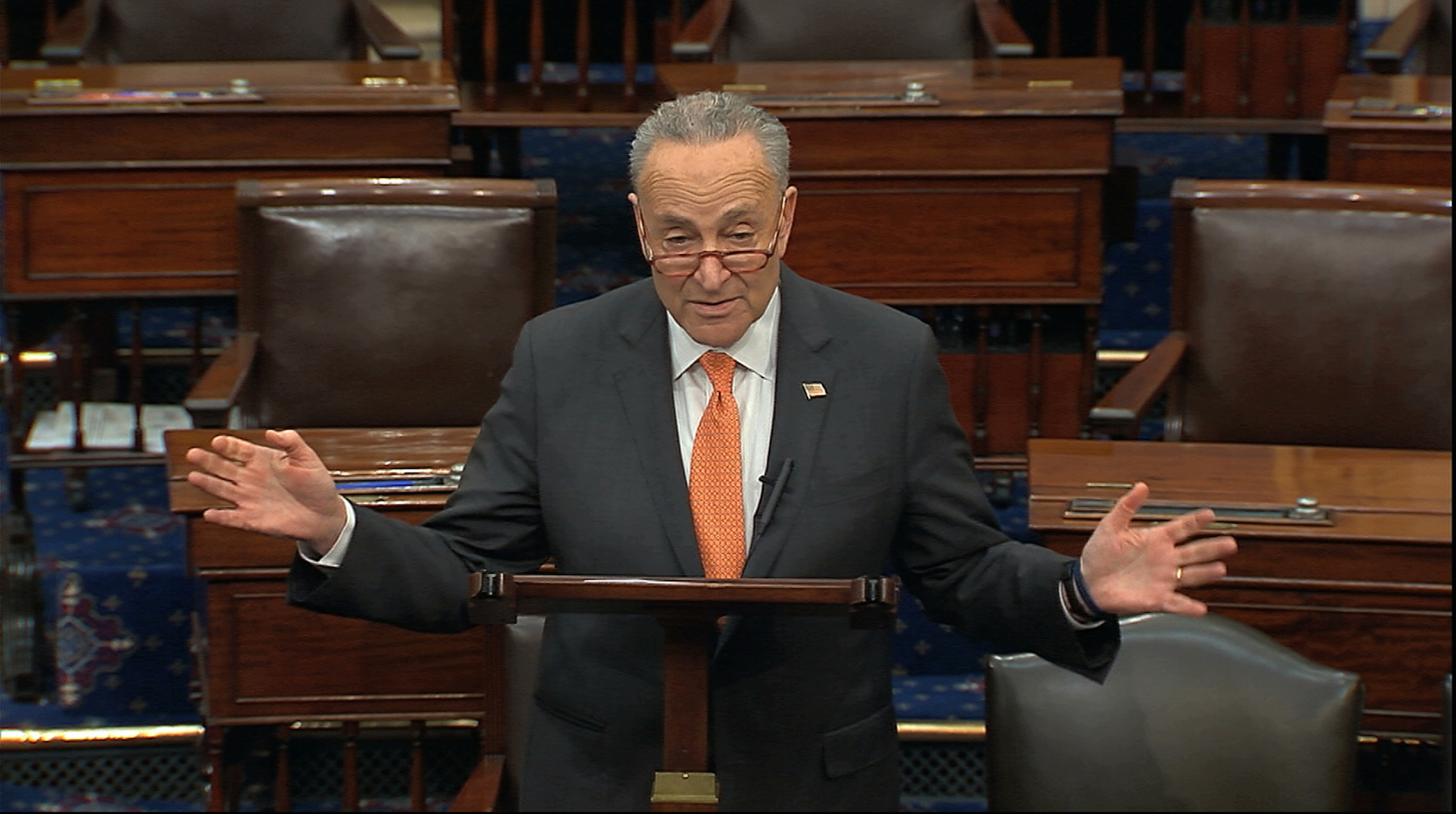
Schumer predicts economic relief deal ‘within the next few hours’

Senate Minority Leader Chuck Schumer predicted lawmakers would reach a bipartisan deal Tuesday on an urgent economic relief bill with changes sought by Democrats.

“Of the few outstanding issues, I don’t see any that can’t be overcome within the next few hours,” Schumer, a New York Democrat, said.

Schumer said Democrats have successfully pushed for the inclusion of billions of dollars for states to deal with the health impact of the coronavirus, and unemployment insurance for workers will now “pay your full salary” for four months to keep workers furloughed rather than fired.

“With our plan, since they stay on the payroll with the employer, as soon as the crisis is over, they can all come back together. They’ll be able to reassemble quickly so we can get the economy going again.”

Schumer has been negotiating with Treasury Secretary Steven Mnuchin and other Trump administration officials for changes in the $2 trillion-plus measure. Democrats have blocked the bill in two Senate votes in an effort to force changes to the bill.

“Last night, I thought we were on the 5-yard line,” Schumer said. “Right now, we’re on the two.”

Schumer said he is also seeking oversight of the distribution of $500 billion in loans to the airlines and other big companies that need help staying afloat during the slowed economy.

Schumer is proposing, among other things, a congressional oversight board and a requirement that the Treasury Department disclose the companies who receive loans. Companies say the disclosure will discourage investors and will make it harder for them to recover.

“We are not looking for things that are extraneous to this crisis,” Schumer said.

Schumer did not mention an enormous economic relief bill introduced Monday by House Democrats.

Republicans have repeatedly condemned the House bill for including provisions they say have nothing to do with the coronavirus crisis, including corporate board diversity requirements, early and mail-in voting for federal elections, the bailout of the U.S. Postal Service, student debt reduction, and emission reductions for the airlines, among many other items.

Related Content
