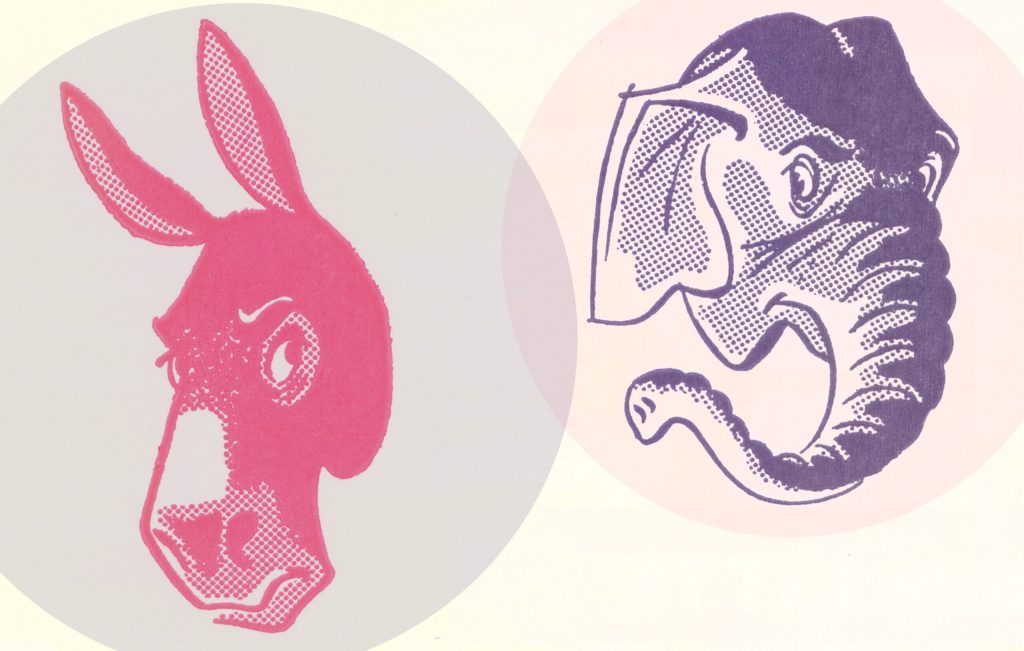
In the first and only political science course I ever took, just over 50 years ago, the first and almost only thing I remember learning was that the United States was different from most representative democracies in having “broker” political parties rather than the “missionary” parties that were more typical in, for example, European countries. For historical reasons, both major parties in this country had coalesced around regional, ethnic, racial, religious, class, and cultural loyalties and only sporadically and secondarily around ideological ones. Liberal Republicans and conservative Democrats were both forces to be reckoned with in their respective parties and had to be conciliated—often by what was called “balancing the ticket”—when it came to choosing candidates for national office.
Even as I sat in that classroom, however, the parties were beginning what Bill Bishop has dubbed “the Big Sort.” The Democrats were to take the lead, after the upheavals of 1968 and Hubert Humphrey’s loss to Richard Nixon, in purging their (mainly Southern) conservative bloc—which Nixon’s “Southern Strategy” had been designed to welcome into the Republican party.