

Democrats in some blue states are racing to unwind pandemic-era restrictions that have grown deeply unpopular with voters — even though COVID-19, in some of those places, poses no less danger than when leaders put the restrictions in place.
Illinois and New York on Wednesday became the latest Democratic-controlled states to announce an end to statewide mask mandates in light of the shifting consensus around the virus, although the states left intact mask requirements in schools.
Recommended Stories


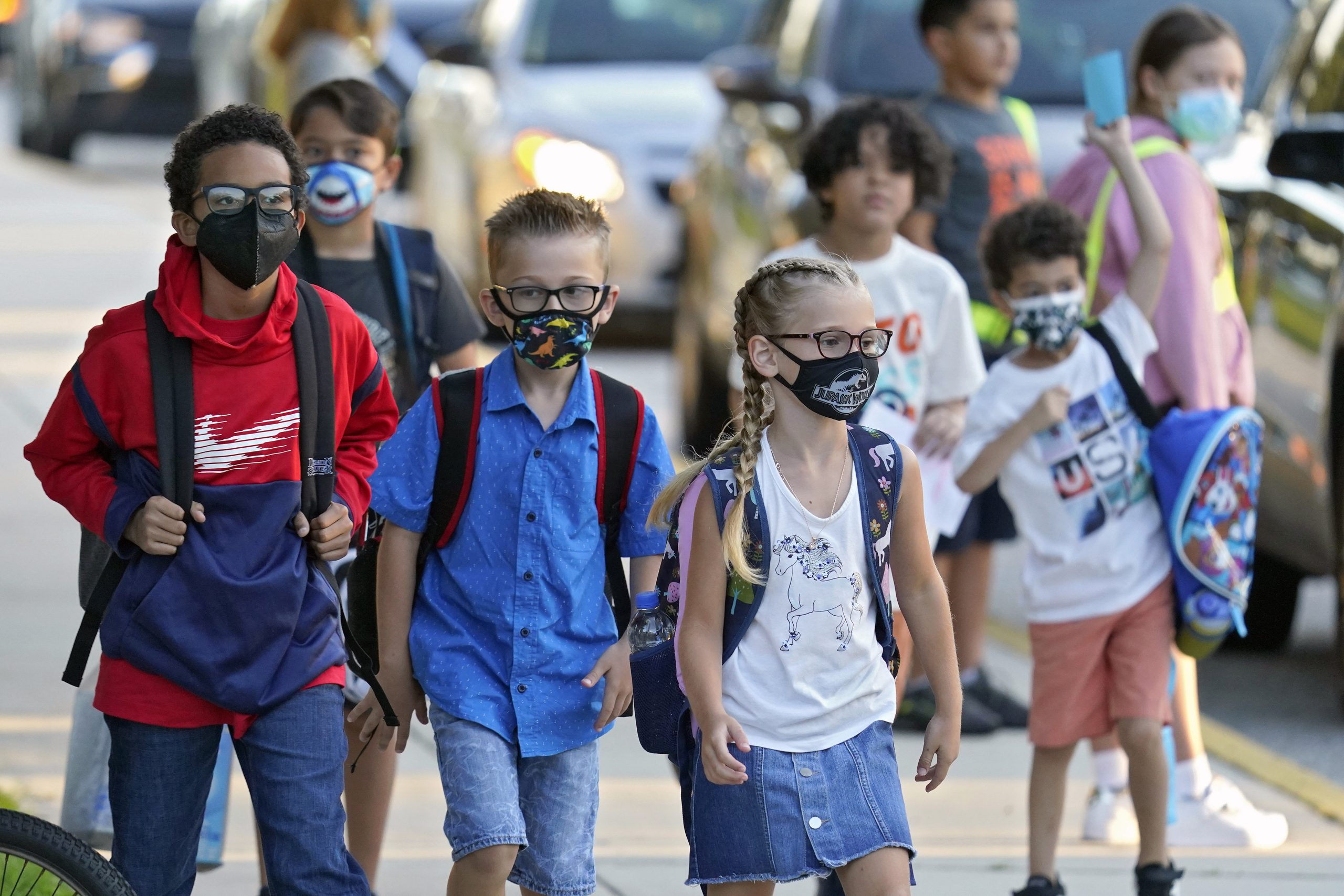
Democratic governors in other states, including New Jersey and Connecticut, lifted mask mandates for schools this week in a sign that attitudes about one of the most contentious aspects of pandemic policy are changing rapidly.
BLUE STATES ANNOUNCING END TO MASK MANDATES
Proponents of the sudden shift in strategy from Democrats argue that the science has indeed changed: Vaccination rates are up, and positive cases driven by the omicron variant are falling.
But critics say little has changed recently about scientists’ understanding of the virus and the effectiveness of mitigation efforts. They accuse Democrats of rolling back restrictions out of concern for political consequences, not because of new scientific evidence.
COVID-19 data show cases are falling across the nation — although transmission levels haven’t dropped below the threshold that the Centers for Disease Control and Prevention set for recommending an end to masking.
But COVID-19 death rates in the blue states backing away from mandates remain just as high or higher as they were when Democratic leaders imposed mandates initially.
And little new evidence has emerged to suggest that masks are no longer necessary in the classroom — few studies supported their use to begin with.
New York
Gov. Kathy Hochul announced this week an end to a statewide rule that forced businesses to demand that customers show proof of vaccination or wear a mask at all times indoors.
Hochul cited “tremendous progress” in the fight against COVID-19 as the reason for her shift away from a policy she implemented in mid-December.
When Hochul ordered the indoor mask requirements Dec. 10, the average number of daily deaths from COVID-19 was 50, according to New York Times data.
On Feb. 8, the day before she announced an end to the requirements, the average number of daily deaths in New York was more than twice as high at 134.
New York will leave its mask mandate for schools in place for now, Hochul announced, although she said officials would reassess the situation in the weeks ahead.
California
Gov. Gavin Newsom announced Monday that the statewide indoor mask mandate would be allowed to expire next week for the vaccinated, with unvaccinated Californians still required to wear face coverings indoors.
“With things moving in the right direction, we are making responsible modifications to COVID-19 prevention measures while also continuing to develop a longer-term action plan for the state,” Dr. Tomas J. Aragon, California’s public health director, said this week.
In mid-December, Newsom imposed a statewide indoor mask mandate that was initially set to expire on Jan. 15 and later extended it.
At the time he signed the order to impose the mask requirements, the number of average daily deaths in California was 67.
On Feb. 7, the day Newsom announced the expiration of the order and his state officials touted progress, the number of average daily deaths was 180.
New Jersey
Gov. Phil Murphy announced an end to the state’s school mask mandate this week amid a heated national debate over the value of masking in schools.
Murphy had put the mandate in place in early August, as classes were set to resume after the summer break.
The day his office announced the mandate, the average number of daily deaths from COVID-19 was 6.7 in New Jersey.
The average number of daily deaths Monday, when he ended the mandate, was 78.
Connecticut
Following the lead of other blue-state leaders, Gov. Ned Lamont announced this week that the state’s school mask mandate would end at the end of February.
“I think today with boosters, given vaccines, given the N95 masks, you are in a better position to keep yourself safe — your child is in a better position to keep him or herself safe,” Lamont said Monday of his decision to recommend an end to the statewide mandate.
When Lamont extended the statewide mask mandate for schools in mid-August, the average number of daily COVID-19 deaths in Connecticut was 1.6.
On the day he announced an end to the school mask mandate, the average number of daily deaths was 25.
Delaware
Leaders in President Joe Biden’s home state also moved this week to end indoor mask mandates and set a date to end mask requirements in the classroom by the spring.
Gov. John Carney said in a statement that he believes people now have the ability to keep themselves safe from the virus moving forward, echoing other Democrats who have pointed to tools that have been around for months as the reason for supporting shifts away from mandates.
On Aug. 10, the day Carney ordered all schools in Delaware to require masks, the average number of daily COVID-19 deaths in the state was 0.3.
On Feb. 7, the day Carney announced that he would allow the school mask mandate to expire at the end of next month, the average number of daily deaths was 6.4.
Illinois
Gov. J.B. Pritzker said Wednesday that the statewide indoor mask mandate for most businesses would end Feb. 28.
He stopped short of rolling back the state’s school mask mandate.
Like in other blue states making similar changes, more people are dying from COVID-19 now than when the mandates were imposed originally.
When Pritzker signed the indoor mask mandate at the end of August, the average number of daily deaths from COVID-19 in Illinois was 29.
The average number of daily deaths was 89 the day before he announced the end of the indoor mask mandate.
Pritzker cited falling hospitalization rates as the reason for his decision, noting that hospitalizations had dropped from the peak of the omicron wave.
But hospitalizations still remain far higher than when the mandate first went into place. The average number of daily hospitalizations in the state was 2,146 when the mandate went into effect and 3,022 when Pritzker decided to end the mandate.
Oregon
Oregon’s leaders moved this week to end indoor and school mask mandates by the end of March, pointing to encouraging COVID-19 numbers.
Gov. Kate Brown reinstated the indoor mask mandate Aug. 10 amid fears of the delta variant. At the time, the average number of daily COVID-19 deaths in Oregon was 5.6.
The state’s announcement that its mask mandates would soon end came at a time when the average number of daily COVID-19 deaths was more than three times as high, sitting at 21 on Monday.
