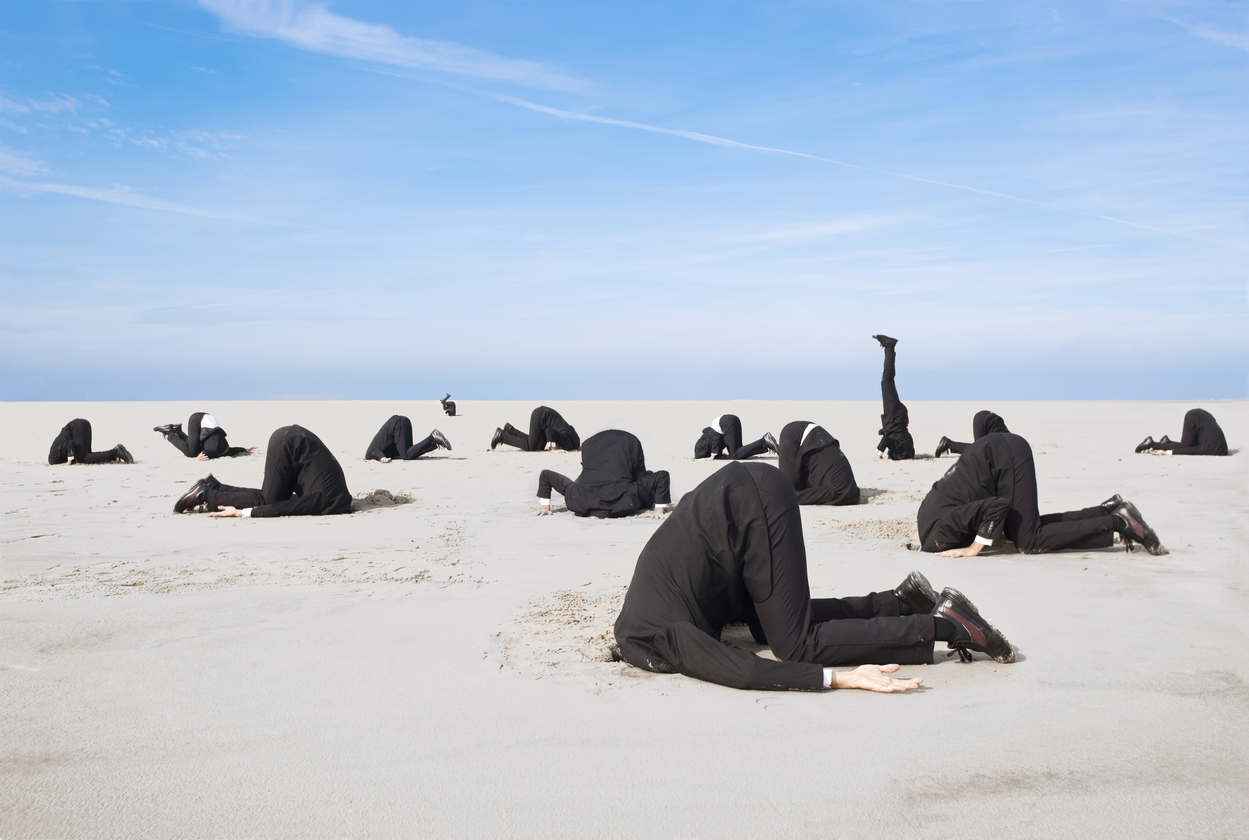
Philip Wallach and James Wallner for LegBranch: Leadership shapes the agenda to exclude cross-cutting issues (or, as with immigration, to give them only nominal chances) in order to differentiate their partisan brand and thereby maximize their electoral advantage. (Or so the story goes…)
Let us offer an example where issue suppression has been remarkably successful over the last decade, during majority control by both parties. In the wake of the financial crisis, there were huge reservoirs of political energy looking for retribution against America’s big banks, who had profited from bad practices and then been rewarded with government support. Retaliation would almost certainly have been a political winner, whether in the form of breaking up the businesses somehow or dramatically raising their required levels of capital. Our major piece of post-crisis financial regulation, the Dodd-Frank Act, took half-hearted approaches on both counts (by imposing the modest and largely ineffectual Volcker Rule that bans banks from proprietary trading, and by vaguely pushing for higher capital requirements). The policy merits of the more dramatic moves are highly debatable, but that debate has rarely taken place in Congress, and certainly none of the proposed legislative vehicles for dramatic action ever received extended consideration. Neither the Bailout Prevention Act of 2015, co-sponsored by Elizabeth Warren, D-Mass., and David Vitter, R-La., nor the Terminating Bailouts for Taxpayer Fairness Act of 2013, cosponsored by Sherrod Brown, D-Ohio, and Vitter, ever made it out of committee.
From our perspective, this is no puzzle: Leaders can see that their members are internally divided on these questions, and they have no interest in seeing whether a complex, ideologically heterodox coalition could form. They might well offer policy justifications for their opposition, but the coalition-preservation explanation is almost certainly the real cause. As Lee Drutman explored, congressional leadership has generally done a masterful job suppressing issues that activate a pro- and anti-establishment cleavage, which cuts across the two parties.
Blame public housing for Denmark’s hostility toward immigrant enclaves
Samuel Hammond for the Niskanen Center: Denmark’s immigrant enclaves, and the backlash they’ve engendered, aren’t the death knell for liberal democratic welfare states conservatives would like to believe they are. But it isn’t exactly rosy news for strong proponents of the Scandinavian model, either. Some types of social welfare are simply less compatible with multicultural immigration than others — a fact that Denmark is learning but many on the American left have yet to reckon with.
The culprit in the Danish case is clear: public housing projects. Not-for-profit housing makes up around 20 percent of Denmark’s total housing stock. While nominally managed as self-governing housing organizations with no income-test on membership, in reality the projects receive substantial government backing and are required by law to reserve up to 25 percent of rentals for vulnerable communities, such as refugees and the poor, unemployed, and disabled.
In their working paper, “How Distributional Conflict over Public Spending Drives Support for Anti-Immigrant Parties,” political scientists Charlotte Cavaillé and Jeremy Ferwerda argue that “in-kind” benefits like public housing are particularly prone to distributional conflict with natives due to their salience and scarcity…
By creating a salient, geographically segregated locus for native-immigrant conflict, Cavaillé and Ferwerda argue that public housing projects accentuate perceptions of scarcity, and thus activate zero-sum modes of thinking.
Incel behavior is firmly rooted in performance
Understanding incels Chloe Safier for New America: When Alek Minassian drove his car onto a crowded Toronto sidewalk three months ago, he was aiming to kill women — and he didn’t think that he was acting alone. According to his Facebook post written just hours before the attack, he felt that he was contributing to what he called an “incel rebellion.” Incel, at its most benign, refers to a man who’s involuntarily celibate. In practice, it refers to an online community made up mostly of men who express and validate their aggressive misogyny. …
We tend to think of misogyny as an individual practice, one that’s propped up by a culture that permits male entitlement to prevail over women’s lives, bodies, and freedoms. But as Ross Haenfler, an associate professor at Grinnell College, suggests, incel behavior is firmly rooted in performance: “Incels seek to prove themselves to other men, or to the unrealistic standards created by men, then blame women for a problem of men’s own making.” In a similar vein, part of what makes incels such a spectacle is that they protest the very same conditions of patriarchy their expressed enemies — feminists — have sought to disrupt: the repressive standards of behavior for men, the limited opportunities men have for real emotional connection, the sometimes unfairly transactional nature of sex. To address the problem of incels and groups like them, we need to know more about what conditions encourage men to perform toxic masculinity and violent misogyny for, and sometimes with, each other.
Incels themselves seem to talk a lot about the unfairness of masculine performance. Think of their anger toward “Chads,” a term for men women want to sleep with, and their belief that women should be forced to date undesirable men. But instead of re-imagining masculine gender performance as feminists do, incels seek more opportunities to access existing, narrowly defined versions of masculinity.
Compiled by Joseph Lawler from reports published by the various think tanks.
