Republicans think they’ve found the answer to midterm victory

President Trump’s instinct for exploiting America’s deep cultural divisions could help Republicans nullify the Democratic resistance in the midterm elections, saving the party’s vulnerable congressional majorities.

Trump on Tuesday accused House Minority Leader Nancy Pelosi, D-Calif., of being in league with a violent Hispanic street gang and used a disagreement with the Super Bowl champions the Philadelphia Eagles to question the patriotism of the mostly African-American professional football players who last season knelt during the National Anthem to protest racial injustice.

Republican strategists, in a perpetual state of anxiety over what the president might say next, didn’t flinch.

Trump’s habit of ignoring the economic message preferred by House and Senate Republicans in favor of the culture war tropes that propelled him to the White House is increasingly seen as an asset. Though provocative, the president’s rhetoric resonates with the base, offering Republicans a vehicle for matching the Democrats’ critical voter enthusiasm edge.

“Not all of Trump’s cultural cudgels work this cleanly for him politically, but this one is pretty much all upside for him,” said Brad Todd, a Republican consultant who explored this issue in The Great Revolt; Inside the Populist Coalition Reshaping American Politics, a book he co-authored with the Washington Examiner’s Salena Zito.

“I see no evidence in survey data that the [National Football League] flap hurts Republicans with any voters who would otherwise consider voting Republican. Independents disapprove of the way the NFL handled the protests,” Todd added.

Trump seems bored with the historic $1.3 trillion tax overhaul he signed into law late last year. Republicans in Congress credit the Tax Cuts and Jobs Act with accelerating economic growth and job creation and see it as the key to survival in the midterm. But Trump appears more interested in illegal immigration, gang violence, and patriotism.

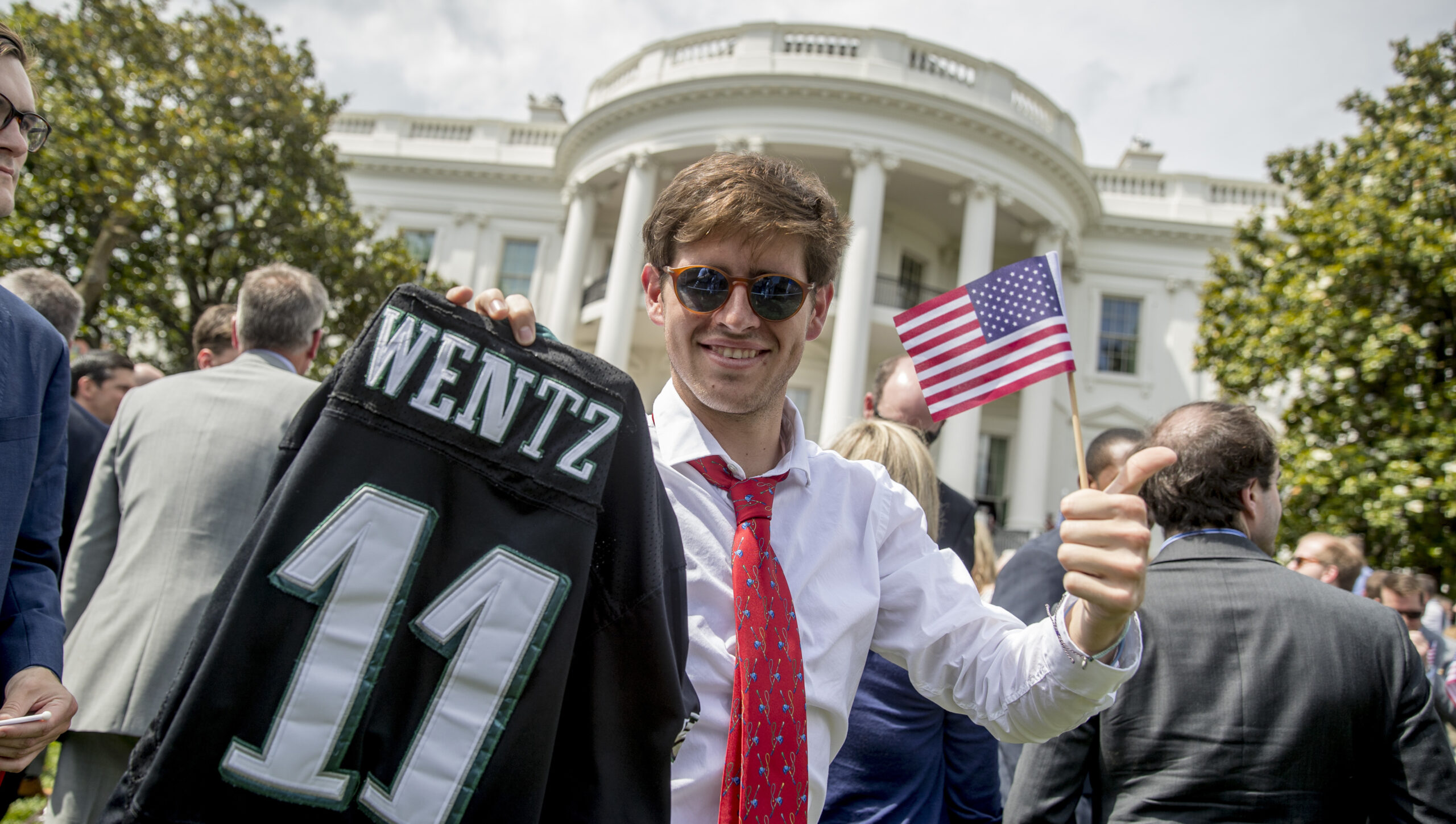
Trump gravitated to patriotism this week after the Philadelphia Eagles informed the White House that only a few players would attend the team’s Super Bowl celebration, citing a scheduling conflict.

Rather than try for a new date, the president canceled the event entirely, and replaced it with a ceremony to honor America and its patriotic symbols. Trump accused the Eagles of canceling because they refused to meet his demands for showing proper reverence to the anthem. Republican insiders close to the president say this isn’t some grand strategy.

“He follows his gut. He had to know it would blow up,” a Republican operative close to Trump said of the revived attacks on the NFL, requesting anonymity in order to speak candidly.

“He very cleverly tapped into this issue,” added Bill Whalen, a political analyst at the conservative Hoover Institution think tank in Palo Alto, Calif.

Fueling some Republicans’ new faith in Trump’s instincts for driving cultural wedge issues is the party’s rising 2018 fortunes. In the past few months, GOP prospects for holding the House have skyrocketed from nonexistent to likely (if the election were held today.) In the Senate, Republicans are now expected to pick up seats.

The improvement is due largely to greater engagement by Republican voters who were threatening to abandon the party in the fall out of dissatisfaction with Republicans in Congress, or disenchantment with Trump. Midterm elections in particular are influenced by which party is more energized. Democrats don’t have that problem, fired up to put a check on the president.

But there are downsides.

In the suburban districts that could determine control of the House, Trump’s polarizing leadership doesn’t play as well. Republican voters there affiliate with the GOP because of shared values on fiscal and national security matters. They are not culture warriors, and the strategy of whipping up the base could boomerang on the party.

“Trump’s calculus here,” said Bruce Haynes, a Republican operative in Washington, is that “suburban females and Republicans will place a higher priority on practical political outcomes such as a rising stock market, low unemployment and growing economic opportunity.” But it’s a risk.

On the trail in Alabama last fall for a Republican candidate, Trump without warning criticized the relatively few NFL players kneeling during the national anthem, just prior to kickoff, to protest police brutality against African-Americans. Grassroots Republicans applauded; the players responded by kneeling en masse in solidarity with their teammates.

The overtly racial aspect of the issue has left many Republican elected officials cautious when discussing the issue. On the one hand, they are aware that many of their own voters agree with Trump, making them hesitant to critique the president’s rhetoric. And yet they aren’t aping Trump’s approach either, apparently wary of appearing to be racially insensitive or out of touch.

Asked if he thought Trump’s use of the national anthem as a wedge would help Republicans win seats, the party’s elections chief in the Senate, Cory Gardner of Colorado, would only say: “Stand up for the national anthem, that’s what I would do.”

“I absolutely agree there are issues of race in America,” Sen. James Lankford, R-Okla., said. “It’s still unresolved for us. We’re much better than what we were, but we’re not done.”

Related Content
