
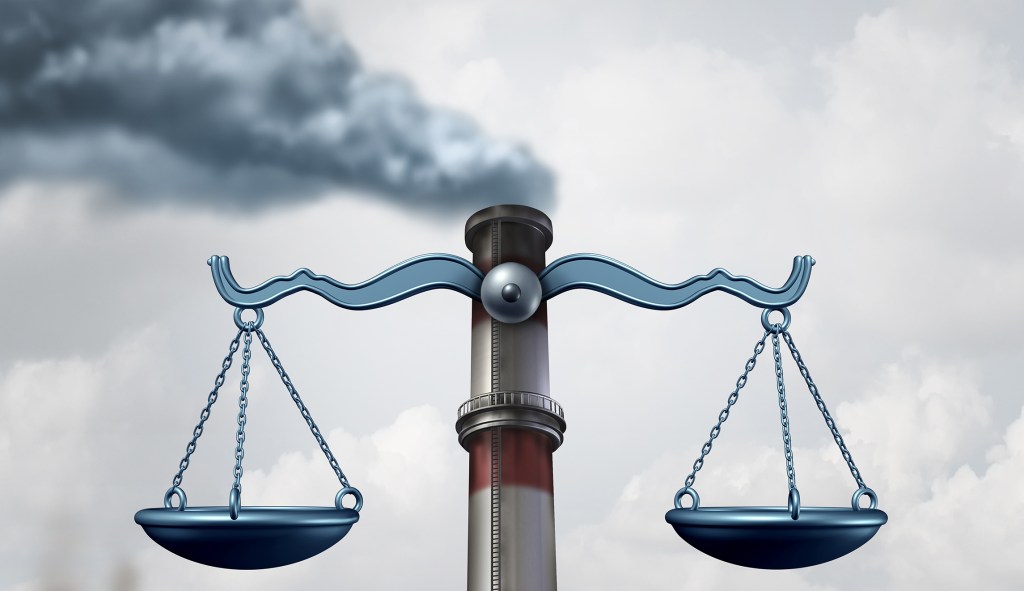
Climate change is a fraught topic. Even among those who are confident about the trajectory of the climate, there is disagreement about the cause, severity, consequences, and solutions. Among Republicans, while interest in the issue has increased over time, particularly among younger voters, many are concerned that steps to mitigate environmental harm will fuel a bigger government and impede economic freedom. But if Republicans base their climate policy stances on this fear, they will miss the chance to pursue a conservative “harm reduction” strategy that would also check the size and reach of government.
Instead of viewing the debate as only about climate change, conservatives should embrace the political opportunity it presents to reduce the harmful distortions imposed by other taxes and shrink the regulatory morass of federal agencies such as the Environmental Protection Agency. As I explain in a new paper, conservatives can achieve these goals with a well-crafted revenue-neutral carbon tax.
Such a tax, if set at the right level, would align the private cost of carbon consumption with its social cost, reduce emissions, and encourage energy conservation and alternative energy production in a market-based fashion. Because it would trade “good” policy (a carbon tax) for “bad” policy (regulations and taxes with high excess burdens), it would make government more efficient. And packaging together the benefits from deregulation and tax reform would compensate the public for any adverse economic impact of introducing a tax on carbon.
This proposal also uniquely opens up dialogue on climate change policy. Advocates for climate change mitigation should view it as a win-win since it produces both less carbon and a better economy, while conservative climate change skeptics should be happy with the reductions in fiscal and regulatory burdens it allows.
Why negotiate at all? If conservatives refuse to negotiate, it is less likely that deregulation and tax reform will be part of climate policy. Refusing to negotiate may be a winning strategy when the other side is weak. But because advocates for government action on climate change are not weak, it is incumbent on conservatives to at least reduce the potential harm that policies may inflict on our economy.
Conservatives have raised legitimate questions about a carbon tax. Would it really be a substitute for existing, costly regulations aimed at reducing carbon emissions, or would it end up being an additional burden that further extends the reach of Washington?
Ensuring that a carbon tax would not simply finance more government spending requires a strict commitment by conservatives that any legislation establishing a tax on carbon emissions must also include, first, an equal tax cut, preferably targeting existing taxes that impose the highest excess burdens on the economy, and second, a significant rollback of carbon regulations. On these points, conservatives should not negotiate.
Embracing a non-negotiable stance on revenue-neutrality and deregulation will test the convictions of carbon tax advocates. Proponents unwilling to accept these commitments may be more interested in growing both tax revenue and the regulatory state than decreasing greenhouse gas emissions.
The mainstream focus on climate change has been dominated by forecasts from scientific models. But with a revenue-neutral carbon tax, one need not have an opinion on the science of climate change to recognize the opportunity this high-profile issue affords to achieve a more limited, more efficient government.
Michael L. Marlow is a professor of economics at California Polytechnic State University, San Luis Obispo.
