Elizabeth Warren’s FREE Act isn’t what it seems

A poorly kept Washington secret is that the Consumer Financial Protection Bureau has far too much power. An unchecked and unaccountable government agency, the CFPB operates with practically no oversight. The director of the CFPB has unilateral power to issue rules and to decide when and how to enforce them. That’s why there is currently a power struggle over whom will be the next director.

Now, with the help of far-left legislators, the CFPB’s power could grow even greater.

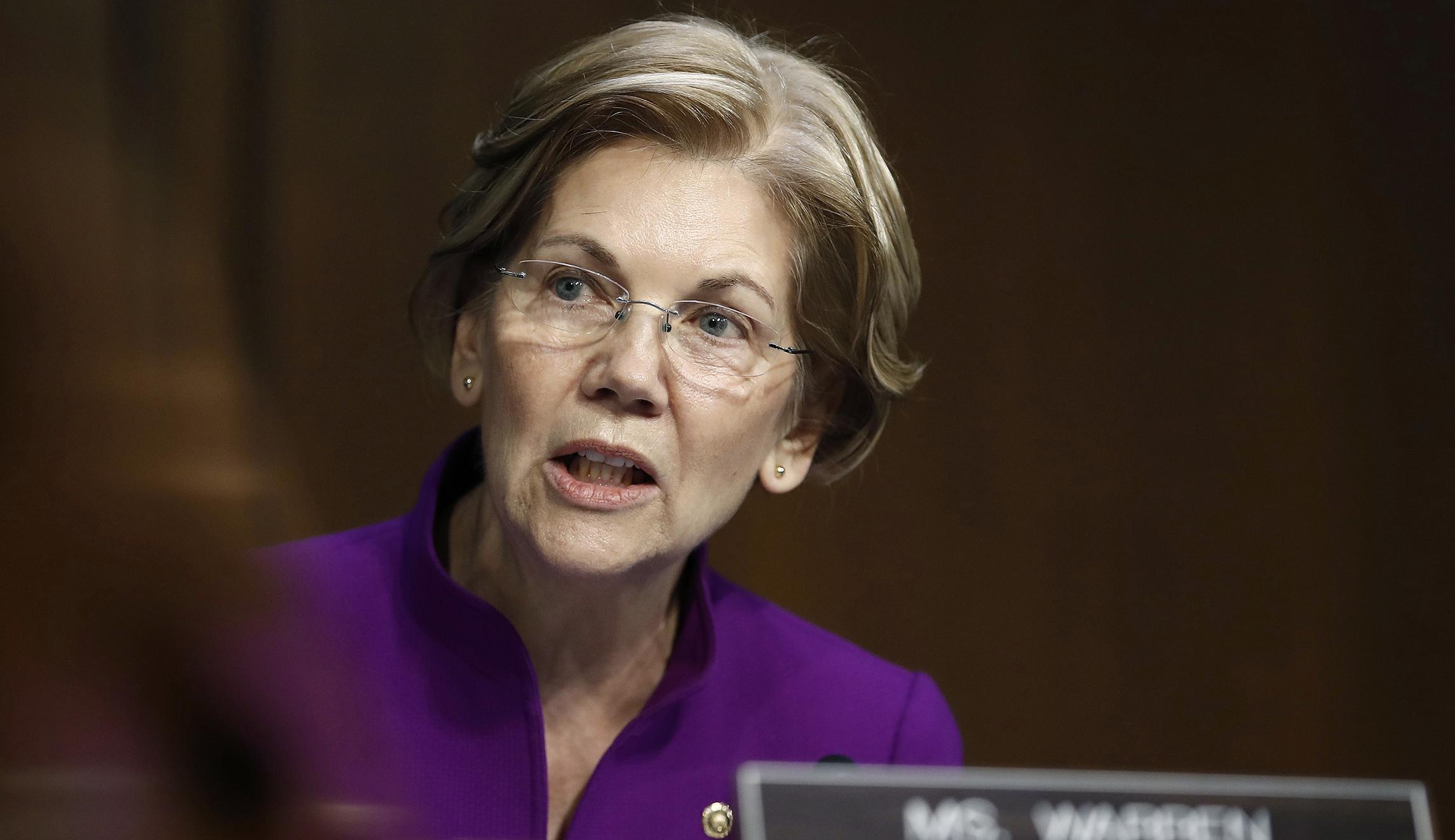
In response to the Equifax data breach earlier this year, Sens. Elizabeth Warren and Brian Schatz proposed the Freedom from Equifax Exploitation, or FREE, Act, which lays the groundwork for a massive, unjustified regulatory power grab. If passed into law, the FREE Act would harm the very people it is meant to help.

Equifax is one of the three major credit reporting companies in the United States. Last summer, cybercriminals hacked into the Equifax databases, committing one of the worst ever data breaches in U.S. history. Overnight, hackers gained access to the personal information – names, social security numbers, addresses, and driver’s licenses – of over 145 million Americans.

This breach reflects the inherent threats that result from the technology of our day. There is an ongoing struggle between cybercriminals and cybersecurity defense. It is not the case that, as Sen. Warren has argued, “this whole industry should be completely transformed”; the problem, at its core, is about how we store data and how susceptible it is to hacking.

Following the Equifax data breach, Consumer Data Industry Association public policy strategist Eric Ellman warned, “Don’t let this crisis generate legislation or regulations driven by panic.” Yet that is exactly what Sens. Warren and Schatz have done. The FREE Act would require credit reporting agencies to, among other things, offer customers the option to impose or lift credit freezes for free. This concept has now also been incorporated into Idaho Republican Sen. Mike Crapo’s recently proposed bill, but there are a number of problems with these progressive lawmakers’ alternative.

First of all, their bill fails to actually target the source of the problem. Neither the causes nor the effects of the Equifax data breach would have been significantly ameliorated if consumers were able to instantly freeze or unfreeze their credit – a decision that typically costs between $2 and $10. Secondly, despite what ideological supporters of the FREE Act will tell you, credit freezes have consequences. Credit freezes disrupt markets and, in the aggregate, cause labor inefficiencies that disadvantage businesses and consumers. Were there to be another such breach, websites and telephone lines would be overwhelmed. All in all, it could take several days before consumers would be able to unfreeze their credit.

That’s a big deal.

Frozen credit prevents credit checks, which are necessary when applying for apartments, cable, or utilities. It often makes it more difficult to open new lines of credit and can even cause consumers to neglect other, more important security measures.

And concerns with the FREE Act don’t solely come from the right end of the political spectrum. A recent article from the progressive magazine Mother Jones argues the FREE Act is too weak and too complicated.

So what would effective federal legislation look like? For an example of reasonable compromise, national lawmakers should look to Pennsylvania. State-level legislation known as House Bill 1847 would better monitor credit reporting agencies by improving upon existing laws. This bill allows agencies to charge a small fee to freeze and unfreeze accounts, capped at $10, and introduces more oversight with credit monitoring and free consumer reports.

And while we discuss these reasonable legislative responses to the ever-present threat of cyberattack, let us not forget that progressive Sens. Warren and Schatz may have ulterior motives for wanting to uncontrollably expand the power of the CFPB. As ideologues bent on opposing this presidential administration, Sen. Warren and her allies no doubt hope to undermine the White House with the informal “Fourth Branch” comprised of government agencies.

For leftists like Sen. Warren, it’s not about saving you $2 to $10. It’s about advancing the progressive agenda.

Amalia C. Halikias is a writer who covers issues of U.S. politics, cultural conservatism, law, and technology. She graduated from Yale University in 2015 with a B.A. in Political Science.

If you would like to write an op-ed for the Washington Examiner, please read our guidelines on submissions here.

Related Content
