

“Thanks to the United States military and our partnership with many of your nations,” President Donald Trump said in remarks to the United Nations General Assembly on Tuesday, “I am pleased to report that the bloodthirsty killers known as ISIS have then driven out from the territory they once held in Iraq and Syria.” The statement is technically true, but misleading: ISIS has lost most of the territory it gained beginning in 2011, but that does not mean the international terror group is vanquished. Far from it.
Trump’s claim was only technically true, though, because it was scripted. When he speaks off the cuff, as he usually does, he puts the point in far bolder terms. On Monday, for instance, he remarked to Egyptian president Abdel Fattah Al-Sisi, “If you look at various parts of the Middle East, you look at Syria, we’ve wiped out ISIS. [They’re] in the very final throes.” Vice President Mike Pence frequently makes the same claim. “ISIS is on the run,” he said in late August; “their caliphate has crumbled, and we will soon drive ISIS from the face of the earth.”
Recommended Stories


Trump and Pence are politicians, of course, and politicians like to take credit. We don’t know if these and many similar statements are mere credit-taking or if they represent the thinking of the administration’s top policymakers. Even if it’s just political rhetoric, though, declarations that ISIS has been “wiped out” demoralize American intelligence and military personnel working to defeat ISIS right now, and encourage quasi-isolationists such as Rand Paul and Bernie Sanders who want the United States to cede its influence in the Middle East and elsewhere.
In this sense, at least, Trump and Pence sound a lot like Barack Obama, who famously told George Stephanopoulos in 2015 that ISIS had been “contained” just hours before the group’s fighters carried out coordinated attacks in Paris, killing 130 people.
Trump doesn’t even say “contained.” He says “wiped out.”
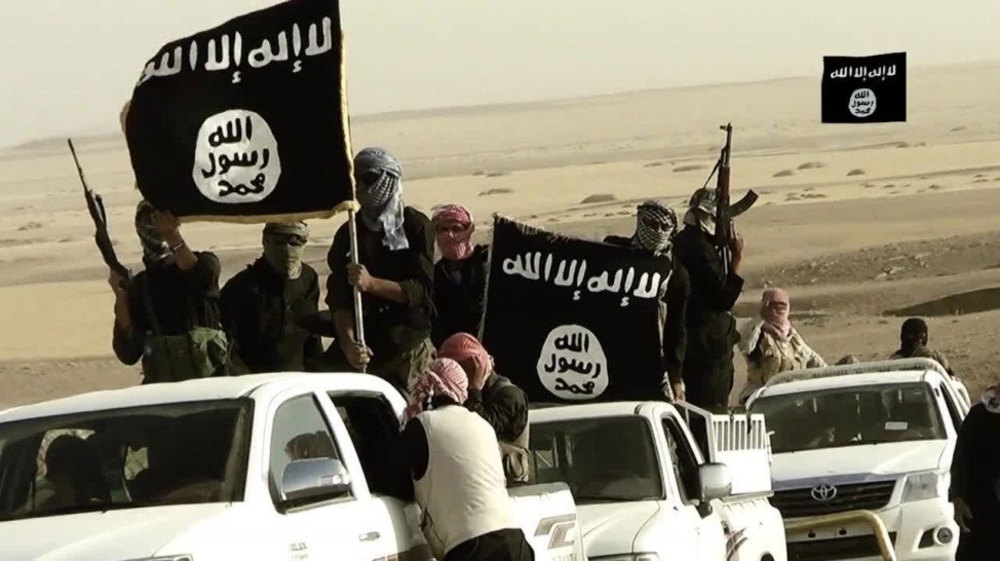
The trouble, as we’ve remarked before in this space, is the blinkered insistence that the Islamic State’s strength corresponds to the territory it holds. While it is true that ISIS has been forced to relinquish most of its territory in Iraq and Syria, thanks mostly to the work of the U.S. military, it is also true that the group continues to carry out terror attacks. Nobody knows how many soldiers claim allegiance to the black flag of the Islamic State, but we do have some idea of its operational capacity. In August alone, ISIS carried out roughly 200 operations in Iraq and Syria. The numbers for September will be about the same. That’s considerably fewer than it carried out at the height of its power in 2013 and 2014, but hardly indicative of a group that’s been “wiped out.”
ISIS has tens of thousands of loyal fighters operating around the world—in the Middle East, Africa, South Asia and beyond. ISIS claimed responsibility for a bombing in Afghanistan two months ago that killed 166 people. It conducts operations in Afghanistan and Pakistan on a near-daily basis. The group has fighters in Malaysia, Indonesia, and the Philippines, too, and has mounted operations as far afield as Australia. ISIS has branches in Niger, Somalia, and Libya—as well as other parts of Africa. A December 2017 report from U.S. Central Command estimated that the ISIS presence in Yemen “had doubled in size over the past year,” using “the ungoverned spaces of Yemen to plot, direct, instigate, resource, and recruit for attacks against America and its allies around the world.”
The audience for Trump’s boasting, Egyptian president Al-Sisi, knows well the continuing threats from ISIS and other jihadists. In his own speech to the United Nations on Tuesday, Al-Sisi described in detail the comprehensive counterterrorism efforts undertaken by his government over the past ten months—known as “Sinai 2018.” As Thomas Joscelyn noted in these pages in February, the threat is so significant the Egyptian government has enlisted the help of Israel’s anti-terror experts to help fight it.
There is furthermore the problem of Al Qaeda. The network once headed by Osama bin Laden hasn’t made the headlines in Western capitals, but there is a growing body of evidence that it is even stronger than ISIS. Terror groups affiliated with Al Qaeda don’t brand themselves with the media savvy of ISIS, aggressively taking credit for every terror operation, but they are increasingly active not just in Iraq and Syria but in Yemen, Somalia, Ethiopia, Afghanistan, Pakistan, and in the West. A United Nations report issued in late July concluded that Al Qaeda is already stronger than ISIS, capable of carrying out more and deadlier operations in the West and East Asia.
The Trump administration deserves credit for the progress it has made in its campaign against ISIS in Iraq and Syria. But progress isn’t the same as victory; diminishing a threat isn’t the same as eliminating it. Rhetorically, the Trump administration is making the same mistake the Obama administration made: Declaring victory over jihadi terrorism across the globe. We understand the political and practical attractiveness of such triumphalism. It’s far easier to pretend such threats have been eliminated, particularly if your stated goal is to turn attention back to America at home. But it is not true. And we can say with confidence that the Trump administration or its successor will come to understand that reality in due course.
