

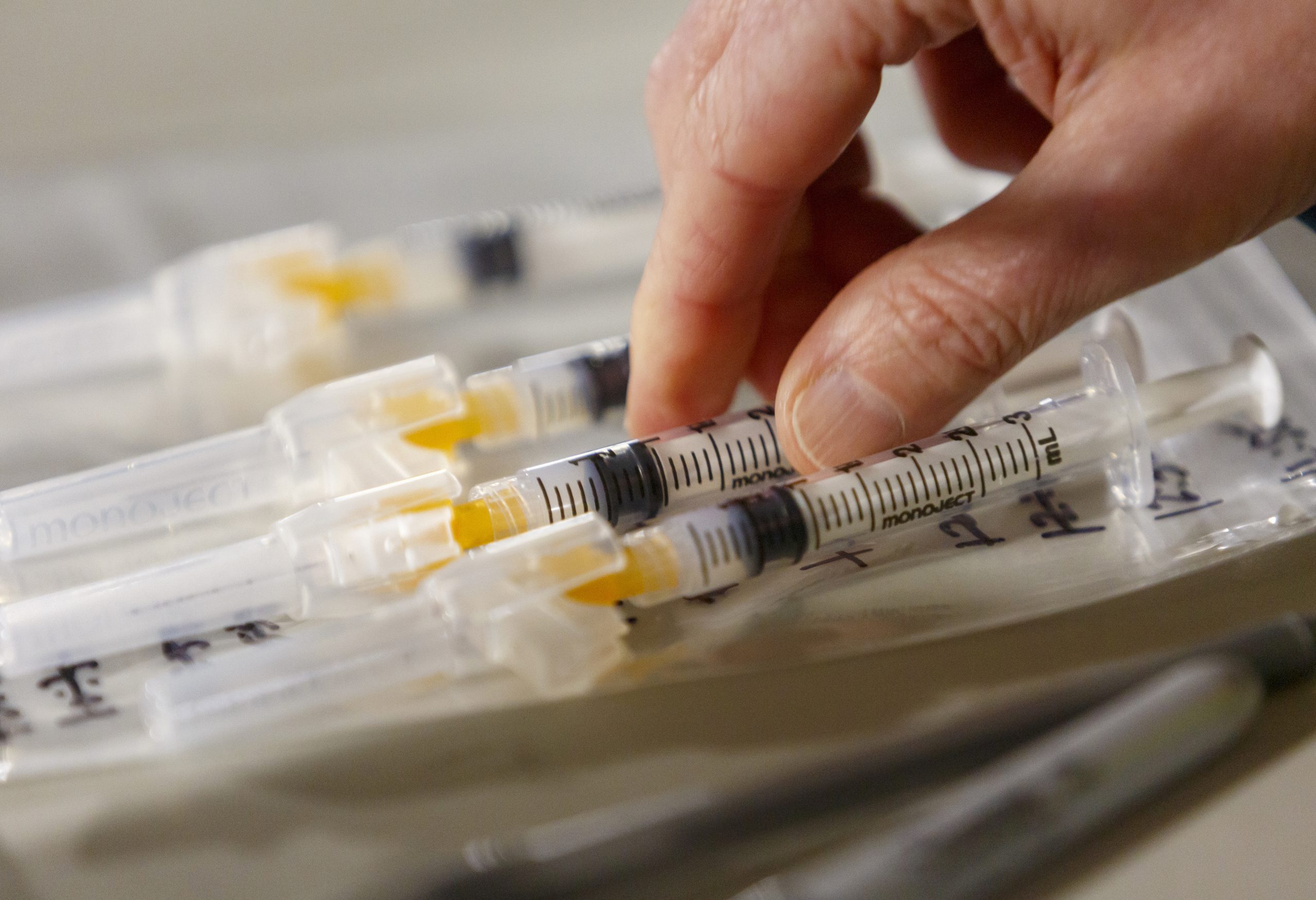
The threat of COVID-19 infection remains high for kidney transplant patients, underscoring that people with weakened immune systems are still vulnerable even as the pandemic recedes and people are eager to abandon social distancing guidelines.
“It’s still a little concerning because COVID is still out there and it affects everyone differently, and I still think it’s still a little early [to ditch masks], but that’s coming from somebody who is immunocompromised,” Shayla Harris, 38, told the Washington Examiner.
Recommended Stories


KIDNEY TRANSPLANT RECIPIENTS STILL VULNERABLE TO COVID-19 POST-VACCINATION
Harris, a resident of Burtonsville, Maryland, received a donated kidney from her younger sister 11 years ago, but she will always have a weakened immune system due to the medications necessary to prevent her body from attacking the foreign organ. This puts her at a considerably higher risk of becoming seriously ill from viral infections such as COVID-19 even after being vaccinated.
Transplant surgeons at Johns Hopkins University reported earlier this month that almost all of the 658 organ transplant recipients they surveyed who received both doses of the coronavirus vaccines mounted little or no antibody response, meaning they were still at high risk of severe infection.
Last fall, researchers at the Geisinger Medical Center in central Pennsylvania reported that kidney disease patients were over 11 times more likely to be hospitalized for COVID-19 than people who didn’t have kidney disease.
“It’s always in the back of your mind that you are immunocompromised and that you generally have to be careful at all times,” Harris said. “A lot of the recommendations by the CDC, mask-wearing and frequently washing your hands, have kind of been my life for the last 11 years, but in this case, it was heightened, obviously.”
The dialysis treatments many kidney disease patients must undergo also increase their risk of becoming seriously ill due to coronavirus infection, the National Kidney Foundation warns. Those dialysis treatments, which patients often must receive 12 hours each week, use a machine to filter out waste from their blood. Patients cannot forgo those lifesaving treatments.
DEATHS FROM CORONAVIRUS ‘BREAKTHROUGH’ CASES RARE, CDC SAYS
The risk of coronavirus infection remains acute for transplant patients like Harris, even as many people are ditching their masks as vaccination percentages increase. Nearly 62% of all adults have received at least one dose of vaccine, and half of all adults have been fully inoculated.
In recent weeks, a growing number of states such as California, New York, and Massachusetts have announced that they will lift mask mandates and further loosen restrictions on gathering sizes and business capacities for those who have been fully vaccinated. Public officials and businesses, however, will have to turn to the honor system in the absence of requiring people to prove they have received the shots.
“Prior to getting the transplant, after the transplant, and continuously for the last 11 years, it’s always in the back of [my] mind that I’m immunocompromised and that I generally have to be careful at all times,” Harris said. “We developed a bubble within our family … to ensure that I was protected.”
Harris, who is also a staff member at the American Kidney Fund, was 27 when she received the donated kidney from her sister Ivy just four months after receiving a shocking diagnosis that her kidneys were functioning at about 10%. Harris said she felt blindsided as a healthy young adult who played Division I volleyball at Rutgers University.
While she was fortunate to have a match in her family, other kidney disease patients without known donors have to wait about five years on the national organ transplant waitlist.
CLICK HERE TO READ MORE FROM THE WASHINGTON EXAMINER
“I’m fully vaccinated … and the more people we can get vaccinated is more people who would be protected from COVID, and so people like me and those with transplants would be able to go back out into the real world, so everybody in my family is vaccinated,” she said. Harris added that it was “disheartening” to learn that vaccines may not be as effective for people with kidney disease and organ transplants.
Still, Harris implored people with compromised immune systems to get vaccinated anyway because “some antibodies are better than none.”
