On 5th anniversary of Snowden leak, one state effectively bans the NSA

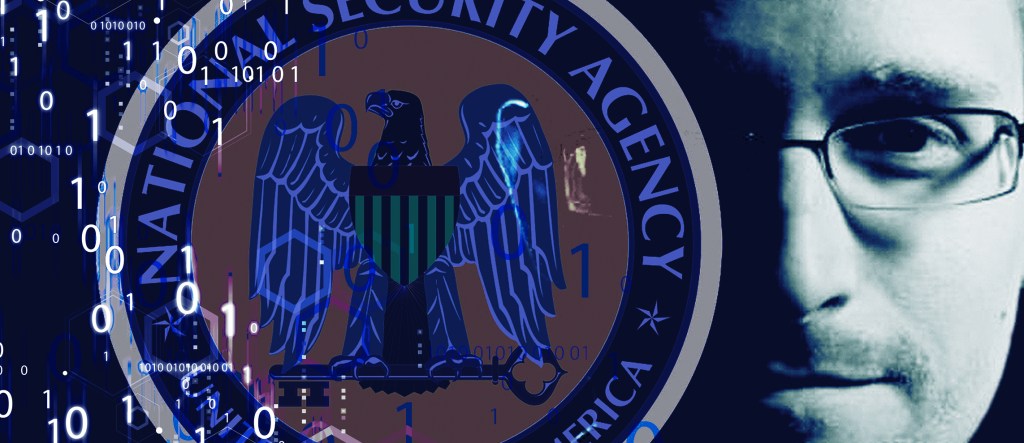
Former National Security Agency contractor Edward Snowden marks five years in exile next month. And 11 days after the anniversary of his initial public surveillance disclosure, the first state will implement a law that arguably cuts the NSA off from local water and electricity.

There isn’t a known NSA facility in Michigan, but the law’s author says it sends a clear message with a ban on state and local officials, including law enforcement and public utilities, cooperating with federal agencies that allegedly collect personal data without legal process.

“It hangs up a sign on Michigan’s door saying, ‘No violation of the Fourth Amendment, look elsewhere’,” said state Rep. Martin Howrylak, a Republican. “Democrats as well as Republicans would certainly stand very strong in our position on what this law means.”

Michigan’s Fourth Amendment Rights Protection Act takes effect June 17 after passing with a single “no” vote in the legislature.

The new law is the biggest accomplishment yet growing out of efforts to block water to a massive NSA data-storage center in Bluffdale, Utah. After Snowden’s leaks, lawmakers from Alaska to South Carolina introduced similar measures, but almost all failed.

In Maryland, eight lawmakers proposed a specific plan to shut off power and water to NSA headquarters in Fort George G. Meade, but five co-sponsors dropped after a backlash. An unsuccessful Washington state bill would have made it a crime to work with the NSA. “For a lot of my constituents this doesn’t go far enough,” the sponsor said.

The Michigan law doesn’t make cooperation with the NSA a crime or outline an enforcement mechanism. Howrylak said litigation would be needed if the NSA decided to open shop.

Howrylak’s bill and similar legislation was inspired by the Tenth Amendment Center, a group that argues that states can effectively nullify NSA activities by banding together in opposition.

Before the Michigan win, only California had passed a so-called Fourth Amendment Protection Act. But the legislation — co-sponsored by Democrat Ted Lieu, now a well-known congressman — was watered down and bans only local assistance “in response to a request from a federal agency … if the state has actual knowledge that the request constitutes an illegal or unconstitutional collection.”

By contrast, the new Michigan law is broader, banning “material support or resources to a federal agency to enable it to collect or to facilitate in the collection or use of a person’s electronic data or metadata,” except if the collection is done with informed consent, a warrant, or a legal warrant exception, such as instances in which there’s no expectation of privacy.

“It’s a pretty comprehensive bill in terms of prohibiting state cooperation with gathering data,” said Tenth Amendment Center communications director Mike Maharrey. “It’s encouraging to get the first one over the hurdle. In politics there’s a lot of copy-catting.”

A similar bill passed the lower chamber of Missouri’s legislature this year, but still awaits action by the state senate, Maharrey said.

Tanya Baker, a spokeswoman for Republican Gov. Rick Snyder, who signed the legislation, declined to directly say whether the governor believed the new law prevents the NSA from accessing local utilities or other assistance in Michigan.

“The intent of the legislation is to prohibit the state from assisting a federal agency from illegally collecting a person’s electronic data or metadata,” Baker said. “We don’t deal in hypotheticals.”

The NSA declined to comment on the Michigan law, as did a spokesman for the Office of the Director of National Intelligence.

Susan Hennessey, a Brooking Institution fellow who formerly worked as an NSA lawyer, said there may be issues with the Constitution’s Supremacy Clause, and that she doesn’t think the law will amount to much.

“Considering that the NSA is a foreign signals intelligence agency with a foreign-focused mission, the physical location of its facilities within the United States are not usually relevant to that work,” she said. “This bill might signal some sort of broad condemnation of the NSA’s lawfully-authorized mission, but any practical effect beyond that seems to be zero.”

Howrylak and Maharrey said they recognize the new law may do little on its own.

“We need the other states to join us,“ Howrylak said, optimistically noting that President Trump’s disputed claims about surveillance abuses during the Obama administration helped eliminate opposition among conservative politicians deferential to law enforcement and the military.

Howrylak said “because this is law there could be a strong court case saying this is what the state intends.” In fact, he said, a legal case could offer a rare opportunity for court review of NSA surveillance by giving standing to more people.

Lawsuits challenging NSA surveillance generally are derailed on standing. In a rare exception, a panel of federal judges ruled last year that the Wikimedia Foundation had standing to challenge the NSA’s Upstream collection program, which the government says is legal under Section 702 of the Foreign Intelligence Surveillance Act. Upstream collection takes information directly from the cables and switches that make up the Internet’s backbone, collecting an unknown number of domestic records, which are then searchable without a warrant.

Howrylak said passage of the law “speaks to the fact that a lot of the domestic surveillance of American citizens is highly unpopular.”

Still, Maharrey said “people realize it going to happen one bite at a time.”

Related Content