
Brazen fentanyl sales continue online as China vows crackdown

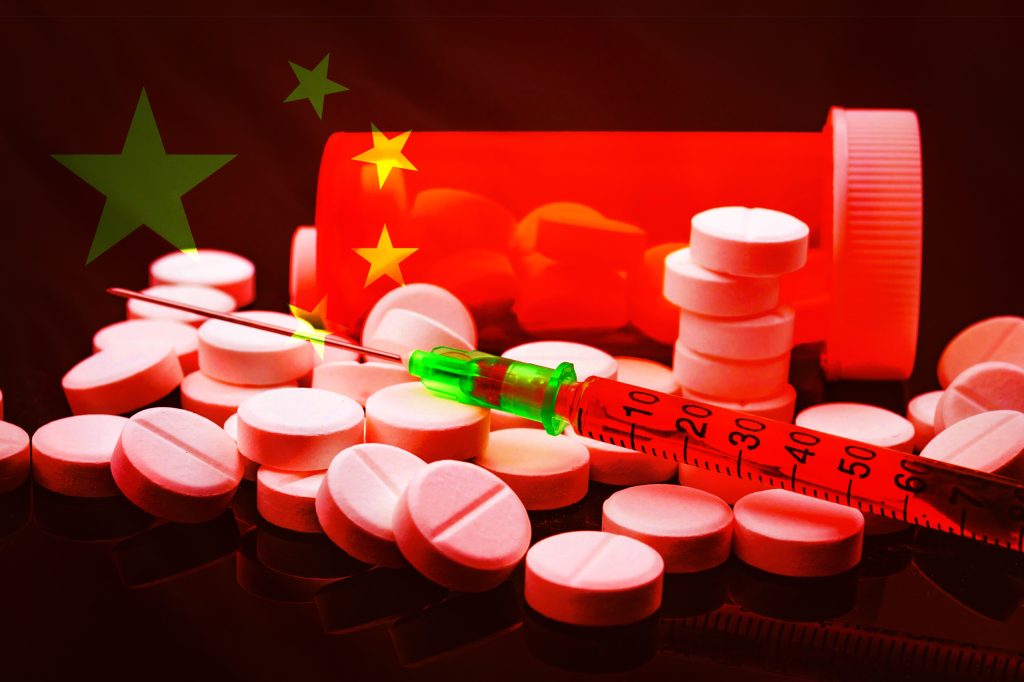
President Trump left dinner with Chinese President Xi Jinping confident thousands of American lives could be saved: the president announced Xi would introduce the death penalty for illegally dealing fentanyl, a synthetic and deadly opioid.

“What he will be doing to fentanyl could be a game changer for the United States,” Trump said on Air Force One as he returned from the G-20 summit in Argentina.

Although Chinese-made fentanyl is reputed to have flooded the U.S. market — cheaply adding a respiration-arresting kick to unwitting buyers of heroin and knock-off pills — experts are far more cautious.

“The fact remains, the demand is here,” said Rand Corporation researcher Bryce Pardo, an expert on illegal drug abuse. “If China were to do something, [manufacturing of the drugs] could go to India.”

Chinese authorities are moving to ban non-pharmaceutical manufacture of the base structure of fentanyl, which would prevent rogue chemists from developing closely related analogs, Pardo said. But the far-reaching restriction may also generate “a lot more novel synthetic opioids” with lesser-known public-health effects, he said.

Pardo said that the conditions in China that allowed a rise of fentanyl exports include a vast number of pharmaceutical companies — the country is believed to have 160,000 chemical companies — and few government inspectors, with product safety issues affecting everything from drywall to toothpaste. Similar conditions might be replicated elsewhere, he said.

“If China does crack down on this successfully, it’s very possible this will move, [and] you have chemists in other countries picking up the slack,” Pardo said.

The significance of China is largely supposition based on the large number of package intercepts from the country, in addition to Mexico, where drug gangs may be processing material sourced overseas. But there’s some evidence production could shift.

“Indian fentanyl exports to the United States are a fraction of those from China,” India-focused Center for Strategic and International Studies researcher Natalie Tecimer recently wrote. “However, unlike China, which has now designated over 100 fentanyl variants and precursors on its list of controlled substances, India has not placed fentanyl, or most other opioids, on its controlled substances list, easing production and export.”

The precise supply chain is rarely publicly known. Online, a number of vendors openly sell fentanyl, some ostensibly geared to businesses. Separately, vendors on illicit marketplaces on the deep web, accessible with the Tor anonymous browser, hawk less-coy contraband.

Earlier this year, as fentanyl drove a spike in opioid deaths, the leading illegal drug marketplace on the deep web, Dream Market, unilaterally banned vendors from selling fentanyl or carfentanil, an elephant tranquilizer that’s even more lethal to humans.

A small percentage of active drug users are believed to purchase their supplies online. Additional users, however, acquire drugs though people who bulk-buy on sites like Dream Market.

Some of the leading fentanyl dealers on Dream Market were arrested in the past year, including four Canadians busted in June for allegedly operating leading fentanyl outlet Mr. Hotsauce. But other popular vendors who marketed fentanyl in the past remain active, including cdnven, which formerly boasted the most fentanyl listings.

“We cannot talk about fent on this site … But you’re in the right place,” cdnven wrote in response to an inquiry about whether it was still possible to buy fentanyl.

“The SH [synthetic heroin] and CW [china white] product is very strong … They both come rocky now … So it doesn’t matter what one you buy,” he explained.

Pardo said “code switching” to avoid the word “fentanyl” appears to be a reaction to market restrictions and law enforcement’s sharp eye for the dreaded compound.

On the “open web,” supposed sales also continue.

An afternoon inquiry sent to a vendor advertising fentanyl on exportersindia.com, a marketplace geared to business-to-business sales, resulted in an onslaught of dozens of text messages between 3:30 a.m. and 6:30 a.m. eastern time — sent from seven different phone numbers — and was followed by emails and phone calls.

“Hello mate, we got your inquiries from exporters India about fentanyl injaction [sic], we Deal with the best of India products and we got a Base in california,” one text message claimed.

David Khalaf, communications specialist at LegitScript, a consumer-protection firm that released an in-depth report in June on the landscape of illicit fentanyl, commissioned by the Center for Safe Internet Pharmacies, said that many supposed sales on the open web are “non-delivery schemes.”

LegitScript’s report identifies the countries of origin for leading darknet and open-web sources, but Khalaf notes that illicit businesspeople aren’t known for supply-chain transparency.

“The problem with our research is the countries of origin are self-reported, we can’t verify that,” Khalaf said, adding however that “my sense is, if China were genuine in its efforts to curb sales, there would be a meaningful difference.”

Pardo said that even if other countries expanded illegal fentanyl exports in response to a Chinese crackdown, he’s hopeful about the long-term outlook. With the exception of Estonia, where heroin has almost entirely been displaced by fentanyl for two decades, he said the stronger compound hasn’t gained a devoted national following, and that, in the long run, a broader tackling of opioid addiction may shrink its use, accidental or otherwise.

But in the near-term, Pardo added, “regardless of what you control, what matters is the enforcement capacity, and China doesn’t have it.”

Related Content