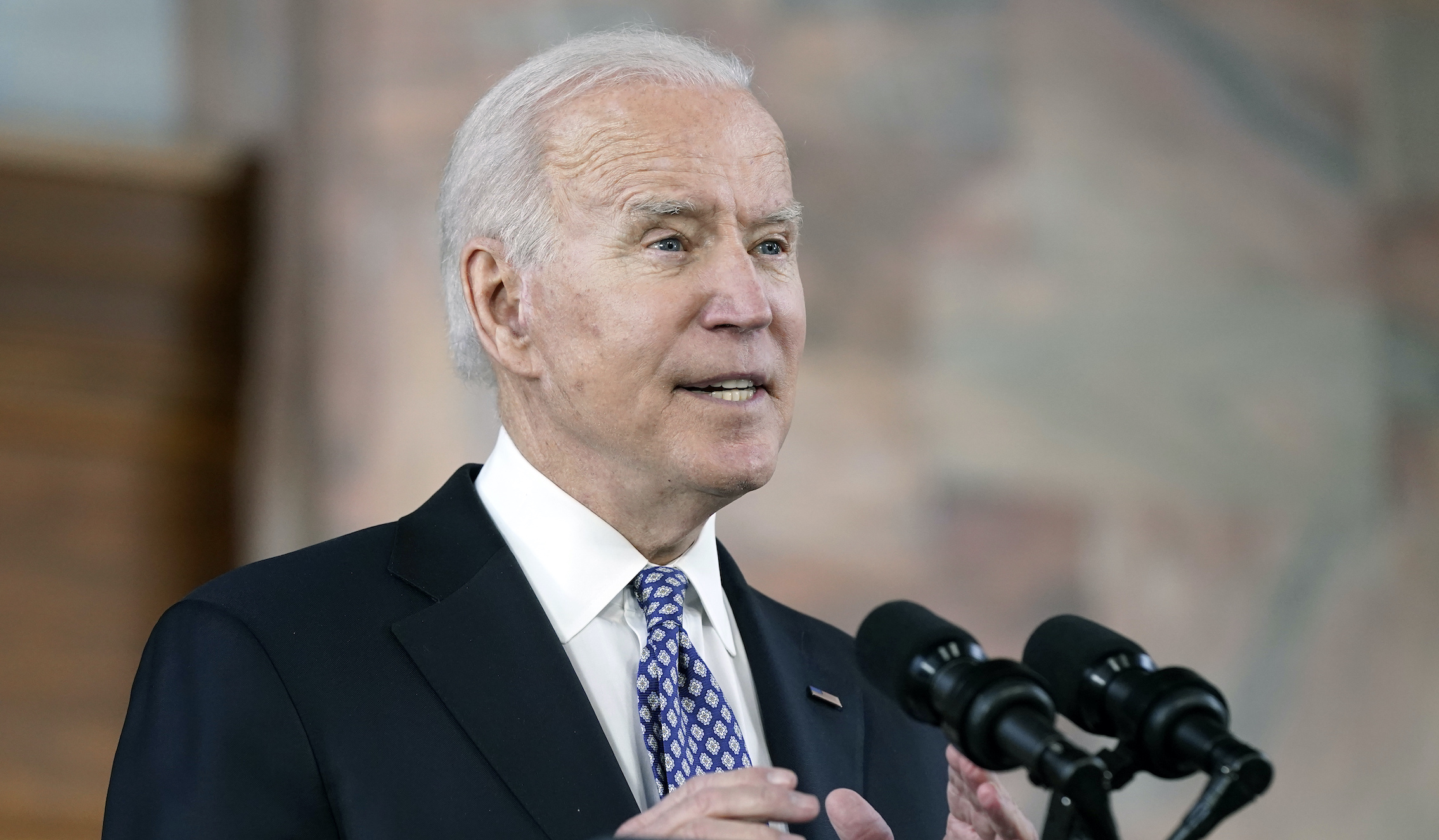
Big expectations and pressure for Biden in first press conference

The delay in convening President Biden’s maiden solo press conference may have had the unintended consequence of raising the bar for his performance.

Biden is set to face reporters in his first stand-alone press briefing on Thursday, day 64 of his administration.

Yet by holding off on holding the press conference longer than his immediate predecessors, the White House has raised expectations for Biden, an inconsistent performer in some unscripted appearances. And it also means he will face reporters as his administration is increasingly criticized for its lack of transparency regarding the surge in unaccompanied migrant children at the southern border.

BIDEN TEAM COMPLICATES BORDER DRAMA BY REFUSING TO UTTER DREADED WORD

Jen Psaki, Biden’s top spokesperson, announced the press conference last week after fielding repeated inquiries in the briefing room about the amount of time it took the White House to schedule one. It was not put on the docket until after Biden signed his $1.9 trillion spending package into law, but Republican strategist Alex Conant was skeptical Biden would be able to keep the measure, dubbed the “American Rescue Plan” by he and Democrats, “in the spotlight.”

“News conferences are good opportunities to explain positions and educate people. They are terrible venues for driving a message, since the topics tend to vary wildly,” Conant told the Washington Examiner.

And after four years of former President Donald Trump, a former reality TV star who knew how to capture people’s attention, the live nature of the press conference may add to the drama already created by the delay.

“Reporters want to make news, so they’ll ask questions that the White House hasn’t adequately answered already. Sometimes, the White House hasn’t answered those questions for a reason,” Conant said.

Conant suspects Biden would be peppered about immigration during the press conference as his aides refuse to describe the situation at the southern border as a “crisis,” instead calling it as an “enormous challenge.”

Foreign policy is also likely to be on the agenda after last week when China, North Korea, and Russia all publicly adopted adversarial positions against Biden’s administration, as well as the Trump-negotiated May 1 deadline to withdraw U.S. forces from Afghanistan draws near.

And then, there’s his next legislative priorities as the White House reportedly prepares to release a $3 trillion infrastructure and energy proposal, expected to include broader “care economy” provisions, such as ones related to universal pre-kindergarten.

Republicans have played up Biden’s delay in organizing a press conference to paint him as having lost a mental step or two. Their complaints echo ones they made during the campaign when they mocked the then-candidate for being basement-bound as he adhered to Delaware’s pandemic stay-at-home order.

“Day 62, and Joe Biden has still not held a press conference,” tweeted Republican National Committee Chairwoman Ronna McDaniel.

Although partisan, Republican protests are historically sound: The last 15 presidents have put together press conferences within their first 33 days in office. As counterpoints, Biden staffers argue that he’s sat for multiple interviews, though with relatively friendly outlets, taken part in a televised town hall, and responded to at least 40 queries shouted at him by reporters.

The clamoring for a press conference has coincided with scrutiny over the administration’s handling of the border situation. Many of those tensions have emanated from Psaki referring requests into the number of unaccompanied minor children in the federal government’s care to the Department of Homeland Security. She’s also declined to release photos of conditions inside DHS facilities while denying media outlets access to federally run shelters.

For University of Michigan debate team director Aaron Kall, Biden would probably be insulated from the heightened anticipation surrounding the press conference by his reputation for verbal missteps. Yet, Kall suggested the lenience often afforded to Biden would eventually “go away.”

“The some kind of slack that he’s been cut certainly won’t be there forever because, before you know it, we’ll be around midterms November 2022 cycle,” he said.

Biden’s worst-case scenario, according to Kall, would be the verbal equivalent of his stumble last week boarding Air Force One.

“Some kind of major health episode or kind of some lapse of memory that, you know, all of a sudden a pattern emerges and then, people begin to express some greater concern about his health and his ability to either finish the term or be able to run for election. That’s on a scale of absolute disaster,” Kall explained. “I don’t expect something like that to actually happen.”

CLICK HERE TO READ MORE FROM THE WASHINGTON EXAMINER

Eric Schultz, a White House principal deputy press secretary for former President Barack Obama, downplayed expectations for the press conference. He warned the Washington Examiner against placing “too much stock” in the event.

“To be sure, this will be an opportunity to walk through how much he has already accomplished in the last two months and what’s in store for the few, but the only people focused on the press conference have a 202 area code,” Schultz said, referring to Washington’s area code.

Related Content
