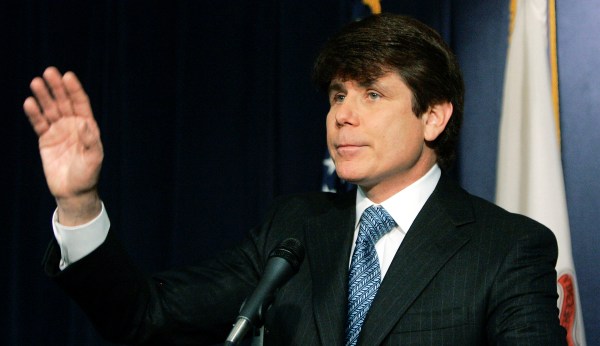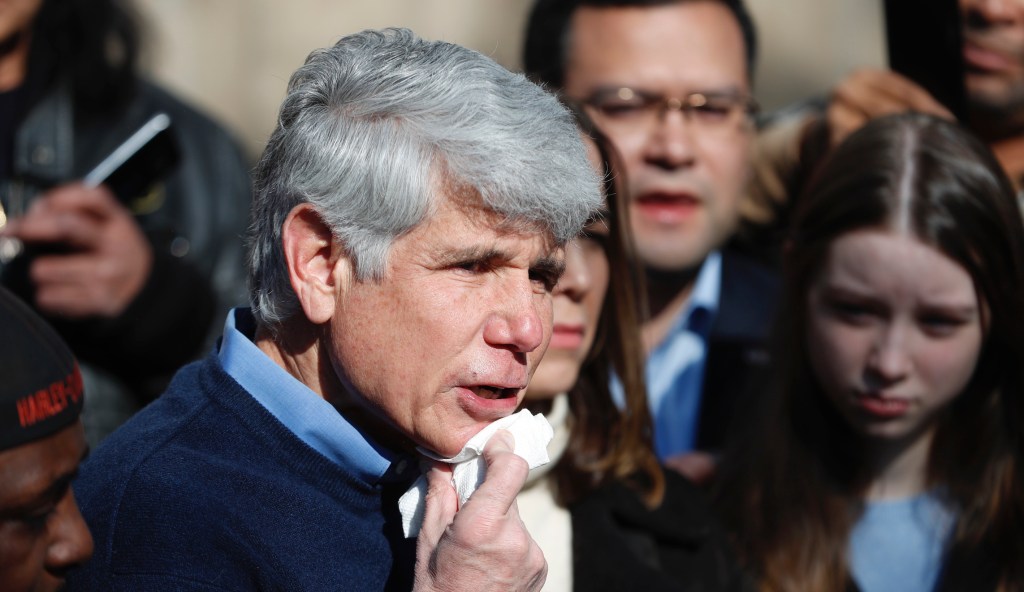
After declaring himself a “Trumpocrat” on Wednesday, former Illinois Gov. Rod Blagojevich was asked if he would vote for President Donald Trump in 2020.
“If I had the ability to vote for him, I would vote for him,” Blagojevich said.
Because he was released from prison, Blagojevich is able to vote so long as he re-registers to do so, according to state election laws.
However, because Trump commuted Blagojevich’s sentence rather than granting him a pardon, Blagojevich remains a convicted felon, said Richard Kling, a law professor at the Chicago-Kent College of Law at the Illinois Institute of Technology.
“A pardon clears the record completely so that, even if you’d been convicted, it takes away the conviction and you can do anything that you could have done before the conviction,” he said. “A commutation merely gets you out of jail earlier and that’s exactly what happened with former Gov. Blagojevich.”
That’s also why, Kling said, voter won’t see Blagojevich’s name on a ballot.
“The Illinois Constitution states ‘a person convicted of a felony, bribery, perjury, or other infamous crimes shall be ineligible to hold office created by this Constitution,’ ” he said. “He cannot run for office in Illinois.”
Before he was in politics, Blagojevich was a lawyer. However, Blagojevich’s law license has been suspended since his conviction in 2011, according to the Illinois Attorney Registration & Disciplinary Commission. Blagojevich might not be able to get his law license back.
“The Attorney Registration and Discipline Commission, which regulates lawyers, is pretty strict with respect to some types of felonies,” Kling said. “Particularly, alleged financial crimes or corruption.”
Criminal justice advocates have pushed to lighten some occupational barriers for the formerly incarcerated, saying it keeps them from making an honest living and increases recidivism.