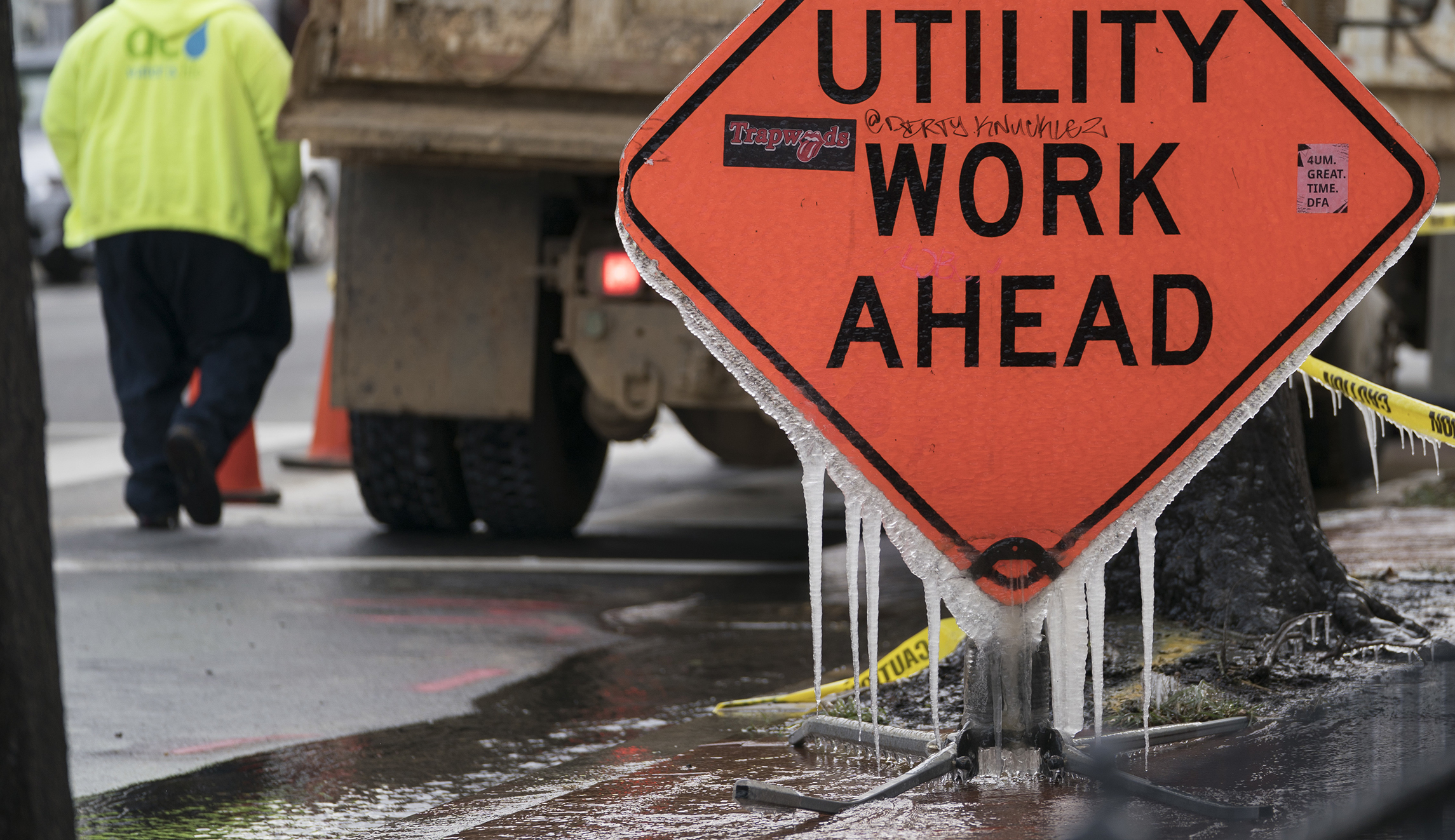
President Joe Biden’s odd proposition is that Congress ought to pass an infrastructure bill that has almost nothing to do with infrastructure.
It’s unfortunate because there has long been a bipartisan understanding that an infrastructure bill will be needed at some point. Former President Donald Trump promised to tackle it. Former President Barack Obama had tried to address the issue but learned the hard way that “shovel-ready” projects are often anything but.
Biden’s new $2.3 trillion package is that it isn’t so much an infrastructure bill as it is an attempt to reshape a perfectly healthy economy into something suboptimal at best and more ideological at worst.
As Sen. Marsha Blackburn, a Tennessee Republican, has pointed out, “not even 6%” of the package is dedicated to updating roads and bridges. This bill, the latest installment of a combined $8 trillion in extraordinary pandemic-era spending, is not so much a genuine infrastructure measure as it is cover for passing agenda items that leftists have been chomping at the bit to move for decades.
For example, this measure would spend hundreds of billions of dollars on climate regulation and the restoration of by-now completely unnecessary incentives to purchase electric vehicles. Call that what you will, even Tesla subsidies if you like, but this isn’t infrastructure.
The bill throws billions at initiatives designed, for example, to reduce “racial and gender inequities” in STEM education — so once again, Washington finds fault in the college majors that women or black and Hispanic students are choosing, and it’s here to help! Seriously, though, whatever merits such initiatives might have in interesting younger students in those fields, this is not even remotely related to infrastructure.
Beyond that, Biden’s package is filled with items, which, even if inoffensive, are just extraneous. An infrastructure package is really not the place to deal with “education deserts.” Today, the only “deserts” in education are those caused by the teachers unions refusing to let their members teach inside a classroom.
And then, there’s the money involved. As the Associated Press recently pointed out, it was cheaper for the U.S. government to fight and win World War II than it has been for Presidents Trump and Biden to stimulate the economy during the current pandemic. And that estimated $6 trillion total doesn’t even include this infrastructure package.
It is not popular to talk about the national debt situation nowadays, given that at least some of the trillions in recent COVID-19 spending were justifiable as a means of helping people put out of work by government mandates. But there’s something even less popular than talking about debt, and that’s austerity. Irresponsible spending at a time like the present, when things are actually not that bad (29 states have unemployment rates below 6%, and over 900,000 jobs were created last month), will at a later date make generous spending in an emergency impossible, or even force deep spending cuts amid a severe economic downturn.
Every round of PPP loans, combined with every $1,400 check for wage-earners, combined with each new bailout for state governments and poorly managed pensions — well, that all starts to add up. A trillion here, a trillion there — pretty soon, you find yourself talking about the federal budget in quadrillions of dollars.
If Congress wants to do something constructive and bipartisan, it should draft and pass a more limited bill that deals with roads, bridges, and waterways. The times, along with Biden’s razor-thin majorities in Congress, call for something responsible in scope, which covers genuine needs and sets ideological goals aside for another day.
