

Joe Biden once joked that in Delaware “you cannot go to a 7-Eleven or a Dunkin’ Donuts unless you have a slight Indian accent.” Hillary Clinton quipped at a Missouri political fundraiser that Mahatma Gandhi once “ran a gas station down in St. Louis.”
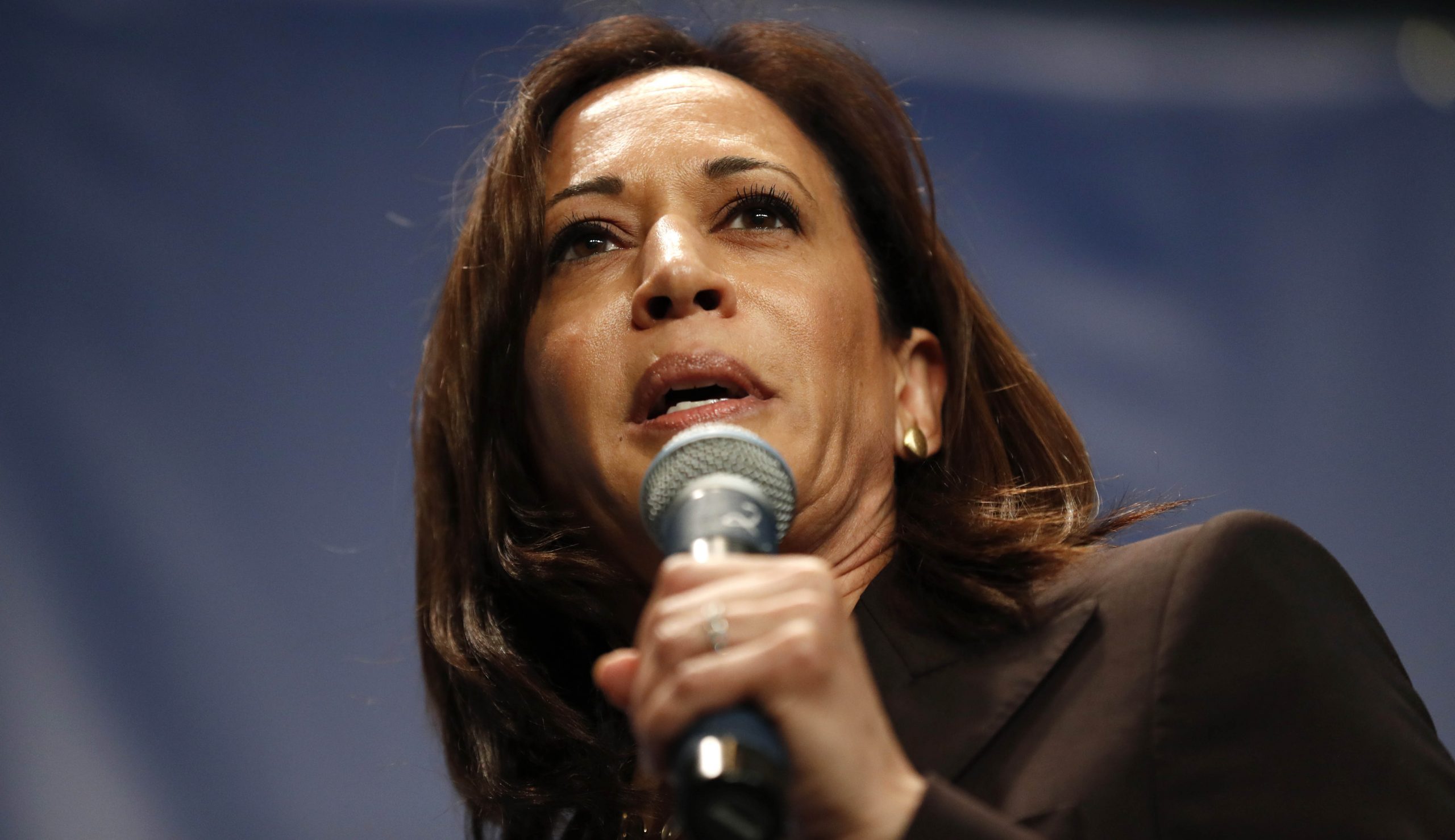
Those attempts at humor were more than a decade ago. Now, Indian Americans are being taken a lot more seriously by Democratic presidential candidates. One of the leading contenders is California Sen. Kamala Harris, 54, whose mother was a Tamil Indian, though she has dwelled more on her black heritage from her Jamaican father.
Recommended Stories


The four-million strong, left-leaning Indian American community, representing just more than 1% of the population, has increasing political clout. Almost 50% of voting-age Asian Americans cast a ballot in the 2016 elections and some 1.5 million were Indian, according to the U.S. Census Bureau.
Four Indian Americans are Democratic members of the House of Representatives: Ami Bera, California; Pramila Jayapal, Washington; Ro Khanna, California; and Raja Krishnamoorthi, Illinois. On the Republican side, President Trump’s former United Nations Ambassador and ex-South Carolina Gov. Nikki Haley is likely to be a leading candidate for the White House in 2024.
Indian Americans have donated $3 million to presidential campaigns so far this 2020 cycle, eclipsing highly sought-after Hollywood contributors. Two-thirds of that figure went toward Democratic hopefuls, their donations mostly funneled into Harris, Hawaii Rep. Tulsi Gabbard, who is not Indian American but is a Hindu, and Sen. Cory Booker of New Jersey, home to the highest percentage of Indian Americans of all U.S. states.
Harris raised more than $387,000 from Indian Americans through June. Despite Harris dominating Gabbard in a slew of early primary polls, the first Hindu elected to Congress, boosted by her pro-Indian Prime Minister Narendra Modi stance, was only a touch behind with $374,000. Booker’s active role in his local Indian American community helped him attract $248,000. Biden, in comparison, earned $173,000 since he entered the race in April from the community who’s seen him take part in annual White House Diwali celebrations.
In 1990, Democratic Maryland House delegate Kumar Barve became the first Indian American elected to a state legislature. He told the Washington Examiner: “It’s definitely a generational shift.”
“Indian Americans came here, they were professionals, they were upper-middle class, and a lot of them really didn’t need government services in those days, and so they had less of an incentive. Their children began to be interested in politics because public service and what they learned in school,” Barve said.
But he warned that Harris wasn’t guaranteed the community’s support, a sentiment reflected in the fundraising numbers: “It’s a plus-point certainly, but I think that most Indian American voters are going to vote for whoever they think has the best chance of beating Donald Trump.”
Harris, whose first name means “lotus” in Sanskrit, hasn’t made her Indian ancestry a central part of her campaign. Sumit Ganguly, a political science professor at Indiana University, Bloomington, called it a smart choice given the breakdown of African American and Indian American voters in the country, but said it was “a source of a little bit of unhappiness in the Indian American community.”
“While she has not denied her Indian American heritage and has spoken quite warmly about her mother, she identifies on the campaign trail as African American because this is a matter of political savvy. She recognizes this is where she’s going to pick up votes,” Ganguly told the Washington Examiner.
Ganguly suspects the senator is “losing out on some of the funding from Indian Americans” but is optimistic she could make up ground by “being present.”
“For example, in Silicon Valley for crying out loud,” he said. “All she would have to do is show up at one of their gatherings and maybe make some nod toward her mother, and immediately she would win considerable support from significant segments of the community.”
Harris routinely attributes her liberal political positions to her parents, civil rights activists who met in Berkeley, California, during the 1960s. She sometimes mentions her mother’s parents. P.V. Gopalan was a diplomat involved in India’s independence movement before spending time in Zambia resettling refugees after Great Britain relinquished control of its colony.
“My grandfather, having been a freedom fighter in India and a very progressive person, put my mother on a plane, a transcontinental flight, which was unheard of in those days, 1959, to go and study at Berkeley,” Harris said at a Washington fundraiser hosted in May by Manan Trivedi and wife Surekha.
She says he inspired her to enter public life during childhood vacations every two or three years to the family’s south India hometown of Chennai, then known as Madras.
“There I would be, this young girl, holding my grandfather’s hand, walking with them as they would debate and discuss with incredible passion the importance of a democracy,” Harris told Indian American leaders at the 2018 Impact Summit in D.C. of her grandfather and his peers.
“My grandfather would talk to me about the importance of applying an unflinching ethical lens to every single problem you face. He was joint secretary for the Indian government, a post akin to our deputy secretary of state, and he had numerous fascinating assignments, including several years as an adviser to the government of Zambia in Africa,” she said in a 2009 interview with Reshma Dhawan.
In her 2019 memoir The Truths We Hold, Harris described her grandmother Rajam Gopalan as “a skilled community organizer.” “She would take in the women who were being abused by their husbands, and then she’d call the husbands and tell them they’d better shape up or she would take care of them. She used to gather village women together, educating them about contraception,” she wrote.
In the book, Harris recalled how her mother raised she and her younger sister Maya to be “confident, proud black women” knowing her “adopted homeland” would view the pair as “black girls,” regardless of their mixed background.
That primacy of her black identity was on display at the Washington fundraiser when the senator was urged to make her first overseas trip as commander in chief to India.
“When you become president, we want … your first foreign visit to go to India instead of Jamaica,” a man told her before she declined to commit, according to the Los Angeles Times.
