
‘It improves targeting’: Americans under threat from Chinese facial recognition systems, Rubio warns

Chinese facial recognition technology is spreading to cities around the world, heightening the risk of travel for U.S. government officials and even private citizens, according to a top lawmaker.

“It improves targeting,” Republican Sen. Marco Rubio told the Washington Examiner. “That sort of activity could imperil Americans traveling abroad, including those who are involved in the business sector, not just those involved in intelligence and diplomacy.”

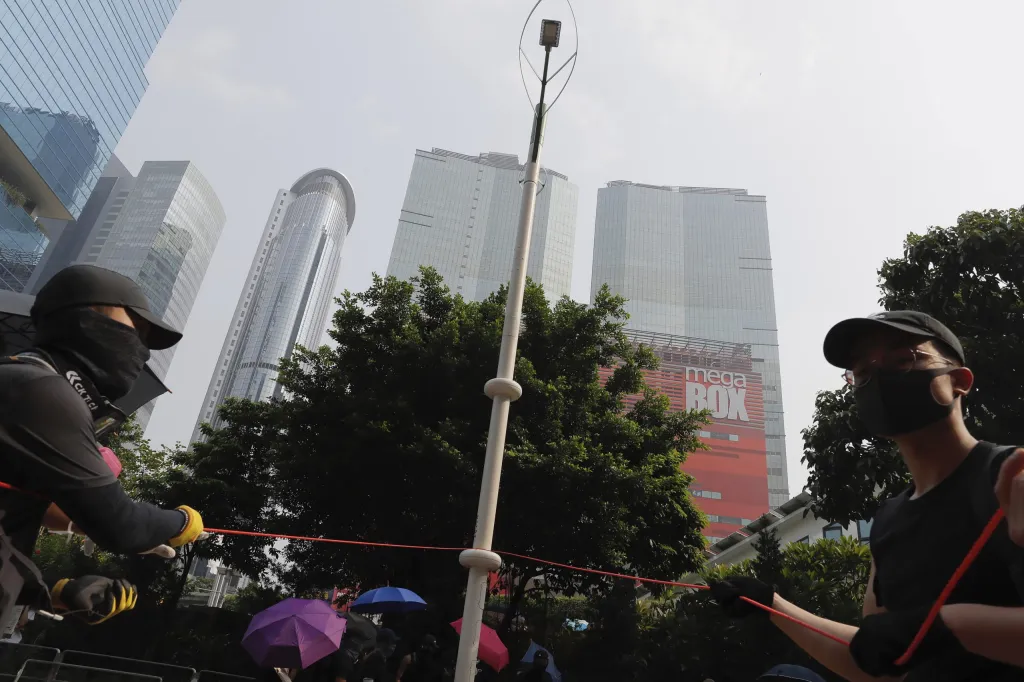
China’s use of high-tech surveillance has returned to the international spotlight as Hong Kong protesters with electric saws cut down government “smart lampposts” they fear could identify them to mainland Communist authorities. Those scenes underscore how Beijing’s spy services could exploit partnerships between local governments and Chinese technological giants to gain advantages in a worldwide competition with the United States.

“At its most basic level, the more you know about someone, the easier it is for you to target, leverage them, or use their information to make predictive decisions about it,” said Rubio, a senior member of the Senate Foreign Relations and Intelligence committees.

China’s authorities have deployed roughly 200 million cameras across the country to maintain control by expanding surveillance to deter behavior they don’t like. But Rubio is also worried about the ramifications of places outside China relying on the same technology for security. That concern was stoked during a recent trip to Kenya.

“Literally at every intersection, some picture snapped,” the Florida senator said. “Now they would argue that all that information is held by the Kenyans, ‘We’re just buying a product off the shelf from a company that happens to be from China.’ But the reality is that in order for that system to work and for them to design the software for it, they had to have access to government databases.”

Making matters worse, from Rubio’s perspective: The surveillance systems are made by companies such as Huawei, the Chinese telecommunications giant that Secretary of State Mike Pompeo and other American officials believe puts malware and other technology in its equipment for the benefit of Chinese spies.

That cooperation between high-tech companies and espionage agencies raises alarming scenarios. Rubio envisions, for instance, an American executive or scientist traveling abroad for business meetings only to be detected by Chinese-made facial recognition software, which alerts China’s intelligence apparatus.

“Now you’re able to overlay your ability to hack into their computers and access their databases with knowing where they are in real time, who they’re meeting with, and get information from them that way,” he said. “They know what hotel you’re staying in, they know what WiFi network you’re on. It provides them more and more opportunity for that company and that government to access your corporate information and steal it.”

That thought spurred Rubio and Oregon Sen. Ron Wyden, a Democratic colleague on the intelligence panel, to urge the State Department to issue travel warnings for the 18 countries that reportedly rely on Chinese technology for surveillance.

“Indeed, Americans need to know that repressive regimes may use Chinese-made technology to gain access to sensitive data, or that Chinese intelligence may gain access to data, even if Americans never set foot in China,” the lawmakers wrote in a letter this month to Pompeo. They noted that the countries believed to be using such technology “include Germany, which has strong privacy and human rights protections, but also Pakistan and the United Arab Emirates, which do not.”

The senators haven’t heard back from the State Department, according to Rubio’s office.

“We are committed to providing U.S. citizens with clear, timely, and reliable information about every country in the world so they can make informed travel decisions,” a State Department spokeswoman told the Washington Examiner. “We provide comprehensive safety and security information for every country in the world to help citizens assess the risks of travel. Each country information page contains a Travel Advisory, Alerts that have been recently issued, and other important details specific to that country.”

The technology has been deployed in Western countries as well as poorer and more authoritarian nations in Latin America, a trend that has lawmakers and analysts worried about China developing a surveillance empire on the doorstep of the United States.

“It also allows them to target opponents of their politics,” Rubio told the Washington Examiner. “We’ve seen harassment efforts in the mainland, in the continental United States, where political opponents of what China is doing have had visits and reminders that they have relatives living in China. So imagine that with a global reach. Again, this is the tip of the iceberg.”

Related Content