The border crisis isn’t just a security concern — it’s also an ecological one

Opinion
The border crisis isn’t just a security concern — it’s also an ecological one
Opinion
The border crisis isn’t just a security concern — it’s also an ecological one
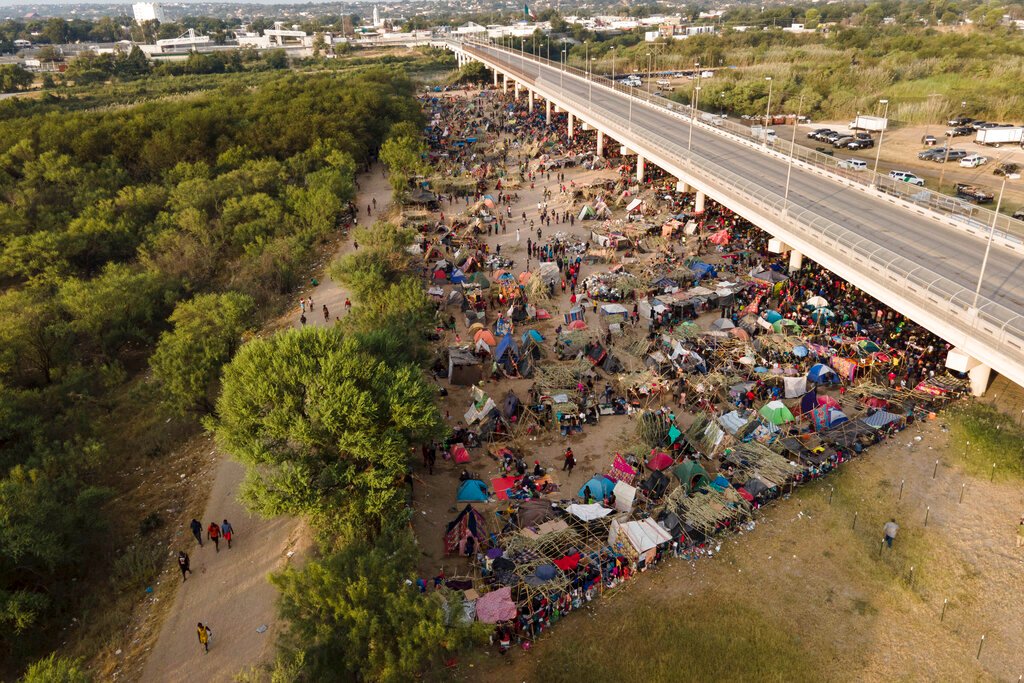
Mexico US Border Migrants Del Rio
Migrants, many from Haiti, are seen at an encampment along the Del Rio International Bridge near the Rio Grande, on Sept. 21, 2021, in Del Rio, Texas.

The southern border has immense ecological and environmental treasures. That’s why, over the last century, Republican officials prioritized protecting the border’s exceptional resources and ensuring proper management of the region’s protected species. President Theodore Roosevelt, for example, used his executive authority to

reserve
land and

establish
federally controlled sanctuaries. President Gerald Ford remodeled various reserves into National Parks under the international Man and Biosphere

program
.

Decades later, however,


unauthorized
border crossings have led to habitat loss, soil erosion, and pollution. With the Biden administration’s recent suspension of Title 42, a public health policy that allowed border officials to turn away unqualified migrants seeking asylum, the desecration of the southern border will continue, exacerbating the existing soiling of the local terrain.


BIDEN TRIES TO SHAKE LOW MARKS ON ECONOMY WITH ‘BIDENOMICS’ PUSH

For border families, unauthorized immigration has dramatically affected their everyday lives. From the ranches of the Southwest to the waters of the Rio Grande, the border’s tremendous ecological and environmental diversity is a cornerstone of regional culture. The 1,951-mile border is home to at least 50

endangered
species and numerous natural barriers establishing the Mexico-United States border. From Tijuana to Brownsville, border communities have felt the brunt of littered streets, polluted rivers, and

exhausted resources
.

Local organizations have pioneered steps to address this crisis.

WILDCOAST
has installed a historic solid waste retention system, which has prevented upward of 30,000 kilograms, or about 66,100 pounds, of waste. The

Benioff Ocean Initiative
at the University of California, Santa Barbara, and the National Oceanic and Atmospheric Administration have followed suit to clean up debris along the California portion of the Mexico-U.S. border. Additionally, local border control agents have cleaned up trash and

remnants
left behind by immigrants.

Officials have also taken tremendous steps to divert these impending concerns at the municipal and countywide levels. In McAllen, Texas, Mayor Javier Villalobos signed a

disaster declaration
to ensure the safety of immigrants and his community. In Cochise County, Arizona, Sheriff Mark Dannels has ordered his department to prepare for the daily entry of

400 immigrants
into his border jurisdiction. And in El Paso, Texas, the Democratic mayor also

declared
a state of emergency, citing the city’s inability to handle the influx of new migrants. Local leaders are working diligently to deflect the hardships associated with this immigration surge.

Officials at the state level, including Gov. Greg Abbott (R-TX), have also worked on environmental matters. Earlier this year, Abbott

deployed
the Texas National Guard to intercept illegal immigrants and worked to stop the overwhelming influx of new crossings.

Over in Arizona, state Senate Republicans have unveiled a legislative agenda focused on

intertwined matters
of border security, public safety, and water scarcity.

And in the halls of Congress, Reps. Bruce Westerman (R-AR) and Paul Gosar (R-AZ), chairman and member of the

House Committee on Natural Resources
, respectively, have highlighted these environmental concerns. In 2021, Gosar and Westerman published a joint

opinion editorial
noting the environmental impact of recent immigration surges. The congressmen pointed out that each migrant discards nearly 8 pounds of trash in the desert during his or her crossing and how the destruction of federal land has interfered with local habitats. Sen. Kyrsten Sinema (I-AZ) has

co-authored
legislation with Sen. Thom Tillis (R-NC) to extend Title 42 in hopes of ceasing these harmful trends.

Conversely, President Joe Biden and congressional Democrats have abdicated their responsibilities regarding border security. When Biden first visited the border as president, residents of the El Paso community

slammed
the city for removing the garbage and waste left behind by migrants just hours before the president’s arrival. Numerous officials have criticized the administration for the trash and

physical damage
that lingers along the southern border. The litter, empty backpacks, and clothing are daily reminders of the ecological and humanitarian calamities at the border.

This should not be a partisan matter. Like Republicans, the Biden administration should be working to secure our southern border and the many ecological treasures to which it is home. Unfettered illegal immigration isn’t just a security concern — it is also an ecological one.

But for now, highlighting local solutions and elevating municipal officials will usher in an effective alternative to current immigration policies, one focused on eliminating the humanitarian and environmental crises along the Mexico-U.S. border.


CLICK HERE TO READ MORE FROM RESTORING AMERICA

Brett Patrick is a rising freshman at Binghamton University pursuing a MA in political science.

Share your thoughts with friends.

Related Content