

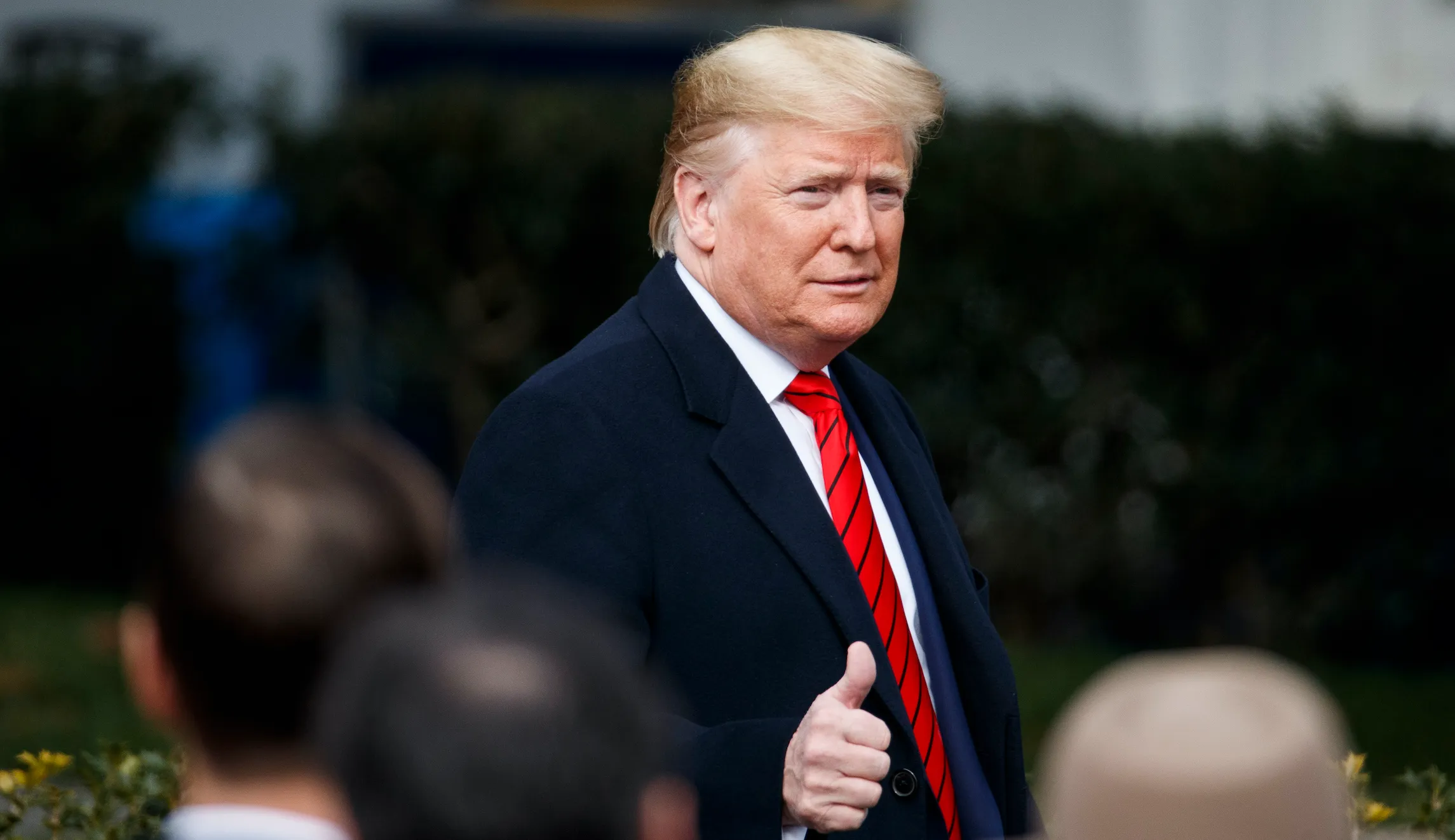
President Trump’s strategy to contain and prevent the spread of the coronavirus is necessary. But its rollout has been marked by missing details, added clarifications, and presidential blunders.
I disagree with those arguing Trump’s Oval Office address Wednesday night was a disaster. At the very least, it proved the president is taking this pandemic seriously and that he’s willing to do whatever it takes to prevent this crisis from deepening, even if that means sacrificing short-term economic stability.
Recommended Stories


“I don’t want people dying,” Trump said during a follow-up press conference Thursday morning. “The stock market is important; it’s very important. But not that important compared to life and death.”
The markets have indeed suffered as the coronavirus spreads, and they nose-dived once again after Trump’s Oval Office address. The president did his share to add to the uncertainty that is making investors flee. He mistakenly announced that travel prohibitions would apply to a “tremendous amount of trade and cargo,” and later clarified that “trade will in no way be affected by the 30-day restriction on travel from Europe.”
U.S. stocks plummeted into bear market territory overnight, and investors are now preparing for serious losses. The fiscal initiatives Trump announced — low-interest loans for small businesses, payroll tax cuts, and delayed tax deadlines, etc. — were supposed to calm the markets. But his blunder added to the temporary frenzy.
Trump’s temporary European travel ban also hurt more than it helped. Make no mistake: the restrictions on travel to and from Europe are absolutely necessary. I’d even argue they should have been put in place sooner. But Trump failed to mention one important detail: The travel restrictions do not apply to U.S. citizens or permanent residents, and they don’t apply to every European country, as the White House later clarified.
But again, the clarification was too little too late. Panicked U.S. citizens abroad rushed to the airports desperate to book early one-way flights home, with at least one person paying more than $20,000.
Bedlam at U.S.-bound airlines at CDG in Paris early this a.m., as Americans pay as much as $20,000 for last-minute flights. pic.twitter.com/kkbOAEFn4Y
— Mike McIntire (@mmcintire) March 12, 2020
Trump would have faced criticism for the European travel ban regardless. But he could have at least made sure the policy was coherent and complete before he announced its implementation. Instead, he rolled out a plan that created more questions than answers.
These containment policies are extreme, but they are necessary. More than 70% of new confirmed cases have been linked to Europe, which means it’s spreading rapidly in that part of the world. To borrow a phrase from the Centers for Disease Control and Prevention director, Dr. Robert Redfield, “Europe is the new China.”
Unfortunately, Trump’s blunders overshadowed the prudence of these policies and made his government look unsure of itself. What we need now is confidence in our government and faith in its ability to protect this nation and its people. Trump was supposed to offer both during his Oval Office address. Instead, his address led to even more confusion.
There is also a lot the federal government has not yet done, as Dr. Anthony Fauci, director of the National Institute of Allergy and Infectious Diseases, pointed out. Trump announced that testing would be widely available, but he didn’t specifically say how the government plans to make this happen. Nor did he outline how the government will prepare hospital readiness, which has been a big problem for countries currently fighting this outbreak.
The coming weeks will continue to test our president’s ability to govern and lead. He must be better prepared.
