

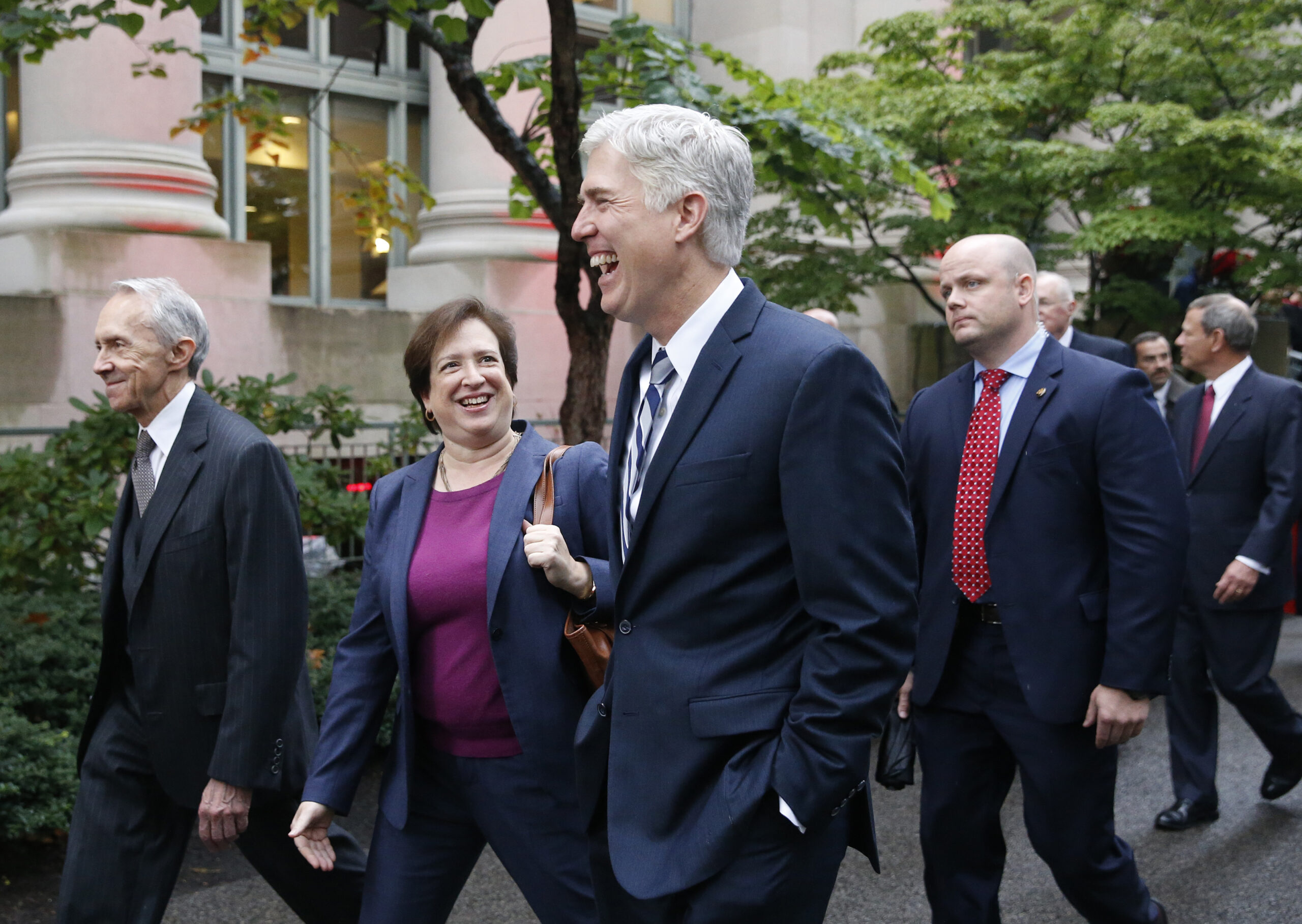
“Gorsuch swings against Trump in deportation case.” So read the headline in Politico Tuesday, after the Supreme Court issued its decision declaring a subsection of federal immigration law to be unconstitutionally vague in Sessions v. Dimaya. The headline tells half of a story: While Justice Neil Gorsuch joined the Court decision against the Trump administration, his position reflected precisely the values that put him on the court in the first place.
While lawsuits challenging the Trump administration’s enforcement of immigration laws have been a hot-button issue—to say the least—the issue in Dimaya was extremely technical: namely, whether the term “a crime of violence,” as used in federal criminal law and incorporated by reference into federal laws requiring deportation, is so vague as to violate potential deportees’ constitutional right to due process of law. It’s an interesting issue, although hardly the stuff of front-page news … except that Justice Gorsuch sided with the court’s four liberal justices, and against the Trump administration.
Stay informed.Stay ahead.
Join Washington Examiner for unlimited access to the news, analysis, and commentary that matter most.
Already a member? Log in
