

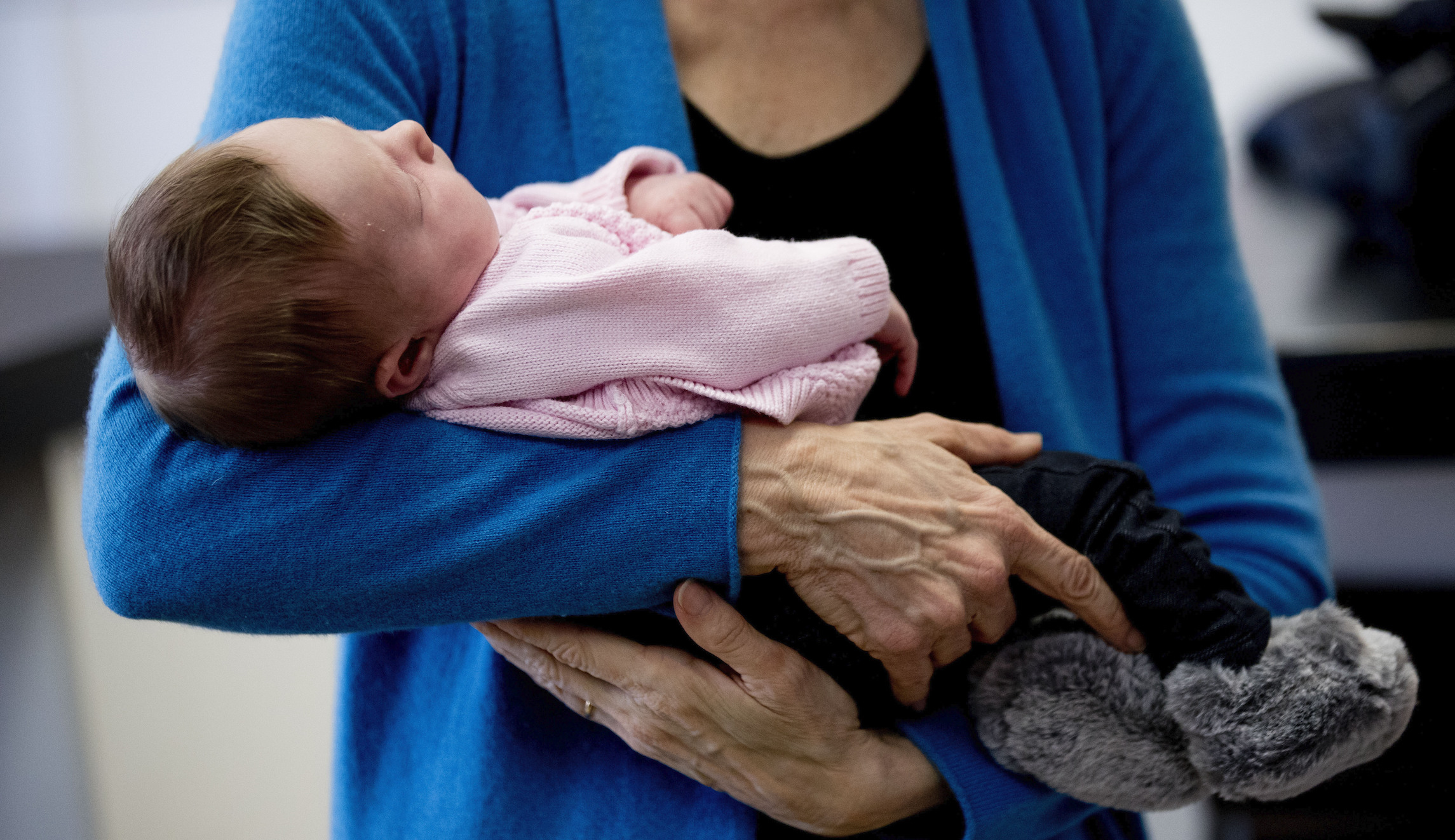
The newborn population in the United States in 2019 was the smallest in 35 years.
The Centers for Disease Control and Prevention’s National Center for Health Statistics revealed that the general fertility rate in the U.S. hit a record low, with 58.2 births per 1,000 women aged 15 to 44. That rate, which was down 2% from the year before, is the lowest recorded birthrate since the data were first collected in 1909.
Recommended Stories


In total, 3.75 million babies were born in the U.S. in 2019. That newborn population dipped 1% from 2018. The total fertility rate, which is the number of children born to an individual woman, moved slightly below the total from the year prior to 1.7 infants per woman over her lifetime. The number of births needed to maintain a population without immigration is 2.1 births per woman.
Melanie Brasher, a sociology professor at the University of Rhode Island, told the Wall Street Journal the decline in birthrate has been a trend since the 2008 recession. She said millennials feel they cannot afford a large family with two or more children.
“There are a lot of people out there who would like to have two children, a larger family, and there’s something going on out there that makes people feel like they can’t do that,” Brasher said.
The only demographic to see its birthrate grow were women in their early 40s. The birthrate for teenagers was down 5%. The teenage birthrate has plunged 73% since its height in 1991.
Brady Hamilton, who co-authored the birthrate report, said the increase in women giving birth in their 40s means that some may just be waiting longer to have children.
“Women are still having children,” he said. “They’re just holding off until a later point in time until they establish their education and establish their career.”
Millennials have broken many of the familial trends set by previous generations. In 2019, marriage rates dropped to the lowest point since data were first recorded in 1867.
