

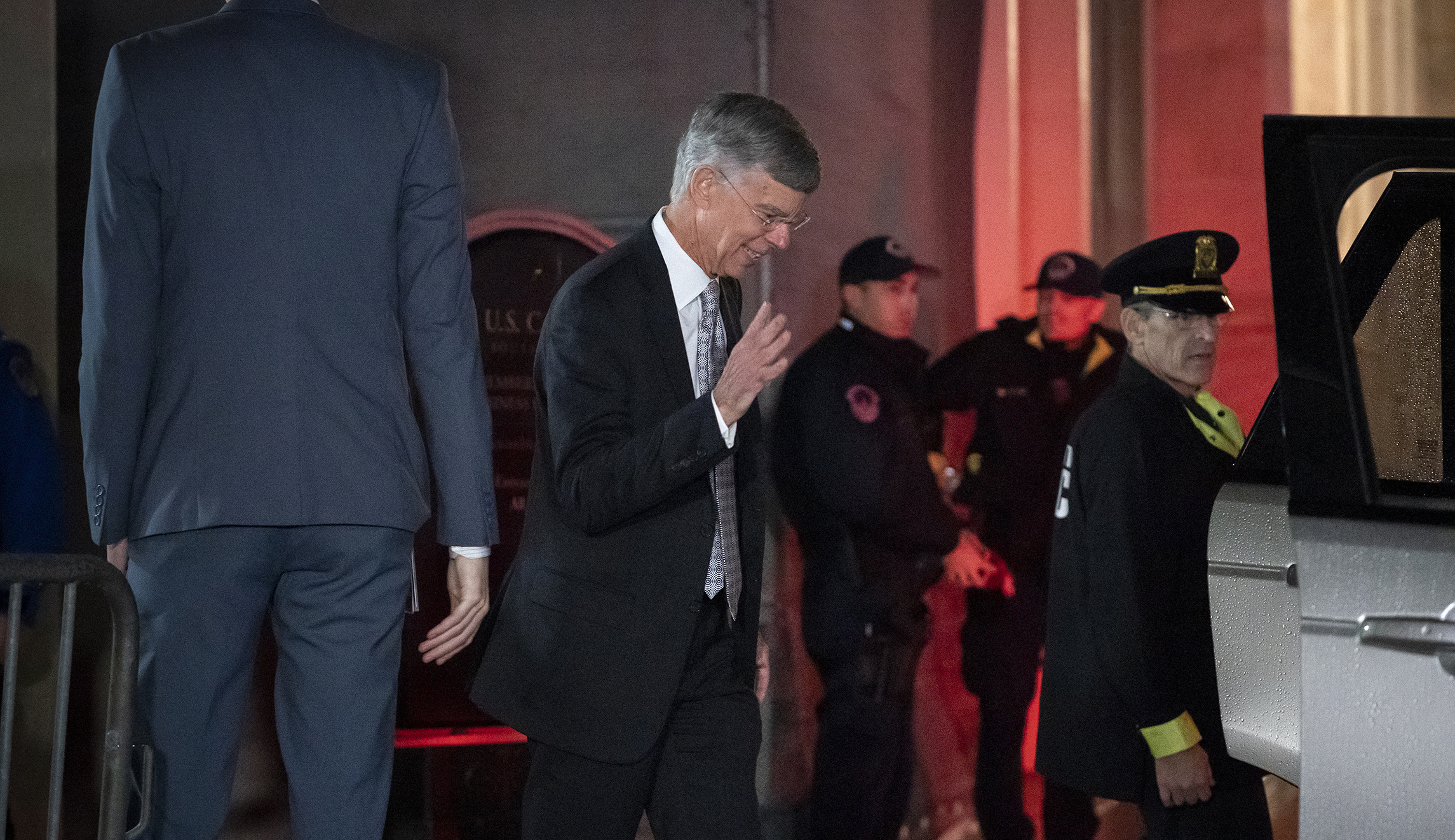
The testimony on Wednesday from the most senior U.S. diplomat in Ukraine, William Taylor, was problematic for President Trump because of who Taylor is and the credibility he brings. But it won’t tip the balance in favor of impeachment.
In his opening remarks, Taylor noted bold efforts by President Volodymyr Zelensky of Ukraine to forge closer relationships with the European Union and strengthen the rule of law. He observed that Ukraine “has been violently attacked by Russia. … If we believe that nations get to decide on their own economic, political, and security alliances we must support Ukraine in its fight against its bullying neighbor. Russian aggression must not stand.”
Recommended Stories


Taylor is correct. It would be a disgrace for any executive to tie congressionally appropriated foreign military aid to a nation’s partisan investigation of an American politician. Although they are attacked as deep-state saboteurs desperate only to see Trump unlawfully unseated, the life stories of public servants such as Taylor and Lt. Col. Alexander Vindman lend them great credibility.
But as I say, Taylor’s testimony won’t tip the balance.
The problem for those who seek impeachment is Taylor’s description of the pre-Trump-era U.S. relationship with Ukraine. Taylor rightly articulated the U.S. strategic interest in supporting Ukraine, but he was wrong in his opening remarks to suggest that this support has been long-standing.
It clearly has not been.
Military aid of the kind that Ukraine has continually sought since the Russian invasion of its territory in 2014 — lethal military aid — only began under the Trump administration. President Barack Obama continually refused to provide that lethal aid in the fear that doing so would spark Russian escalation. Trump, however, authorized that lethal aid in the first year of his administration.
This distinction matters because it cuts to the ultimate heart of the impeachment issue as the public understands it.
Put simply, it is not enough for Taylor to say, as he did, that meetings Ambassador to the European Union Gordon Sondland held with Ukrainian officials indicated U.S. lethal aid and political support was made incumbent on Ukraine’s political investigation of the Bidens. Unless Sondland says the same thing, such conduct must be regarded as likely but unproven. But for most Americans, it’s too far in the weeds to justify impeachment.
Then we go back to Trump’s central defense against impeachment: his claim that until the July phone call, at least, his administration’s support for Ukraine was manifestly superior to that of the Obama administration. Because, unlike Taylor’s assertions, Trump’s claim is provably true. Trump administration support for Ukraine crossed the spectrum of military aid, intelligence action, and political support in ways that Obama’s did not.
That record allows Trump to say “Google what I did and what Obama did.” On the campaign trail, those words dilute the effect of testimony such as Taylor’s. Even, as I say, Taylor’s testimony is likely accurate. To successfully justify impeachment, Democrats must produce forensic evidence of Trump’s quid pro quo — something like an audio recording showing Trump’s explicit instructions to withhold aid in lieu of a renewed Burisma investigation targeting the Bidens.
Absent that, Democrats will not be able to tip the balance and remove Trump from office.
