The other border crisis: Exhausted agents hanging on by a thread

Beyond the humanitarian and security catastrophe unfolding at the southern border, there is another crisis few know about.

Migrants have been the focus of the border crisis for months, and with good reason. More than 700,000 people have been taken into custody by Customs and Border Protection (CBP) personnel at and between ports of entry in the first nine months of fiscal 2019, more than the previous 12 months.

But less visible are the 14,750 rank-and-file U.S. Border Patrol agents who are forbidden from speaking with the media. They make up around 75% of the 19,500 agents on payroll as of late June, according to the agency’s union, the National Border Patrol Council. Several agents, all union representatives themselves, said their fellow agents may not be making a scene, but many are not OK.

“If there’s going to be a front page headline about what’s happening on the border as it pertains to Border Patrol agents, it should be, ‘Exhausted,’” said Wesley Farris, second vice president for the El Paso chapter. “That’s what we are — exhausted — in every avenue. Exhausted mentally. Exhausted physically,” Farris said.

“Some of the things that they have to see and deal with are horrible,” said the union’s Yuma chapter president, Mario Campos. Agents “find people that are deceased — in way greater rates than normal. Normally, we get things that are significant events like this that happen throughout the year, but because of the huge influx, it happens more often.”

Two union reps said agents are drinking more. Other agents who are former military are having new issues with PTSD as a result of seeing thousands of children who have come through without parents suffer emotionally.

“There’s always gonna be those who are affected more deeply with it, just dealing with the constant flow of kids,” said Jon Anfinsen, a union vice president who represents approximately 1,000 agents based out of Del Rio, Texas. “I haven’t seen any increase in alcoholism, but then again, I probably would never know that anyway. If someone was drinking they’re probably going to keep it to themselves, but I don’t doubt it’s happening.”

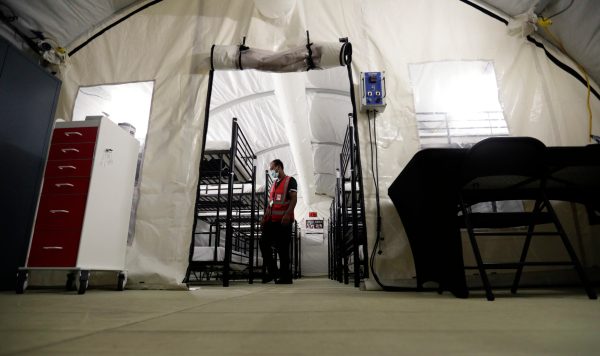
Anfinsen said agents are constantly pressed to bring people in from the field quickly, process, hold, then release those people in order to make room for more.

“Agents are upset, and I would say a big part of it is because of the groups we know are getting away. Those are people that we would normally be pursuing and arresting but we’re just not out there,” said Anfinsen. “A lot of them are also upset about the fact that we are just sort of one length in this conveyer belt toward releasing people into the country.”

“We have no metric for measuring it, but me being a representative of the agents, depression is going up. PTSD that agents already had from their service in the military is now being retriggered all over again,” said Farris.

The El Paso union chapter recently invited a National Institute for Occupational Safety Health Hazard Evaluation to evaluate occupational health issues. However, senior border officials in the region forbid agents and supervisors from speaking with the health officials about their experiences.

“We’re handling it — possibly to our detriment. If, like, it was a disaster where our building was on fire and people were running and it was just an unmitigated disaster, then people might pay attention. But because we’re getting things done relatively in a timely fashion, it looks like we can handle it,” said Anfinsen.

Farris said agents are just the pawns in a political “game” that does not appear to be getting solved any time soon.

“Nobody — in the Border Patrol agent’s mind — nobody is going to step up and fix this. Everybody keeps telling us that it’s Congress,” he said. “Your average Border Patrol agent doesn’t care. We’re doing our part. Now we need the rest of the government to do their part.”

Last week, CBP came under fire for a nonaffiliated Facebook page where some personnel wrote offensive and discriminatory posts about people in custody, as well as politicians who oppose their work. House Democrats who visited border facilities last week called for all personnel who took part to be fired.

The egregious actions of those who wrote derogatory comments on the page added to the frustration of many agents.

“We’re already losing agents to other jobs that don’t have to deal with all of this, with better pay structures, with better locations. And the day that I see a Border Patrol agent hang it up and say, ‘I don’t know what I’m going to do next, but I can’t do this anymore,’ is the day that it’s gone too far,” Farris said.

Related Content