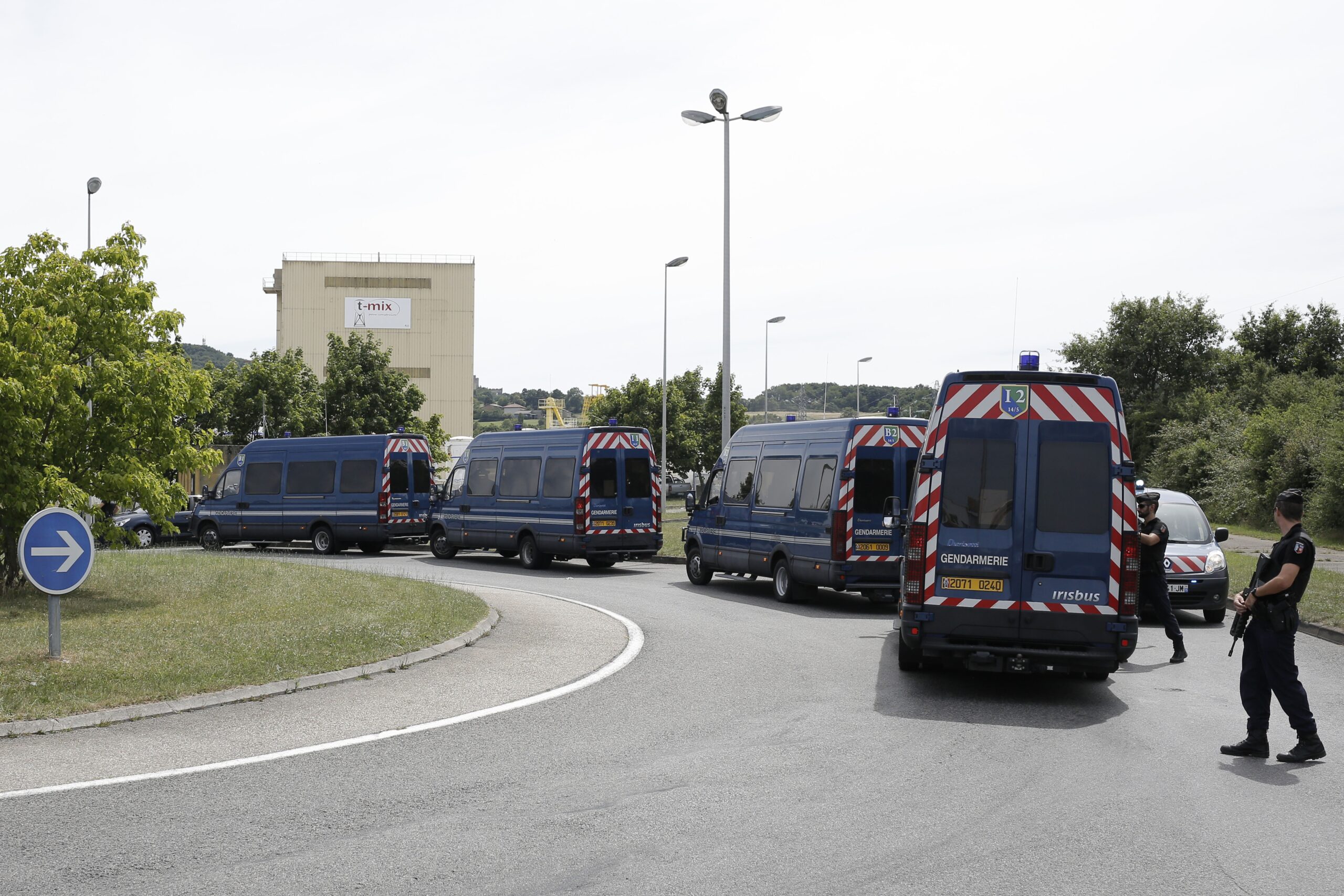
A suspected Islamic State-inspired attack on a gas factory in France on Friday heightens concerns that U.S. energy infrastructure may be targeted.
U.S. company Air Products, which has major operations in the Washington-Baltimore area as well as around the world, was attacked by terrorists. The company issued a worldwide security alert following the attack, establishing defensive measures at its gas product facilities around the globe, including the United States.
“Security has been increased at Air Products’ locations around the world as a precautionary measure,” Air Products said from its headquarters in Lehigh Valley, Pa.
The attack was particularly gruesome, with an employee’s decapitated head reportedly being placed on a pole after militants crashed through a security gate. The terrorists then crashed their vehicle into one of the facility’s gas storage containers, causing an explosion.
Other attacks occurred nearly simultaneously in Kuwait and Tunisia and appeared to be coordinated. But the attack near Lyon stands out because it involves an industrial gas plant owned by a U.S. company. The Islamic State took credit for the attacks.
Air Products isn’t saying why its facility in France was targeted.
Utilities in the U.S. have become more concerned about their natural gas storage facilities becoming a target for attack.
At a nuclear power summit earlier this year in Washington, former FBI director Robert Mueller said the Islamic State should be considered a growing threat to American energy infrastructure through cyber attacks. Others such as Southern Co. CEO Tom Fanning have said threats to the grid are a concern for the industry, which is working with the government to enhance security.
Exelon raised concerns with federal officials during the April riots in Baltimore. The utility, parent of Baltimore Gas and Electric Co., was concerned its facilities would be attacked or vandalized, causing a detonation within a densely populated urban area, according to a recent news article.
The news website Vice News published an investigative news article on June 24 that said Exelon’s concerns forced the Department of Homeland Security and other agencies to dispatch federal officers throughout the city to guard against a natural gas explosion, whether intentional or otherwise.
“Given the current scope of activity and expected protests this upcoming weekend, the potential exists for these containers to be targeted for vandalism or worse,” an April 30 Department of Homeland Security intelligence brief obtained by Vice News says.
The Air Products attack also raises the specter of what many security experts call an inevitable physical or cyber attack on the U.S. electricity grid.
The nation’s electric grid cannot be guarded at all times. Case in point, the 2013 physical attack on Pacific Gas & Electric’s Metcalf transmission station in California. The attack was perpetrated by unknown assailants using high-powered sniper rifles to detonate electrical transformers within the substation, with the intent of bringing down California’s electric grid. The perpetrators were never caught.
The attack was not made widely known by the federal government until the former head of the Federal Energy Regulatory Commission said the attack should be labeled a terrorist attack.
Former FERC Chairman Jon Wellinghoff told the WallStreet Journal that the Metcalf attack is “the most significant incident of domestic terrorism involving the grid that has ever occurred.” He discussed the incident after he left the agency.
The attack spurred the commission, which regulates the power grid, to call for the development of mandatory physical security standards for the electric transmission system. The physical standards went into effect earlier this year.
