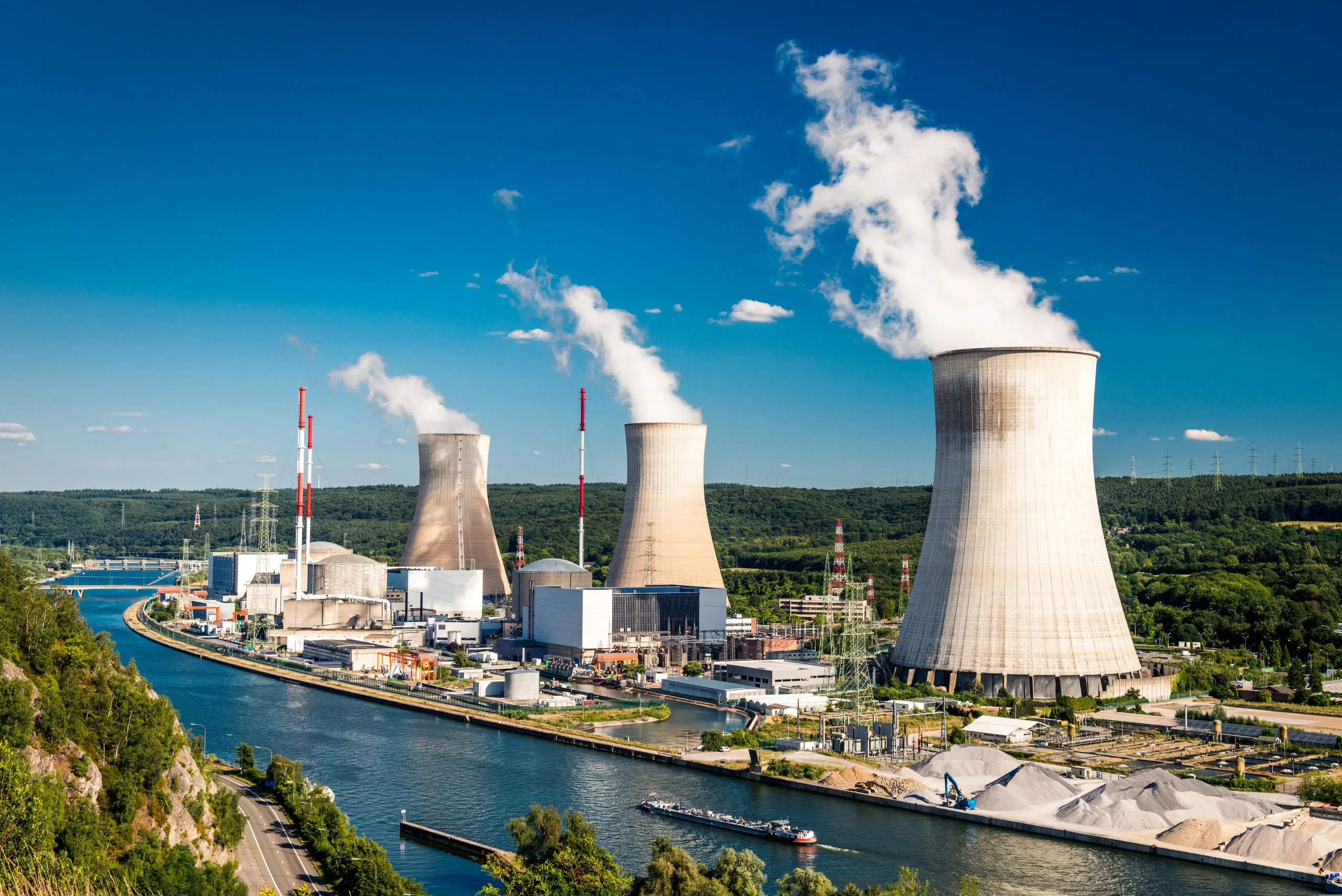
The plight of an Ohio power provider that plans to close three of its nuclear plants is dividing clean energy supporters and environmentalists, who debate whether carbon-free nuclear is worth saving or if wind and solar are ready to pick up the slack.
The impending closure of three of FirstEnergy’s nuclear plants in Ohio and Pennsylvania — and the broader financial struggles of the nuclear industry — presents a challenge to U.S. efforts at lowering greenhouse gas emissions that many scientists say contribute to climate change because nuclear doesn’t emit any greenhouse gases.
“There is no doubt losing nuclear plants is a tragedy for clean energy,” said Jameson McBride, an energy and climate analyst at the Breakthrough Institute, a liberal think tank that promotes technological innovation to combat climate change.
The U.S. depends on the nation’s 99 nuclear power plants for 60 percent of its carbon-free electricity. The U.S. gets twice as much carbon-free power from nuclear as it does from renewables.
The U.S. power grid faces the potential loss of more than 228,000 gigawatt hours of carbon-free nuclear generation because of nuclear plant closures, according to a Friday report from ScottMadden Management Consultants.
Nuclear’s importance is especially acute in the PJM Interconnection system, America’s largest competitive power market, spanning 13 states.
The three nuclear plants that FirstEnergy plans to shut down by 2021, plus Exelon’s Three Mile Island nuclear plant, which is scheduled to close next year, produced more energy than all of the wind and solar generation combined in PJM.
PJM, which opposes a bailout request that FirstEnergy has made to the Energy Department, has said that in the short-term, the retiring nuclear plants will be replaced by generation from cheap natural gas, a fossil fuel that produces fewer carbon emissions than coal.
“If we start closing these nuclear plants en masse, we’ll go backward on carbon reduction efforts,” McBride told the Washington Examiner. “Switching from coal to natural gas has been good for reducing emissions, but switching from nuclear to gas would be very bad.”
Other clean energy advocates and climate hawks, however, argue that wind and solar, which have seen huge reductions in development costs, are ready to replace nuclear power.
Most of America’s new power-generating capacity over the past two years has been wind and solar. Wind and solar account for about 8 percent of the nation’s grid, rising from less than 1 percent a decade ago.
“We are in the 21st century and have simply built a better mousetrap to stop climate change, and that is renewable energy,” Damon Moglen, a senior strategic adviser focused on nuclear energy at Friends of the Earth, told the Washington Examiner. “Renewable energy is kicking the [butt] of the nuclear and fossil fuel industry in producing low-cost, clean energy.”
Some environmentalists are more nuanced in how they view nuclear power’s place in a transitioning energy grid.
The Natural Resources Defense Council supports efforts in states such as Illinois that have moved to compensate nuclear plants for their zero-carbon value.
New York has implemented a similar program.
Both states have adopted zero-carbon energy credits, in which the state issues credits to nuclear plants for generating carbon-free power, which they can sell on the open market to raise revenue.
Ohio considered a similar proposal, but it failed to advance, and no such mechanism exists in Pennsylvania, the two states where FirstEnergy’s closing plants operate.
“A majority of the 99 U.S. nuclear reactors are not in immediate economic distress like those of FirstEnergy. But given the risks of climate change, those nuclear plants at risk of abrupt closure may need some temporary support,” Matthew McKinzie, a senior scientist at the Natural Resources Defense Council, told the Washington Examiner.
McKinzie added that given the high cost of building new nuclear plants, the U.S. should aim to invest long term in “reliable, clean-energy solutions like solar, wind and efficiency measures to step in and take its place.”
McKinzie and McBride, like all others interviewed for this article, oppose FirstEnergy’s request for an emergency bailout from the Energy Department.
“It’s not a viable solution in the long term to be using these emergency measures to prop up nuclear,” McBride said. “You can’t expect to save an industry by having the federal government come and bail you out anytime you can’t compete on cost.”
Energy Secretary Rick Perry is expected to make a decision soon on whether to grant a petition under section 202(c) of the Federal Power Act, which gives him the authority to direct the “temporary” continued use of power plants in circumstances that include war, energy shortages, or sudden surges in demand.
The measure is not meant to be used for economic reasons. FirstEnergy’s coal and nuclear divisions recently filed for Chapter 11 bankruptcy protection.
Perry on Monday expressed doubt that he would approve FirstEnergy’s request, but said he is considering other options.
“My job is to find solutions to challenges that face us,” Perry said after addressing the Bloomberg New Energy Finance conference in New York. “The 202(c) may not be the way we decide is most appropriate — the most efficient way to address this. It is not the only play.”
McBride said it would be wrong for policymakers to forget about nuclear’s plight after Perry makes his decision.
“It’s hard. There aren’t many people at this point who are strongly advocating for nuclear plants to close,” he said. “Almost all people whose first priority is climate change support doing anything we can to support existing plants. It’s almost a no-win situation.”
