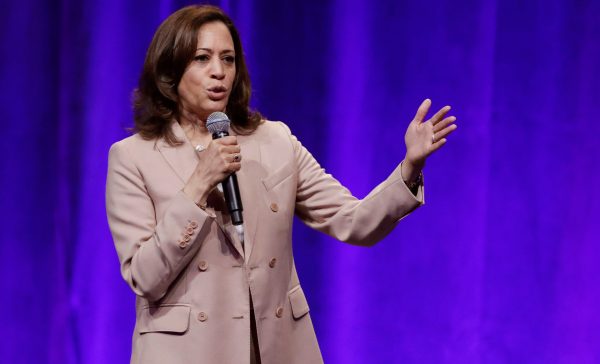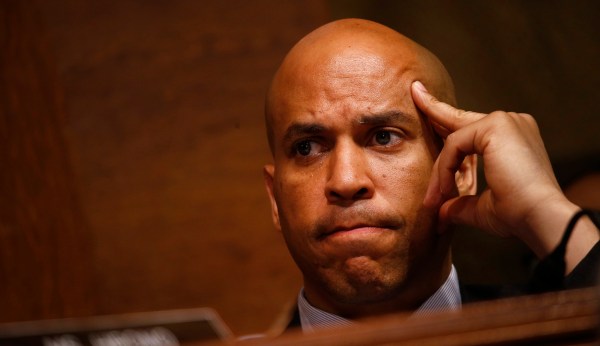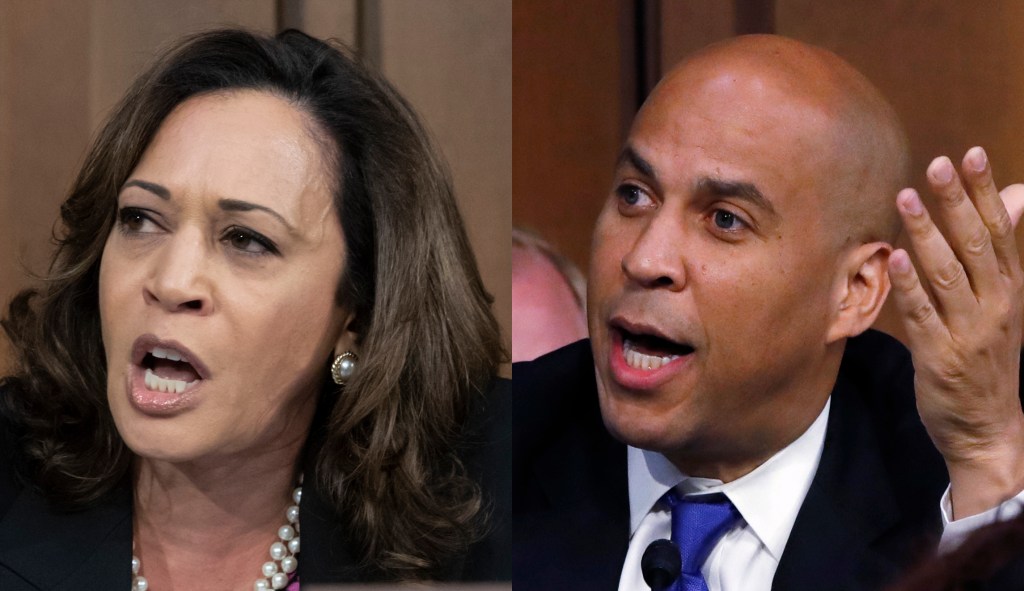
Even before the mass shootings in El Paso, Texas, and Dayton, Ohio, Kamala Harris and Cory Booker positioned themselves as Democratic presidential hopefuls with some of the most aggressive gun control proposals in the crowded primary field.
Nearly all of the 2020 Democrats support strengthening background checks for firearm sales, banning assault-style weapons, and encouraging “red flag laws” to quickly remove firearms from those deemed to be a threat to themselves or others. But not every candidate has released a proposal on how he or she would address gun violence. Booker, a New Jersey senator, and Harris, a senator from California, go further than most other candidates in their plans.
Harris, 54, has pledged that as president she’ll take executive action to achieve gun control priorities if Congress does not send her a gun control bill within her first 100 days. Her proposed executive actions include mandating near-universal background checks, banning the importation of assault weapons, and closing the “boyfriend loophole” to “prevent dating partners convicted of domestic violence from purchasing guns.”
Harris touted her plans to take executive action during a CNN appearance on Sunday, an email to supporters on Sunday and on Twitter throughout the weekend.
We don’t lack good ideas when it comes to gun safety reforms — people lack the courage to act. That’s why, when elected president, I’m prepared to take executive action and save lives. pic.twitter.com/6qrOzwOu3y
— Kamala Harris (@KamalaHarris) August 5, 2019
“Congress must have the courage to pass reasonable gun safety laws. If they won’t act, I will,” a Saturday tweet from Harris said.
The Booker campaign calls his firearm control plan “the most sweeping gun violence prevention proposal ever advanced by a presidential candidate.” The former Newark mayor, 50, calls to create a federal gun licensing system, require handgun microstamping so law enforcement can more easily trace shell casings to a specific gun, limit gun buyers to one handgun per month, and require firearm owners to report lost or stolen guns.
Booker also referenced some of his plans in the wake of the shootings.
“There’s evidence-based measures that we can take that will dramatically reduce or eliminate this problem,” the New Jersey senator said on MSNBC Sunday. “It’s why I’ve come forward on commonsense things like gun licensing, which says that hey, if you need a license to drive a car, it’s common sense that you should need a license to own and possess a firearm.”
In a tweet on Monday, Booker mentioned Chicago in addition to El Paso and Dayton as locations that suffered gun violence over the weekend, drawing attention to his focus on comprehensive reform rather than lone-wolf mass shootings.
While Harris and Booker have laid out some of the most comprehensive and detailed plans to address gun violence, other candidates have expressed support for their ideas. South Bend, Indiana, Mayor Pete Buttigieg and former Colorado Gov. John Hickenlooper have expressed support for federal gun licensing.
Former Texas Rep. Beto O’Rourke has also released a plan to address gun violence that includes reversing “regulatory action that allows access to the 3D printing of plastic guns” through executive action but does not go as far as Harris and Booker on executive action and gun licensing.
Minnesota Sen. Amy Klobuchar one-upped one portion of Harris’ plan, pledging to “immediately” take executive action rather than waiting for 100 days to close the “boyfriend loophole” to prevent those who abused dating partners from owning or buying guns.
Former Housing Secretary Julián Castro has not released a proposal specific to gun control, but he did go further than many of his primary competitors when he told the New York Times that “in an ideal world, people would not own handguns.”
One former 2020 Democratic candidate, Rep. Eric Swalwell of California, had planned to run his White House campaign explicitly on gun control. But Swalwell dropped out of the race on July 8, after garnering negligible support in the polls.