Daily on Energy: Environmentalist skeptic makes case against advanced nuclear reactors

Subscribe today to the Washington Examiner magazine and get Washington Briefing: politics and policy stories that will keep you up to date with what's going on in Washington. SUBSCRIBE NOW: Just $1.00 an issue!

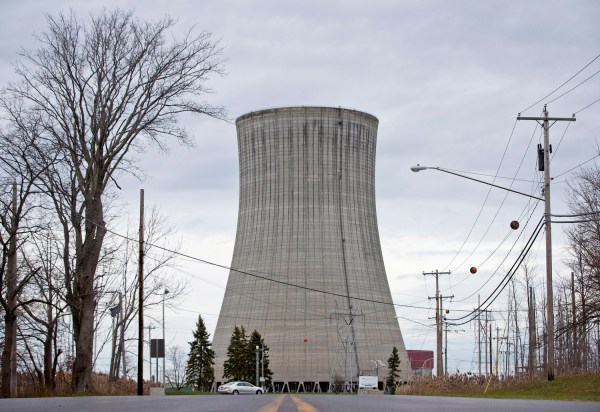
THE CASE AGAINST ADVANCED NUCLEAR REACTORS: Longtime nuclear skeptic Edwin Lyman warns in a new report that smaller “advanced” nuclear reactors can’t be counted on to fight climate change, because regulators won’t be able to say they’re safe until it’s too late to help reduce emissions.

Lyman, the director of nuclear power safety at the Union of Concerned Scientists, doubts the various technologies under development will be any safer than conventional larger reactors that are cooled with water.

Advanced reactors are cooled with other materials like molten salt, liquid sodium, or helium gas.

These designs, Lyman says in his report, “clearly confront a different but no less formidable set of safety, security, and proliferation challenges.”

Lyman calls on Congress to suspend the Energy Department’s first-of-its-kind advanced reactor demonstration program, implemented in the Trump administration, that recently awarded $160 million for companies to build two non-light water reactors that can be operational within seven years.

Policymakers gravitate to nuclear: Members of Congress from both parties in recent years have supported research and development of advanced reactor technologies, on the premise that they can be made more cheaply and than traditional larger plants and provide 24/7 power to help complement wind and solar in the grid of the future.

President Biden has promised to enable them to reach half the construction cost of today’s reactors in order to contribute to his plan for 100% zero-carbon electricity by 2035.

Proponents say the new reactors could be built quickly, reduce the accumulation of nuclear waste, use uranium more efficiently, and reduce the risk of proliferation, touting features such as passive shutdown and cooling.

Not worth waiting for: Lyman, however, says it will likely take decades and billions of dollars to develop and commercialize advanced reactors, and it would take “many more years” to deploy a large number of units and prove they can operate safely and reliably.

The money spent on advanced nuclear reactors should be diverted to expanding the use of renewables, Lyman suggested.

Green groups are divided: Most if not all of them, including the Union of Concerned Scientists, support the preservation of the existing nuclear fleet, which provides more zero-carbon power than wind and solar. But there’s more disagreement over the viability of new nuclear contributing to the grid of the future, given the time constraints of combating climate change.

Brett Rampal, director of nuclear innovation at the Clean Air Task Force, countered that Lyman makes assertions “that are not based on a rigorous and quantitative assessment of advanced reactors.” His report was not peer-reviewed.

“The report’s call to essentially cease innovation in nuclear energy today is extremely unwise, and would foreclose an important option that many environmental organizations, including my own, believe could be an important tool in the fight against climate change,” Rampal told Josh.

Welcome to Daily on Energy, written by Washington Examiner Energy and Environment Writers Josh Siegel (@SiegelScribe) and Abby Smith (@AbbySmithDC). Email [email protected] or [email protected] for tips, suggestions, calendar items, and anything else. If a friend sent this to you and you’d like to sign up, click here. If signing up doesn’t work, shoot us an email, and we’ll add you to our list.

FOR FIRST TIME, FERC WEIGHS PIPELINE CONTRIBUTION TO CLIMATE CHANGE: FERC for the first time has weighed a pipeline project’s contribution to climate change, Democratic chairman Richard Glick announced at the outset of this morning’s very delayed monthly meeting.

As of this writing, FERC had not yet voted on its agenda, but Glick said he worked out a deal with Republican Neil Chatterjee and Democrat Allison Clements to review the significance of a natural gas project’s contribution to climate change.

During the Trump administration, then-chairman Chatterjee had taken the view that the commission should determine the direct emissions of operating and constructing natural gas pipelines and LNG export facilities, without assessing how the emissions from the project contribute to climate change.

Glick, then a regular commissioner, lobbied against that approach, arguing FERC was ignoring the most urgent environmental issue, climate change, when assessing a project’s costs and benefits.

Glick tweeted Thursday that FERC “cannot claim to have adequately addressed the public interest without addressing the significance” of climate change, and said the new approach would protect the commission from legal vulnerability.

“More work to do, but this is an important start,” Glick said.

CHAMBER SEEKS ‘REALISTIC’ PARIS TARGET THAT VALUES NATURAL GAS: The Chamber of Commerce is jockeying to shape Biden’s updated nationally determined contribution (NDC), or emissions reduction target, that he has promised to announce next month as part of the U.S.’ return to the Paris Agreement.

The Chamber, which supported Biden rejoining Paris, said in a list of “principles” this morning that the administration should make sure it sets a target for emissions cuts by 2030 that “are realistic, achievable, appropriately account for U.S. economic interests.”

It calls for Biden to give big business a “seat at the table” and urges the president to account for trade-exposed” sectors, which is likely code for the administration establishing a border carbon adjustment to ensure manufacturers don’t move overseas as a result of his carbon reduction policies.

Don’t forget about natural gas: Biden should embrace “all of the above” approaches to emissions reductions, specifically considering the potential that exporting natural gas could displace dirtier coal. The Chamber says the U.S. should recognize the “global context” of whatever commitment it makes, noting the rest of the world accounts for 86% of emissions.

“The fact that major emitting countries such as China, Russia, India, and Brazil have submitted NDCs allowing for significant emissions increases over the next decade not only undermines efforts to reduce global emissions, it places U.S. industry at a competitive disadvantage,” the Chamber says.

Bottom line: The Chamber does not recommend a specific target for Biden to set, but it’s fair to speculate based on these principles that it would be less aggressive than what many environmental groups want: a target to slash U.S. emissions by at least 50% by 2030.

GREENS URGE BIDEN TO CUT OFF FOREIGN NATURAL GAS FINANCE: More than 400 environmental groups from across the world are calling on the Biden administration to end U.S. financing of fossil fuels overseas — not just coal funding, but also oil and gas.

The groups, in a letter this morning, press the administration to fully implement a significant provision of Biden’s sprawling Jan. 27 climate change executive order.

The order tasks the departments of State, Energy, and Treasury to work with U.S. development finance and export credit agencies in “identifying steps through which the United States can promote ending international financing of carbon-intensive fossil fuel-based energy while simultaneously advancing sustainable development and a green recovery.”

How does Biden handle natural gas? Collin Rees, a senior campaigner with Oil Change U.S., one of the groups on the letter, told Josh the administration cannot “allow loopholes that enable continued promotion of gas.”

The Obama administration State Department promoted exports of natural gas especially for projects in Asia, where gas is seen as a cleaner alternative to coal. The Trump administration took it to another level, promoting gas exports to Europe too.

The letter, also signed by Natural Resources Defense Council, Sierra Club, the Sunrise Movement, and more, says the Biden administration should deny new gas infrastructure from eligibility for all future government financing, except in “extremely limited and well-defined, and closely regulated circumstances.”

It says the U.S. should partner with the UK — which has already announced an end to their overseas finance for fossil fuel projects — and the EU to secure commitments from other governments and public finance institutions to end their public finance for fossil fuels.

REPUBLICAN STATES SUE BIDEN FOR KEYSTONE XL REJECTION: A coalition of 21 Republican state attorneys general filed a federal lawsuit yesterday against the Biden administration for revoking a permit to construct the Keystone XL oil pipeline.

The suit, filed in the U.S. District Court for the Southern District of Texas, claims the decision to grant or deny permission to construct and operate an oil pipeline across international borders is a form of international and interstate commerce. The Republicans said Congress, not the president, has the authority to regulate international and interstate commerce.

“It shows Biden’s contempt for rural communities in Montana and other states along the pipeline’s path that would benefit from and support the project,” said that state’s attorney general, Austin Knudsen, who led the lawsuit with Texas’ Ken Paxton.

SENATE GOP WARNS FED AGAINST REGULATING CLIMATE RISK: Republicans on the Senate Banking Committee are warning the Federal Reserve that regulating climate change financial risk is outside of its purview.

Efforts to regulate climate change through the financial system are a “self-fulfilling prophecy,” wrote the Republicans, led by ranking member Sen. Pat Toomey, in a letter this morning to Federal Reserve Chairman Jerome Powell. They argued such regulations would simply provide a means for the federal government to ban or limit energy production it considered financially risky.

In recent months, the Fed has taken several steps to focus on climate change, including creating a climate committee and joining a global network of central banks dedicated to the issue. Federal Reserve Governor Lael Brainard suggested last month it could be helpful to institute scenario analysis to examine the risks climate change poses to financial firms.

In their letter, the Senate Republicans argued climate predictions, which stretch decades into the future, are “inherently and irreducibly uncertain,” raising questions about the value of scenario analysis based upon them.

MORE GOVERNMENT ACTION ON CLIMATE FINANCE: The Commodity Futures Trading Commission is the latest government agency to create a climate change arm, unveiling yesterday a Climate Risk Unit to bolster its efforts to understand, price, and address climate-related risks.

“Climate change poses a major threat to U.S. financial stability, and I believe we must move urgently and assertively in utilizing out wide-ranging and flexible authorities to address emerging risks,” said CFTC Acting Chairman Rostin Behnam.

The formation of the climate unit follows a comprehensive report adopted unanimously by a CFTC subcommittee last year that found climate change poses a serious risk to the U.S. financial system and recommended federal agencies move urgently to address those risks.

MAJOR INSURER TO EXIT COAL: Swiss Re says it will fully phase out its underwriting of thermal coal over the next two decades, eliminating its exposure in OECD countries by 2030 and the rest of the world by 2040 as part of its goal to reach a net-zero investment portfolio by 2050.

As part of the stricter coal policies, announced earlier this week, Swiss Re will adopt new thresholds for thermal coal exposure starting in 2023, eventually leading to its complete exit. Swiss Re also announced a new goal this week to reduce the carbon intensity of its corporate bond and listed equity portfolio by 35% by 2025.

In addition, Swiss Re is instituting an internal carbon price of $100 per ton starting this year, the first multinational company to use a triple-digit carbon price. That fee will increase to $200 per ton by 2030, the insurer said.

‘COMPREHENSIVE RECONSIDERATION’ OF TRUMP NEPA CHANGES: The Biden administration told a federal district court yesterday that it is undertaking a “comprehensive reconsideration” of the Trump administration’s changes to conducting environmental reviews under the National Environmental Policy Act and expects to decide “in the coming weeks” whether to amend or repeal the revisions.

The White House Council on Environmental Quality has already identified “substantial and legitimate concerns” with the Trump revisions, according to the court filing. Those concerns include that the Trump administration’s changes “may adversely affect environmental justice,” as well as efforts to curb climate change. The CEQ is also questioning whether the Trump changes would restrict public input in NEPA reviews.

Due to its ongoing reconsideration, the Biden administration is asking the court to send the Trump changes back to the White House for review.

The Rundown

New York Times Senate leader stalls climate overhaul of flood insurance program

Bloomberg Texas tried to prepare for crisis and ended up sowing confusion

S&P Global North Dakota studying coal sector’s insurance challenges

The Guardian ‘They aren't used to losing’: wealthy New York enclave battles over offshore windfarm

Calendar

FRIDAY | MARCH 19

9:45 a.m. The House Select Committee on the Climate Crisis will hold a virtual organizational meeting to consider its rules for the 117th Congress.

Related Content