

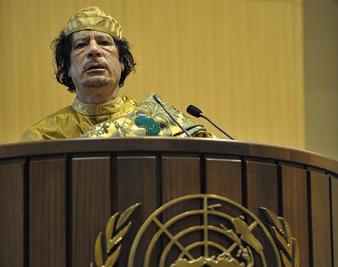
The crisis of the Libyan dictatorship has shamed a number of prominent personalities in academia and culture, who benefited from Qaddafi’s random, but typically excessive, spending on whatever he and his family desired. London School of Economics (LSE) director Sir Howard Davies resigned from his job on March 4, in response to disclosure that the school had accepted a donation of 1.5 million British pounds from the Libyan dictator. Among the British intellectual elite, that news was followed by the resignation of Sir Richard Roberts, 1993 winner of a Nobel Prize in medicine, from the board of the Qaddafi International Charity and Development Foundation, which gave Libyan money to the LSE. In the less elevated environment of pop culture, singers Nelly Furtado, Beyoncé Knowles, Mariah Carey, Timbaland, and 50 Cent have all admitted they were paid exorbitant sums to entertain the Qaddafis.
These revelations call to mind similar shenanigans a quarter of a century ago. Then, Qaddafi’s financial backing was provided to the British actress and veteran anti-Israel agitator, Vanessa Redgrave, her younger brother Corin, who died last year, and a Trotskyist sect to which they belonged, the Workers Revolutionary Party (WRP). That story was briefly noted in the normal world, if not ignored, and then forgotten. But in the context of recent developments, it deserves reexamination.
Stay informed.Stay ahead.
Join Washington Examiner for unlimited access to the news, analysis, and commentary that matter most.
Already a member? Log in
