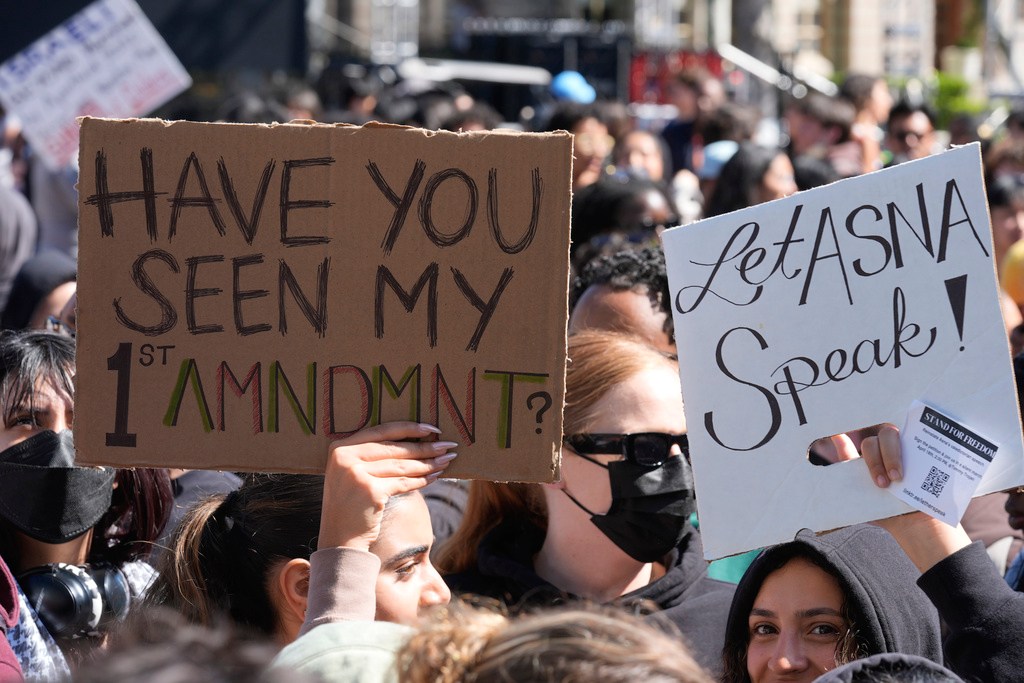
The combination of highly visible protests combined with the varying university responses has lately reignited the debate over free speech on campus. Longstanding opponents of free speech have suddenly declared its importance, and have noticed how recent ideas about how to erode cultural and jurisprudential free speech norms might actually be used for ill — that is, might actually be used against people they like.
As Steve McGuire of the American Council of Trustees and Alumni noted on X, publications from the New York Times to Vox that have spent years sounding reluctant to say anything positive about America’s unusually broad legal protections for speech now seem to regret it, as universities crack down on student encampments protesting for Gaza. “It has not gone unnoticed … that many of those who are now demanding the right to protest have previously sought to curtail the speech of those whom they declared hateful,” the New York Times editorial board allowed in May. “Free-speech radicals need to reject the premise that a certain set of words should be set aside as ‘hate’ and prosecuted as crimes,” the New Yorker’s Jay Caspian Kang wrote two days later, contrary to the sleazy attacks on free speech colleagues such as Andrew Marantz have made a career of publishing in that magazine. Vox, like the much-memed character from the sketch in I Think You Should Leave insisting that “we’re all trying to find the guy who did this,” published Eric Levitz arguing that “progressives would be better equipped to resist the present crackdown on pro-Palestinian advocacy had social justice activists not previously popularized an expansive conception of harmful speech.” In short, just when it had become instrumentally valuable again to the short-term strategic political needs of young leftists, multiple major outlets among the legacy media decided to take the brave step of endorsing a core human right they had spent years attacking.