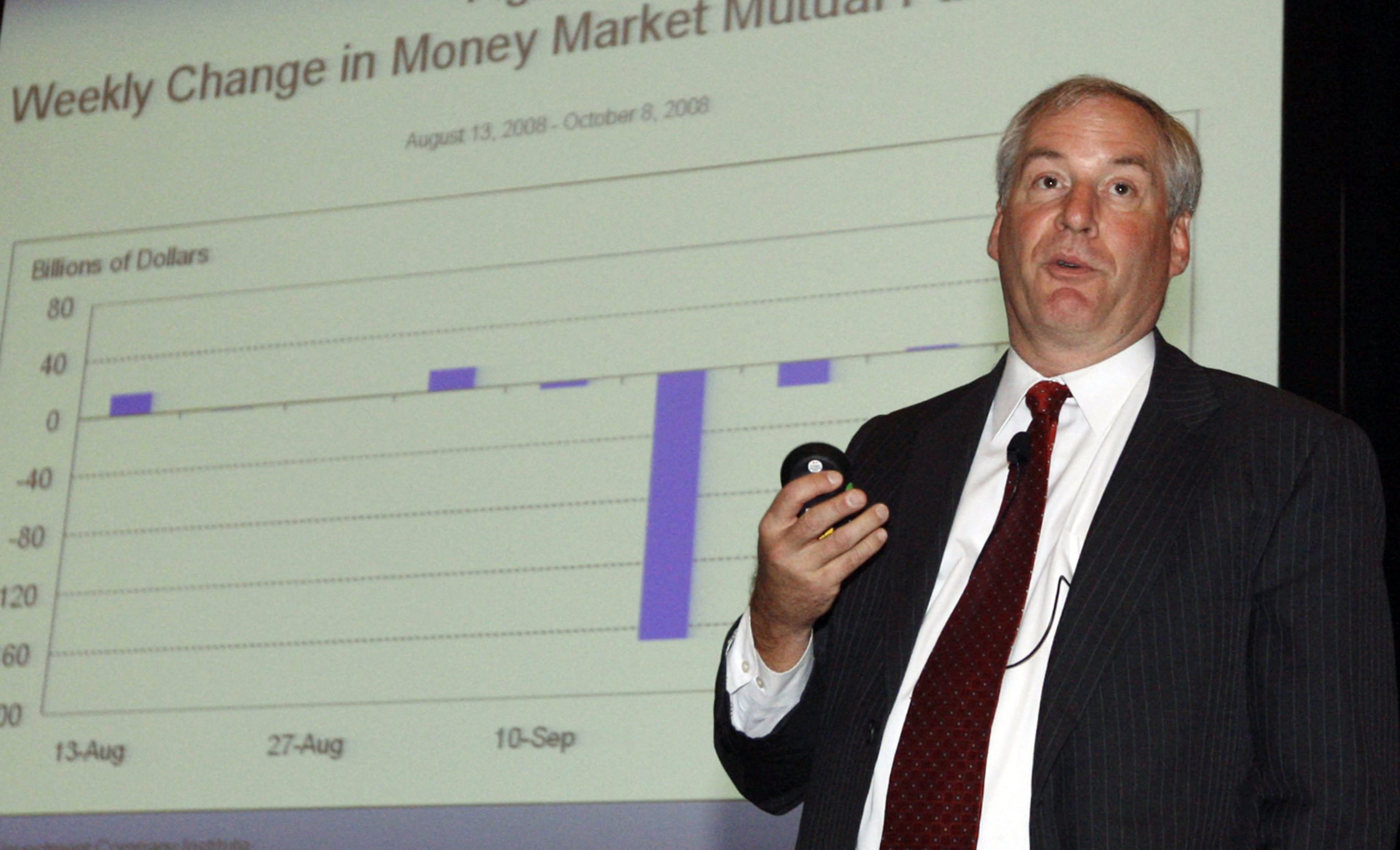
Compliments are in order for Eric Rosengren, president of the Federal Reserve Bank of Boston, for speaking truth to President Trump’s bluster.
Trump has spent more than a year trying to browbeat the Federal Reserve Board into slashing interest rates, at the same time he presses forward with tremendously destructive trade wars against whatever nation most recently has piqued his gall.
Rosengren, quite rightly, told the Washington Post that Trump has things precisely backwards. The better economic policy would be to keep interest rates steady while eliminating Trump’s new tariffs.
“You don’t want to apply accommodation [in interest rates] at a time when you don’t need it, in part because you won’t have it when you do need it and in part because there are side effects from pushing interest rates very low. It encourages people to take more risk,” Rosengren said.
This matches the case I and my colleague Tiana Lowe have each made separately in these pages. The “risk” to which Rosengren refers is, as I put it five weeks ago, that “the lower interest rates fall, the more people will have incentive to borrow and the less to save. As private and public debt both remain at or near record highs, this is an economically dangerous scenario.”
Furthermore, to the extent that an economic slowdown or even recession may be looming, it is Trump’s own actions that are catalyzing those dangers, not a failure to lower interest rates.
“What has prevented the economy from being stronger is the slowdown occurring globally and the tariffs,” Rosengren said. He’s right again, although he explained it inelegantly. Replace the “and” in his statement with “which is caused by” and you get a better picture. As in: The U.S. economy is being dragged down by the global slowdown which is caused by Trump’s tariffs.
The tariffs have a negative ripple effect which harms American consumers and foreign manufacturers, in turn reducing foreign appetites for American products and slowing the velocity of commerce. In short, Trump’s tariffs cut off the American economy’s nose while trying to spite the faces of China, Japan, and European allies.
Here’s hoping Rosengren can convince his colleagues at the Fed to hold off on interest rate cuts for now. The Fed needs to continue proving it is immune to pressure from a president worried about his reelection campaign rather than about long-term national economic stability.
The benchmark U.S. interest rate is now below 2.25%, which is extremely low by historical standards. There’s no need to cut it further.
