DES MOINES, Iowa — If there’s one thing the Republican race in Iowa has proved yet again, it’s that negative ads work, no matter what voters say about wanting a nice, civil campaign.
When Newt Gingrich shot to the top of the polls in early December, a pro-Mitt Romney super political action committee promptly shot him down. Gingrich went from 25 percent in the last Des Moines Register poll to 12 percent in the new one. He might still be falling
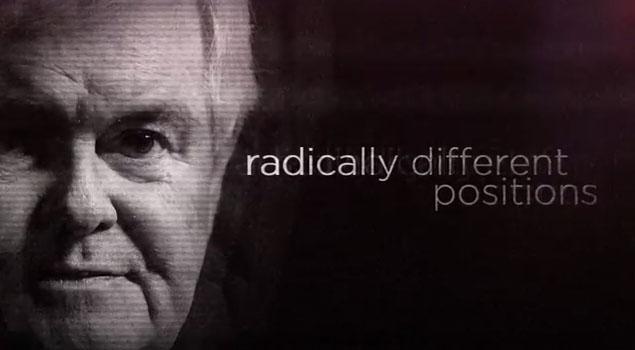
The intensity of the Romney attack, which got an assist from a bitter anti-Gingrich ad aired by Ron Paul, was nearly unprecedented. A new report from the nonpartisan Campaign Media Analysis Group shows that nearly half — 45 percent — of all political ads aired here in Iowa have been attacks on Gingrich. There are seven candidates in the race who might air commercials promoting themselves or attacking someone else, and yet nearly half of all ads have been attacks on one candidate.
So here’s the question: If negative ads are so effective in bringing down a baggage-laden front-runner, where are the attacks on the current baggage-laden front-runner, Mitt Romney himself?
As Iowans go to their caucuses, Romney has remained remarkably unscathed. The campaign ad study found that only 20 percent of ads have targeted him, and even those mostly hit several candidates, with Romney being just one of a group. Romney has faced nothing like the full-bore, straight-on attacks that crippled Gingrich.
Of course, some of Romney’s adversaries just don’t have the money to wage an air campaign. But some do. Rick Perry, for instance, has spent more on ads than any other contender in Iowa and also has a super-PAC raising money on his behalf. But Perry has spent his time fighting to be the anti-Romney, not fighting Romney himself.
“We’re battling for conservative support with Gingrich, Santorum, Bachmann and Paul,” says an aide to the Texas governor. “Romney voters are much more liberal.” In the last few days, rather than beating up on Romney, Perry has attacked Santorum and other potential anti-Romneys. “Our TV ads lump all of the congressional insiders together and discuss their collective legacy of earmarks, debt, and Washington excess,” says the aide.
In essence, it’s a fight for second place, and when the campaign is over and the post-mortems begin, it will likely be seen as the second tier’s big mistake. If voters are looking for the best alternative to Romney, they probably want to identify the candidate who can make the best case against Romney. Yet the potential anti-Romneys spent their time attacking each other. In the end, they didn’t help themselves and they let Romney off scot-free.
And what an opportunity they had. Romney presents opponents just as much of a target-rich environment as Gingrich. His flip-flop on abortion still rankles many Iowa social conservatives, for whom life remains a threshold issue. Those conservatives also question his record on marriage and the Second Amendment. And his creation of Romneycare and support of an individual mandate are big, fat targets. As an added bonus, there is lots of video of Romney saying things he now disowns or plays down. And still, no barrage of attack ads.
Actually, that’s not entirely accurate. By all accounts, those attack ads are now being prepared at President Obama’s re-election headquarters in Chicago. If Romney becomes the nominee, voters will finally see the withering, take-no-prisoners attack on him that they never saw in the primaries, courtesy of Obama 2012.
In the meantime, Gingrich is complaining bitterly about the campaign’s negativity. When a reporter asked whether he had been “swift-boated,” referring to attacks on John Kerry back in 2004, Gingrich said, “I feel Romney-boated.” All the kvetching has revealed an astonishing level of naivete from the man who rose to power in the 1990s by bringing down the entire House Democratic leadership.
Where Gingrich has been naive, Romney has been disingenuous. Asked Dec. 20 why he didn’t tell the super-PAC to stop the negative ads, Romney answered, “It’s illegal … I’m not allowed to communicate with a super-PAC in any way, shape or form.” Asked the same question the next day — after experts pointed out there was no law or rule preventing him from condemning the negative ads — Romney said, “I’m sure I could go out and say, ‘Hey please don’t do anything negative.’ But you know, this is politics.”
He’s right. Attacking is part of politics. And Romney must be gratefully wondering why no one has done it to him.
Byron York, The Examiner’s chief political correspondent, can be contacted at [email protected]. His column appears on Tuesday and Friday, and his stories and blogposts appear on washingtonexaminer.com.
