

Most Democratic primary voters favor candidates who back free-trade policies, a new survey has found, welcome news to President Obama and potentially disturbing news for front-running Democratic presidential candidate Hillary Clinton.
The survey by the Pew Center for People and the Press found that primary voters would back a hypothetical free-trade candidate over a trade skeptic by a wide 45-19 percent margin.
Recommended Stories



The news could help Obama get Congress to approve a 12-nation trade pact called the Trans-Pacific Partnership that his administration concluded negotiations on last week. For Clinton, the news suggests her decision to come out against the trade deal may not help her much in the Democratic primary. And it may have cost her a way to distinguish herself from rival Sen. Bernie Sanders, I-Vt.
Related Story: http://www.washingtonexaminer.com/article/2574118/
She said her decision was based on the final text of the deal, which she said did not live up to her hopes. However, she had been under intense pressure from liberal groups, especially organized labor, to oppose it. Trade critics believe the trade pact will speed up the outsourcing of jobs and give companies too much power to flout environmental rules. The groups have worked hard to present that as a broad grassroots movement within the Democratic Party.
The Pew survey indicated that wasn’t the case. When asked whether they would be more likely to support a candidate who opposed expanded trade policies, just under one-fifth (19 percent) of Democratic primary voters said yes, while almost half (45 percent) said they wanted a pro-trade candidate. About a third of primary voters (34 percent) said it would not be a major factor in their vote.
The survey was conducted between Sept. 22-27 and included 387 Democrats and Democrat-leaning voters.
Neil Sroka, spokesman for the Howard Dean-founded group Democracy for America, dismissed the poll’s results. He argued that most Democrats and liberal voters support the idea of trade in the abstract but view the subject much differently when it is examined more closely.
“If this poll were specifically about the Trans-Pacific Partnership, you would have gotten a much different response,” he said.
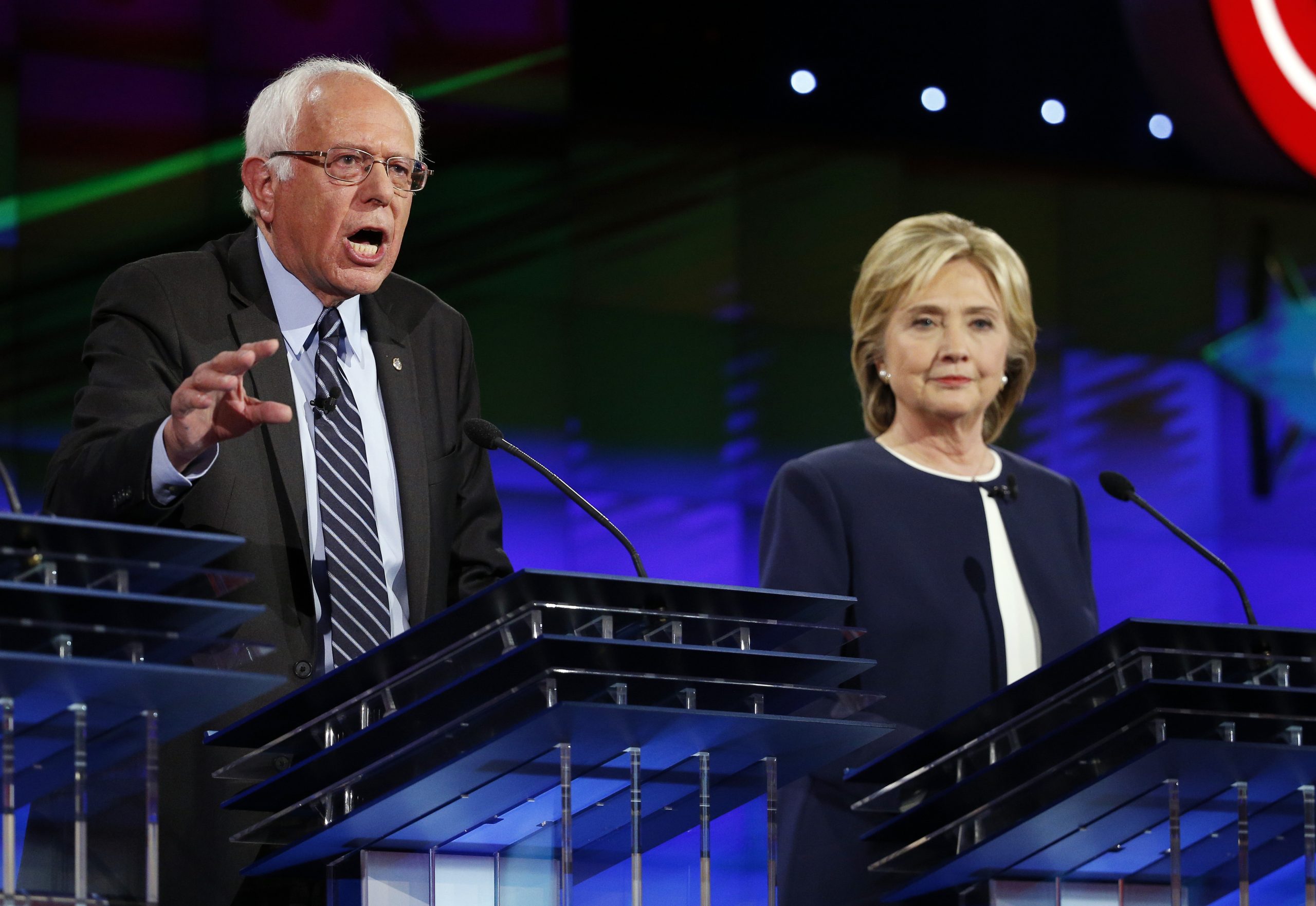
Clinton, who as Obama’s secretary of state helped to negotiate the Pacific Rim deal, said in Tuesday’s Las Vegas candidate debate that the deal just didn’t meet her standards. “I did say, when I was secretary of state, three years ago, that I hoped it would be the gold standard. It was just finally negotiated last week, and in looking at it, it didn’t meet my standards. My standards for more new, good jobs for Americans, for raising wages for Americans,” she said.
Exactly how she looked at the final terms is not clear since Clinton is no longer in the administration and the deal’s text has not been publicly released.
“Yeah, I noticed that too,” White House spokesman Josh Earnest told reporters Wednesday when asked about Clinton’s claim. He did not indicate that she had been given access to the text. “What we have indicated is we have made a commitment to make the text public, both prior to the president signing it but also prior to the responsibility that Congress has to consider and ratify it.”
