

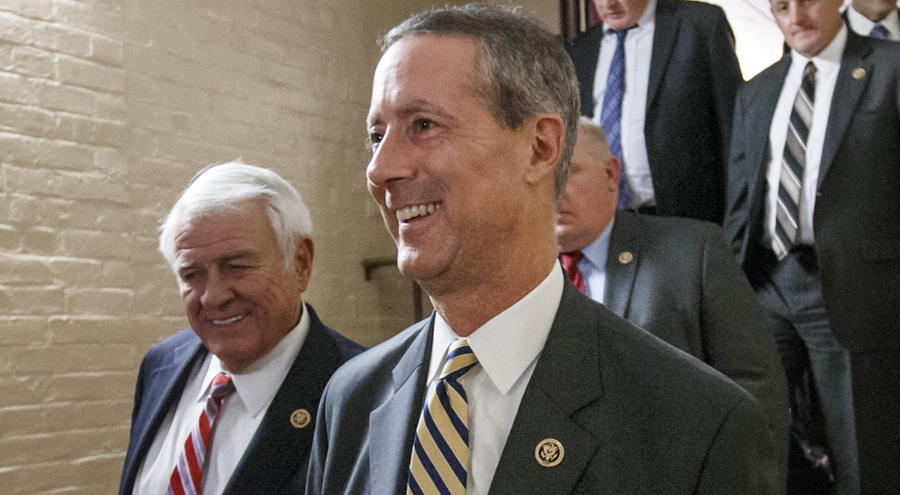
House Armed Services Committee Chairman Mac Thornberry said Thursday that lawmakers are considering boosting defense spending by $18 billion next year to pay for overseas military needs that are underfunded in the current budget.
Thornberry also raised the possibility of a supplemental spending bill next year to provide the military with the funds needed to fight the threat of the Islamic State and Russian military aggression in Europe.
Recommended Stories


“It may well be that even the budget agreement made last December is not enough and so that is certainly a possibility,” Thornberry said.
For this year, lawmakers aren’t talking about a supplemental spending bill. The focus is instead on adding a pot of money that would be included in the Overseas Contingency Operations fund, or OCO, and it would not be part of the general fiscal 2017 discretionary budget, Thornberry, R-Texas, said.
“There are still discussions going on about the OCO part of the budget and how we deal with a president who has proposed all these activities but hasn’t proposed the money to pay for the activities so that is what we are still talking about,” Thornberry told reporters.
Thornberry pointed to President Obama’s $7 billion request to help beef up defenses in Europe, in particular to respond to military aggression from Russian President Vladimir Putin. Those needs, he said, are important but would squeeze out base budget requirements.
“It’s about $18 billion short,” Thornberry said.
House GOP lawmakers are struggling to find a path forward on passing a fiscal 2017 budget that can attract the support of most of their members. Part of the hold up is the desire to add money to the OCO budget.
But Democrats have warned that they would not agree to any defense spending increase unless domestic spending gets an equal boost.
Thornberry blamed Obama for submitting a budget that asked for more overseas military spending without boosting baseline spending of $574 billion agreed upon by both parties last year.
“The way the president has chosen to submit this undermines the budget stability we thought we were getting,” Thornberry said. “That has thrown a monkey wrench into what should have been a relatively simple budget process this year when it comes to defense.”
